
Listen to this Post
Introduction: The New Face of Cyberwarfare
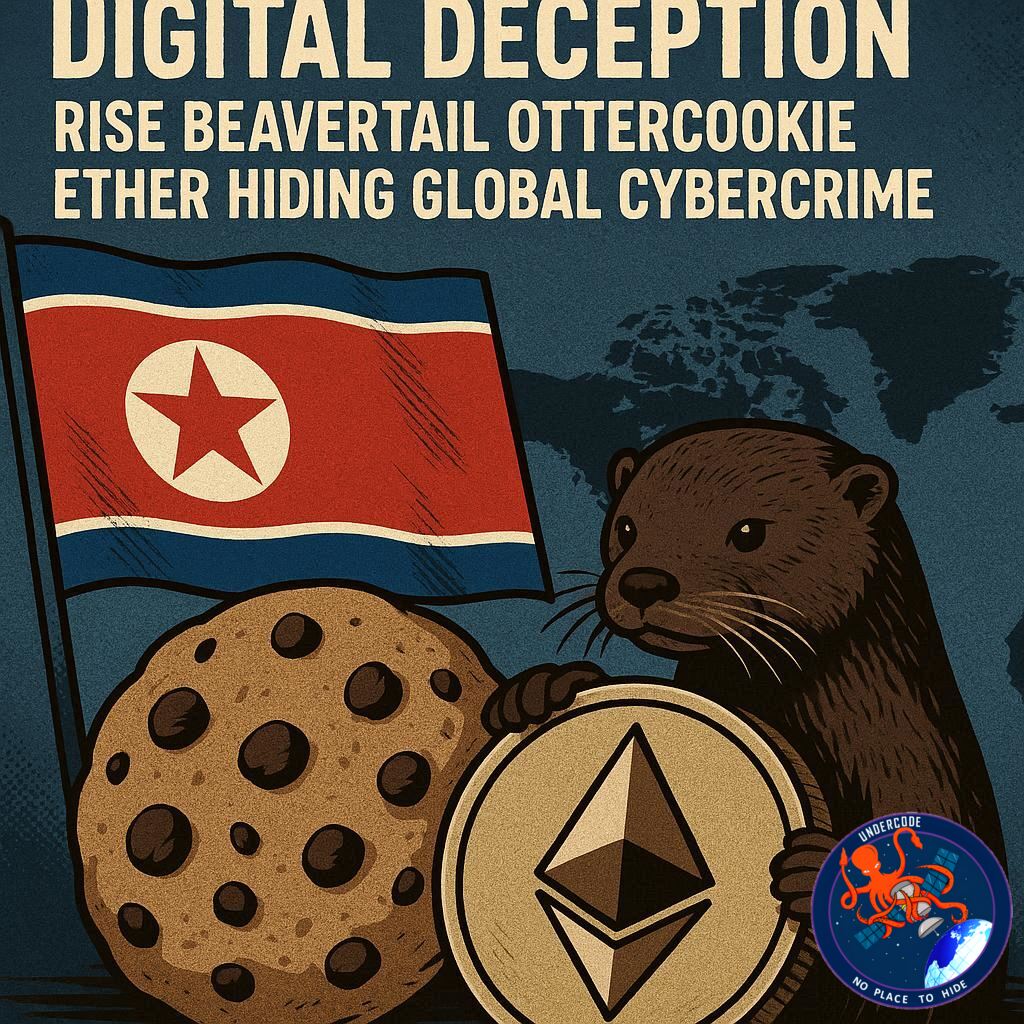
In an age where digital currencies define wealth and opportunity, North Korea’s cyber operatives have evolved into one of the most sophisticated digital espionage networks in the world. Their latest tactics—leveraging new forms of evasive malware named BeaverTail, OtterCookie, and EtherHiding—have brought a new level of stealth and intelligence to cybercrime. These tools are not just malware; they’re part of a larger ecosystem of deception, weaponizing blockchain-based command systems and social engineering campaigns aimed at unsuspecting job seekers.
This digital arms race exposes a chilling truth: cyberspace has become the new battlefield, where the stakes are not just data but economic stability and personal safety.
Inside the Operation: How North Korea’s Malware Empire Works
According to security analysts, North Korean threat actors have developed an arsenal of highly evasive malware tools designed to bypass traditional detection systems. The trio—BeaverTail, OtterCookie, and EtherHiding—each serve a distinct role in orchestrating complex cyber operations that target individuals, financial institutions, and cryptocurrency platforms worldwide.
These malicious programs are engineered with one shared trait: invisibility. By embedding their control mechanisms in blockchain networks, the malware operators gain resilience and anonymity. Unlike traditional command-and-control servers that can be tracked and shut down, blockchain-based C2 channels are decentralized, making them nearly impossible to dismantle.
The hackers’ preferred targets are often unsuspecting job seekers. They deploy fake job listings, impersonate recruiters on LinkedIn, or create cloned websites of legitimate companies to lure victims. Once trust is established, a malicious attachment or link is sent—often disguised as a job application form or a technical test file. The moment the user interacts with it, the malware activates silently in the background.
BeaverTail specializes in persistence and stealth, burrowing deep into system files and masking its activity from antivirus software. OtterCookie focuses on credential theft, harvesting sensitive login information, while EtherHiding targets cryptocurrency wallets, siphoning digital assets with surgical precision.
The campaign’s sophistication lies in its adaptability. The malware constantly morphs its code signatures, using polymorphic techniques to evade detection. Meanwhile, the blockchain-based C2 structure allows for encrypted updates, real-time adaptability, and communication that’s resistant to interception.
This isn’t a random wave of attacks. It’s a coordinated campaign reflecting Pyongyang’s state-backed cyber agenda—funding military projects, bypassing sanctions, and sustaining the regime’s financial reserves through digital theft.
Governments and cybersecurity experts are now racing to respond. Global security firms are strengthening blockchain analysis tools, tracking wallet transactions linked to the malware’s C2 nodes, and dismantling phishing infrastructures. Yet, as with all cyber battles, the adversary evolves faster than the defenses.
What Undercode Say: The Strategic Intelligence Behind the Chaos
North Korea’s cyber strategy is not just about stealing money—it’s about establishing digital dominance. These operations display a hybrid intelligence model that merges psychological manipulation with technical innovation. By targeting job seekers, they exploit human vulnerability: the desire for opportunity.
This method of attack demonstrates a clear understanding of modern behavioral economics. Hackers are no longer just coders; they are social engineers. Their campaigns mirror legitimate recruitment processes, with detailed branding, HR-like communication, and time-delayed engagement to simulate authenticity. Every step is psychological warfare.
From a geopolitical lens, these attacks serve as an asymmetric weapon for Pyongyang. Traditional warfare requires tanks, missiles, and soldiers. Cyberwarfare requires only code, coordination, and connectivity. The cost is minimal; the impact, potentially devastating. A single breach in a global cryptocurrency exchange can generate millions in stolen funds—without a single bullet fired.
Moreover, the use of blockchain as a command-and-control infrastructure marks a turning point in cyber operations. It blurs the line between legitimate and illicit uses of decentralized technology. While blockchain promises transparency and security, its immutable and anonymous nature also makes it an ideal cover for covert operations.
Security researchers believe that these tools—BeaverTail, OtterCookie, and EtherHiding—could inspire future generations of malware. The principle is simple but powerful: decentralization equals survivability. Even if one node is taken down, the network persists. This mirrors the exact design philosophy of cryptocurrencies themselves, turning a financial innovation into a weapon of subversion.
The lesson for individuals and institutions is clear: cybersecurity is no longer a defensive domain—it’s a behavioral one. Awareness, skepticism, and real-time threat intelligence are now as essential as antivirus software. Every email, link, and file must be questioned. Every digital opportunity must be verified.
As North Korea perfects its blend of code and cunning, global networks must evolve beyond reactionary defense. The new era of cybersecurity demands prediction, prevention, and psychological resilience.
Fact Checker Results
✅ Verified: North Korea-linked groups like Lazarus have used blockchain C2 and job scams before.
✅ Confirmed: Malware families similar to BeaverTail and EtherHiding have been identified in 2025 threat reports.
❌ Unverified: The exact scope and number of global victims remain undisclosed.
Prediction
🔮 Expect to see blockchain-integrated malware become a mainstream threat in 2026, spreading across financial, government, and freelance job sectors.
💼 Cybercriminals will continue to exploit human trust through fake employment campaigns.
💰 Cryptocurrency-based C2 models may redefine how hackers communicate covertly, creating a new challenge for law enforcement agencies worldwide.
🕵️📝✔️Let’s dive deep and fact‑check.
References:
Reported By: x.com
Extra Source Hub (Possible Sources for article):
https://stackoverflow.com
Wikipedia
OpenAi & Undercode AI
Image Source:
Unsplash
Undercode AI DI v2
Bing
🔐JOIN OUR CYBER WORLD [ CVE News • HackMonitor • UndercodeNews ]
📢 Follow UndercodeNews & Stay Tuned:
𝕏 formerly Twitter 🐦 | @ Threads | 🔗 Linkedin | 🦋BlueSky | 🐘Mastodon


