
Listen to this Post
Introduction: A Silent Cyber Power Reshaping Digital Warfare
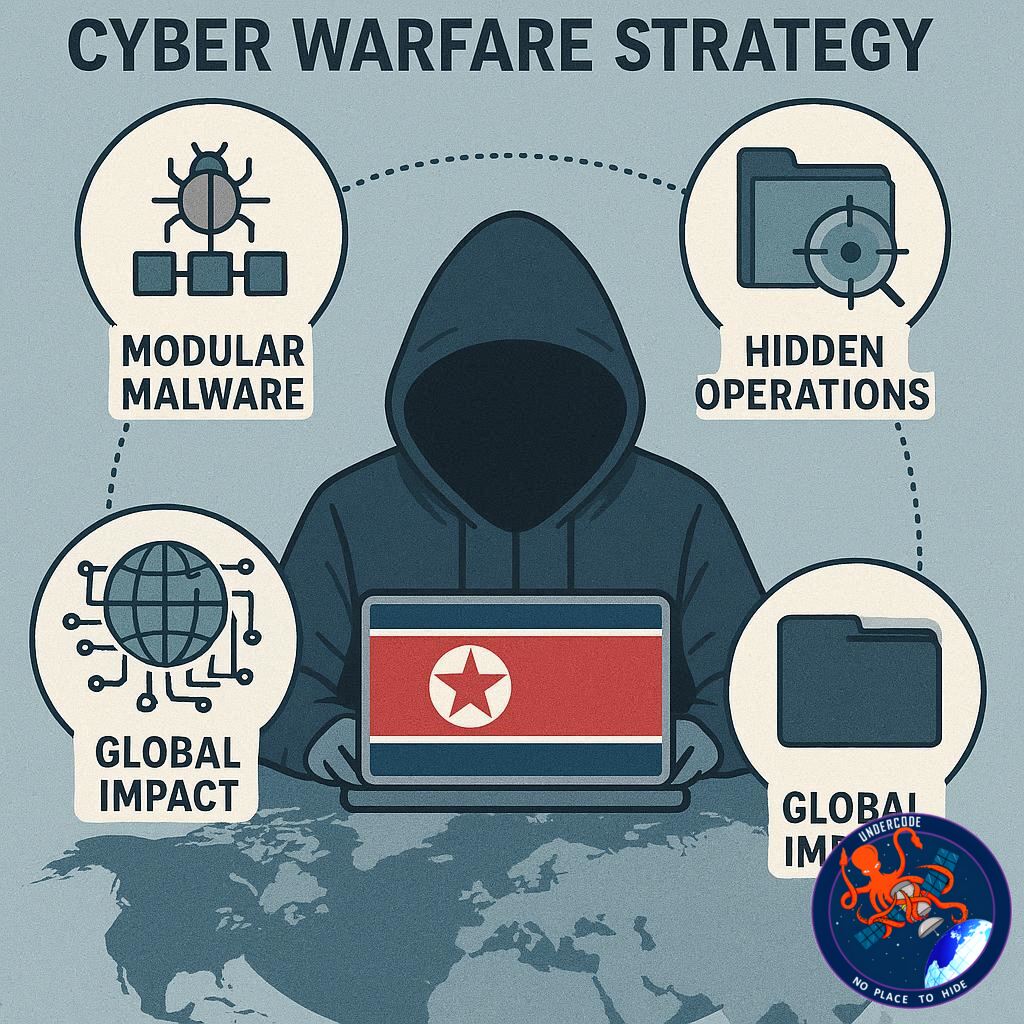
North Korea has steadily transformed itself into one of the most sophisticated cyber actors in the world. While traditionally perceived as an isolated nation with limited technological reach, its cyber capabilities tell a very different story. Behind the scenes, the country operates a highly adaptive and strategic cyber program that blends espionage, financial theft, and disruptive attacks into a cohesive digital warfare doctrine. What makes this program particularly dangerous is not just its effectiveness, but its design philosophy—modular, flexible, and deliberately fragmented to evade detection and attribution.
Recent cybersecurity observations reveal a system that is constantly evolving. Instead of relying on a fixed set of tools or predictable attack patterns, North Korean operators continuously rotate their malware, restructure their toolchains, and isolate operations into tightly controlled compartments. This approach allows them to remain elusive while executing a wide range of missions across the globe. From stealing sensitive government data to orchestrating large-scale financial cybercrimes, their activities demonstrate a level of coordination and innovation that rivals even the most advanced cyber powers.
At the same time, the broader cyber threat landscape continues to intensify. Alongside state-sponsored operations, incidents such as massive data leaks—like the exposure of hundreds of megabytes of Italian identity documents on Telegram—highlight how cybercrime, hacktivism, and geopolitical strategies are increasingly overlapping. This convergence makes attribution harder, response slower, and the overall threat environment far more complex.
the Original Report
The original report highlights the unique structure and operational methodology behind North Korea’s cyber program. Unlike traditional cyber operations that rely on consistent malware families and identifiable signatures, North Korea adopts a modular and mission-specific approach. This means that each operation is built using customized components tailored to a specific objective, whether it be espionage, financial theft, or disruption.
A key characteristic of this strategy is high tool churn. Malware tools are frequently updated, replaced, or abandoned entirely, making it difficult for cybersecurity analysts to track patterns over time. This constant evolution ensures that even if one tool is detected and neutralized, others can quickly take its place without compromising the broader operation.
Another defining feature is compartmentalization. Cyber operations are divided into isolated units, each responsible for a specific task. This limits the exposure of the entire system if one part is discovered. It also enhances operational security by ensuring that different teams or tools do not share unnecessary information, reducing the risk of leaks or traceability.
The report also emphasizes the multi-purpose nature of North Korea’s cyber activities. These operations are not limited to a single objective. Instead, they simultaneously support intelligence gathering, generate revenue through cybercrime, and enable disruptive actions against adversaries. This multi-layered strategy maximizes the effectiveness of each campaign while maintaining flexibility.
In addition to state-sponsored activity, the report references a separate incident involving a significant data breach. Over 500 megabytes of Italian identity documents—including passports, ID cards, and driver’s licenses—were leaked on a Telegram channel associated with a group calling itself “Anonymous Algeria.” Most of the leaked files date back to 2020–2021, suggesting that the data may have been collected over time and released strategically.
This incident underscores the broader challenges in the cybersecurity landscape. Data breaches are becoming more frequent and more severe, often involving sensitive personal information that can be exploited for identity theft, fraud, or further cyberattacks. The use of platforms like Telegram for distributing stolen data also highlights how easily such information can spread once it is compromised.
Overall, the report paints a picture of a highly dynamic and increasingly dangerous cyber environment. North Korea’s advanced tactics, combined with ongoing data breaches and global cybercrime activities, create a complex web of threats that are difficult to track, attribute, and mitigate.
What Undercode Says:
A Strategy Built for Longevity, Not Just Impact
North Korea’s modular cyber approach is not just about immediate success—it is about sustainability. By constantly rotating tools and isolating operations, the country ensures that its cyber capabilities can endure long-term pressure from international cybersecurity defenses. This is a strategic mindset that prioritizes resilience over short-term gains.
Tool Churn as a Weapon Against Attribution
Frequent changes in malware are not merely technical adjustments; they are deliberate tactics to confuse analysts. Attribution in cybersecurity often relies on recognizing patterns, but when those patterns are constantly shifting, even the most advanced threat intelligence systems struggle to keep up. This creates a significant advantage for attackers.
Compartmentalization Mirrors Intelligence Agencies
The use of compartmentalization reflects traditional intelligence agency practices. By separating operations into distinct units, North Korea reduces the risk of a single failure compromising the entire mission. This level of operational discipline suggests a highly organized and state-controlled cyber infrastructure.
Blurring the Line Between Crime and Warfare
One of the most striking aspects of North Korea’s cyber strategy is its dual-purpose nature. Financial cybercrime is not just about profit—it is a tool for sustaining the রাষ্ট্র’s broader objectives. This blurs the line between criminal activity and state-sponsored warfare, complicating international responses.
Data Leaks as Strategic Signals
The Italian identity document leak may not be directly linked to North Korea, but it reflects a growing trend: data breaches are increasingly being used as strategic tools. Whether for political messaging, intimidation, or financial gain, the release of sensitive data can have far-reaching consequences.
The Role of Platforms Like Telegram
The use of Telegram for distributing stolen data highlights the importance of communication platforms in modern cyber operations. These platforms provide anonymity, speed, and global reach, making them ideal for both cybercriminals and hacktivist groups.
Increasing Complexity of Cyber Threats
The convergence of state-sponsored attacks, hacktivism, and organized cybercrime creates a layered threat environment. This complexity makes it harder for organizations to defend themselves, as they must prepare for a wide range of attack vectors simultaneously.
Defensive Challenges for Organizations
Organizations are no longer facing isolated threats; they are dealing with adaptive adversaries. Traditional security measures, which rely on known signatures and static defenses, are becoming less effective against constantly evolving malware.
The Psychological Aspect of Cyber Warfare
Beyond technical damage, cyber operations also aim to create uncertainty and fear. The inability to attribute attacks or predict future threats can undermine confidence in digital systems and institutions.
Global Implications of Cyber Espionage
North Korea’s cyber activities are not confined to a single region. Their global reach means that governments, corporations, and individuals worldwide are potential targets. This elevates cybersecurity from a technical issue to a geopolitical concern.
Financial Motivation Driving Innovation
Sanctions and economic isolation have pushed North Korea to innovate in cyberspace. Cybercrime provides a relatively low-cost, high-reward alternative to traditional economic activities, fueling further investment in cyber capabilities.
Evolution of Malware Architecture
The modular design of malware allows attackers to reuse components across different operations. This not only speeds up development but also makes detection more difficult, as each configuration can appear unique.
Intelligence Gathering as a Core Objective
Espionage remains a central pillar of North Korea’s cyber strategy. By infiltrating networks and extracting sensitive information, the country gains insights that can inform both political and military decisions.
The Growing Importance of Cyber Hygiene
Incidents like the Italian data leak highlight the importance of basic cybersecurity practices. Weak security measures can lead to massive breaches, emphasizing the need for stronger protections at both organizational and individual levels.
A Shift Toward Persistent Threat Models
Rather than executing one-time attacks, North Korea appears to favor persistent engagement. This means maintaining long-term access to systems, allowing for continuous data collection and strategic positioning.
Fact Checker Results
Verification of North Korea’s Modular Cyber Strategy
✅ Multiple cybersecurity reports support the claim that North Korea uses modular and frequently changing malware to evade detection and attribution.
Accuracy of the Italian Data Leak Incident
✅ The reported leak of Italian identity documents aligns with known patterns of data breaches shared via Telegram channels in recent years.
Claims About Attribution Difficulty
❌ While attribution is challenging, advanced threat intelligence techniques can still identify patterns linking attacks to known groups over time.
Prediction
📊 Future Expansion of Modular Cyber Warfare
North Korea is likely to further refine its modular malware approach, integrating artificial intelligence to automate tool adaptation and evasion techniques.
📊 Rising Frequency of Large-Scale Data Leaks
Data breaches similar to the Italian incident will become more common, with stolen information increasingly used for both financial gain and political influence.
📊 Greater Global Focus on Cyber Defense Collaboration
Governments and private organizations will intensify collaboration, sharing intelligence to counter increasingly sophisticated and coordinated cyber threats.
🕵️📝✔️Let’s dive deep and fact‑check.
References:
Reported By: x.com
Extra Source Hub (Possible Sources for article):
https://www.digitaltrends.com
Wikipedia
OpenAi & Undercode AI
Image Source:
Unsplash
Undercode AI DI v2
Bing
🔐JOIN OUR CYBER WORLD [ CVE News • HackMonitor • UndercodeNews ]
📢 Follow UndercodeNews & Stay Tuned:
𝕏 formerly Twitter 🐦 | @ Threads | 🔗 Linkedin | 🦋BlueSky | 🐘Mastodon


