
Listen to this Post
Introduction: A Silent Breach That Changes the Rules
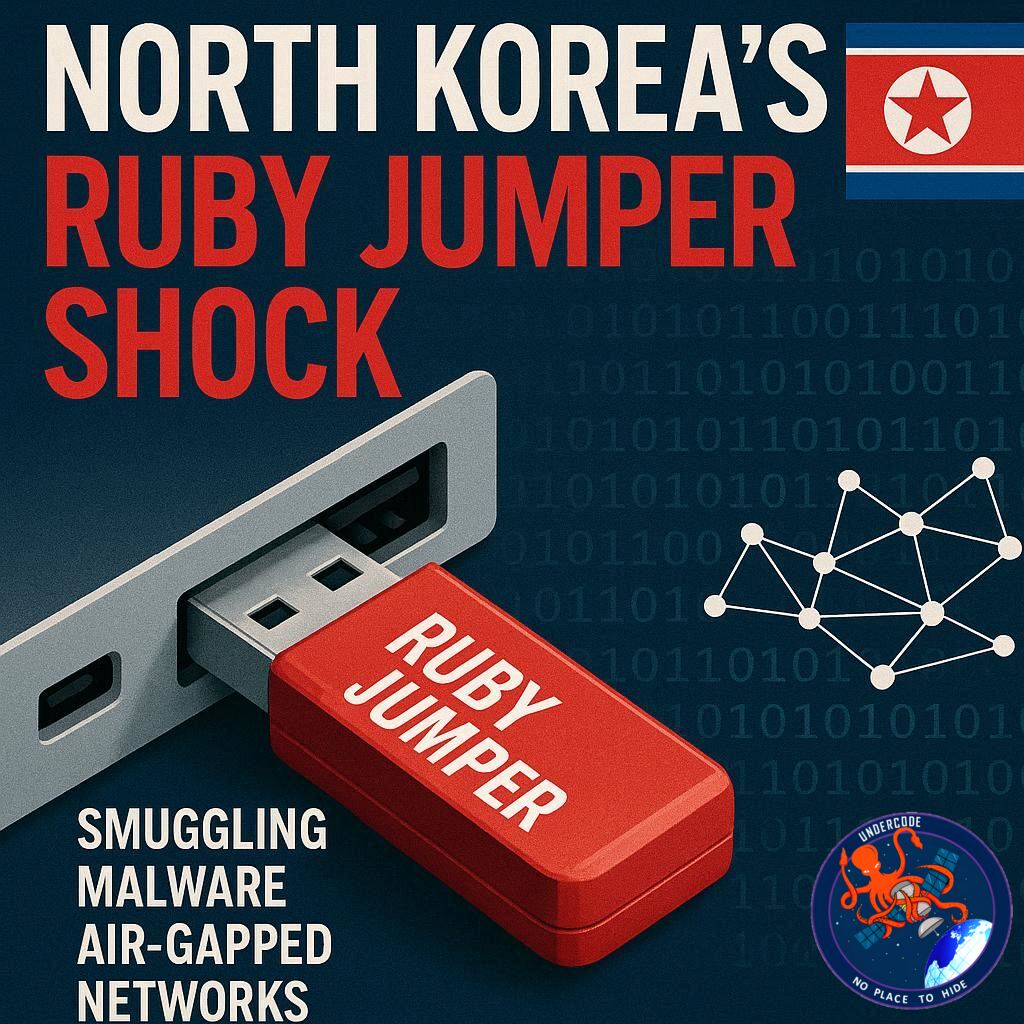
A new revelation in global cybersecurity has sent shockwaves through the threat-intelligence community. A North Korean state-linked hacking unit has been exposed running a covert campaign that bypasses one of the strongest defensive assumptions in security architecture: the safety of air-gapped networks. By abusing removable drives and a stealthy Ruby-based toolkit, the attackers demonstrated that even systems isolated from the internet are no longer off-limits. The operation, dubbed Ruby Jumper, highlights a dangerous evolution in nation-state cyber-espionage.
the Original Report
The disclosure emerged from a post shared by Cybersecurity News Everyday, referencing research published on hendryadrian.com. According to the report, the North Korea–aligned threat actor APT37 has launched a malware campaign known as Ruby Jumper.
The operation relies on removable media, such as USB drives, to infiltrate air-gapped systems—networks that are physically isolated from external connectivity. Once introduced, the malware deploys a toolkit that includes components called RESTLEAF and SNAKEDROPPER, along with a concealed Ruby runtime environment.
This hidden Ruby framework allows the attackers to execute malicious scripts discreetly, maintaining long-term persistence while avoiding detection. The malware is designed for covert surveillance, quietly harvesting data from compromised environments over extended periods.
The campaign demonstrates a strategic focus on high-value, high-security targets—likely government, military, or critical infrastructure systems—where air-gapped defenses are common. The use of removable drives suggests either insider access or carefully engineered social-engineering operations.
Overall, the report underscores a growing trend: nation-state actors are increasingly willing to invest in complex, low-noise intrusion methods that prioritize stealth and durability over speed or scale.
What Undercode Say:
The Ruby Jumper campaign is less about technical novelty and more about strategic intent. Air-gapped networks exist because organizations assume physical separation equals safety. APT37’s approach directly challenges that assumption, signaling a psychological as well as technical escalation.
First, the choice of Ruby is telling. Ruby is uncommon in enterprise malware, which helps the payload blend into environments where security tools are tuned to detect more familiar languages like C++, PowerShell, or Python. This “security by obscurity” approach increases dwell time and reduces analyst suspicion.
Second, removable-media attacks imply patience. These operations are slow, methodical, and intelligence-driven. Someone has to insert that drive. That suggests insider recruitment, supply-chain compromise, or long-term human intelligence operations supporting the cyber campaign.
Third, the modular toolkit design—separate droppers, loaders, and runtimes—points to a mature development lifecycle. This is not experimental malware. It is a maintained platform intended for reuse across multiple targets and campaigns.
From a geopolitical perspective, this aligns with North Korea’s long-standing cyber doctrine: asymmetric warfare. Lacking conventional economic and military reach, Pyongyang continues to invest heavily in cyber-espionage as a force multiplier.
Defensively, Ruby Jumper exposes a blind spot. Many organizations focus on perimeter security while underestimating physical access risks. USB controls, device monitoring, and behavioral analytics inside “secure” networks remain dangerously underdeveloped.
Most importantly, this campaign reinforces a hard truth: air-gapped does not mean attack-proof. It only raises the cost of intrusion—and nation-state actors like APT37 are clearly willing to pay that cost when the intelligence payoff is high enough.
Fact Checker Results
Claim verification: The attribution to APT37 is consistent with prior reporting on North Korean cyber-espionage.
Technical plausibility: USB-based infection of air-gapped systems is a documented and realistic attack vector.
Confidence level: Moderate to high, given the tooling details and historical behavior patterns of the actor.
Prediction
Looking ahead, campaigns like Ruby Jumper are likely to become more common, not less. As internet-facing defenses improve, elite threat actors will increasingly pivot toward physical-access malware, insider-assisted intrusions, and low-visibility programming languages. Organizations relying on air-gaps as a primary defense may soon discover they are preparing for the last war, not the next one.
🕵️📝✔️Let’s dive deep and fact‑check.
References:
Reported By: x.com
Extra Source Hub (Possible Sources for article):
https://www.quora.com
Wikipedia
OpenAi & Undercode AI
Image Source:
Unsplash
Undercode AI DI v2
Bing
🔐JOIN OUR CYBER WORLD [ CVE News • HackMonitor • UndercodeNews ]
📢 Follow UndercodeNews & Stay Tuned:
𝕏 formerly Twitter 🐦 | @ Threads | 🔗 Linkedin | 🦋BlueSky | 🐘Mastodon


