
Listen to this Post
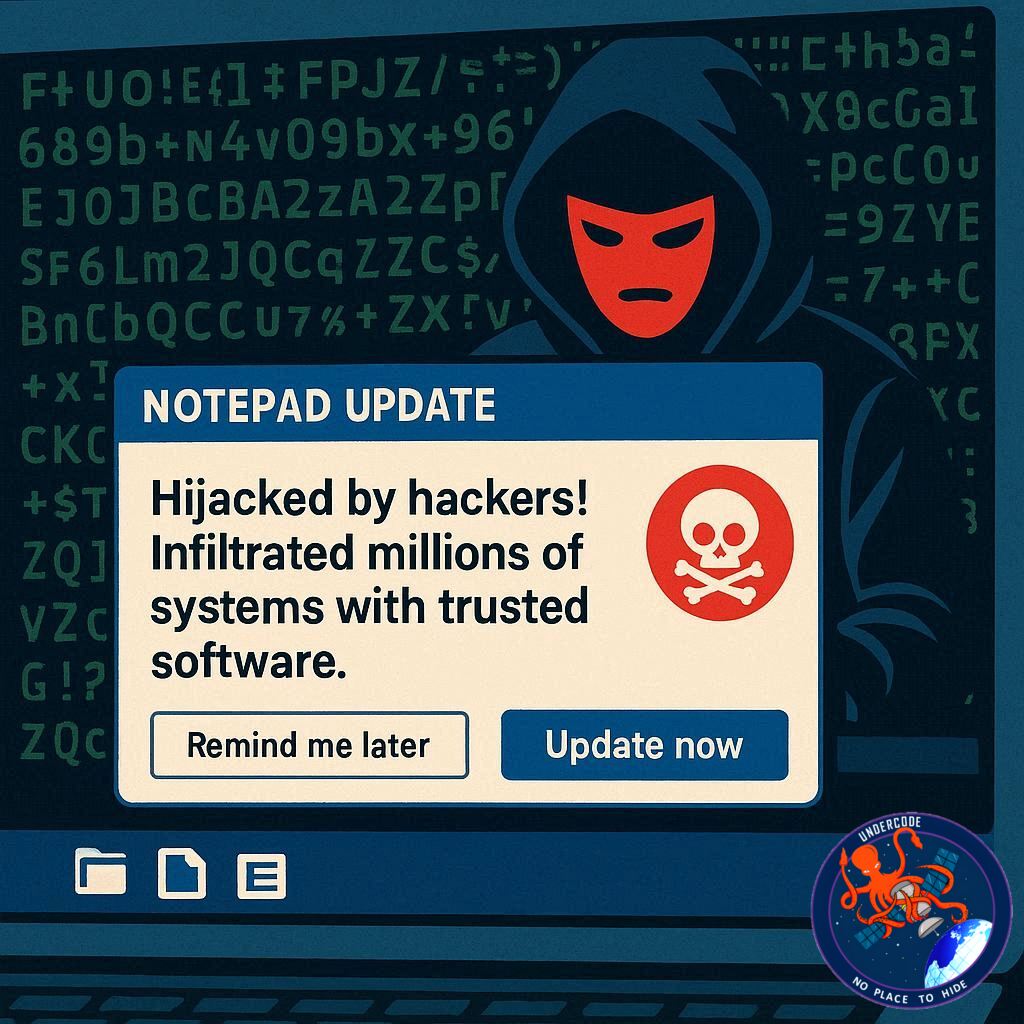
In a startling revelation shaking the software community, security researchers confirmed that the Notepad++ update system was compromised by state-sponsored hackers between June and December 2025. Millions of users who trusted the popular text editor could have unknowingly downloaded malicious payloads from the official update server, highlighting a growing threat in software supply chain attacks. This incident underscores the risks of even widely trusted software and the increasing sophistication of cyber espionage tactics.
Compromised Updates: A Deep Dive
From mid-2025, hackers associated with state-sponsored groups managed to infiltrate the Notepad++ update system, using the official WinGup update framework to deliver malware to users. The malicious payloads were cleverly disguised as legitimate updates, leveraging the platform’s automatic update mechanism. This attack went unnoticed for months, allowing the threat actors to potentially access sensitive information from affected systems without detection.
The breach specifically impacted versions prior to 8.8.9, which lacked enhanced certificate and signature verification. By exploiting weaknesses in the XMLDSig framework, attackers could sign malicious updates as if they were legitimate, bypassing traditional security checks. Notably, cybersecurity researchers traced the activity back to actors operating from China, adding a geopolitical dimension to the technical breach.
Users who installed updates during this period were at risk of remote code execution, data exfiltration, and potential persistence of malware on their devices. The incident serves as a warning that supply chain attacks are increasingly targeting software that millions rely on daily, from development tools to office applications.
Notepad++ developers have since patched the vulnerability in version 8.8.9, introducing mandatory certificate and signature verification to prevent unsigned updates from executing. While this mitigates future attacks, it cannot retroactively protect systems already compromised, emphasizing the need for robust endpoint detection and timely security audits.
This compromise is part of a broader trend where state-sponsored groups exploit trusted software to infiltrate organizations and individuals. Experts warn that reliance on automatic updates, while convenient, can create hidden risks if verification mechanisms are weak or bypassed.
What Undercode Says: Analyzing the Fallout and Implications
Supply Chain Security Must Be Prioritized
The Notepad++ breach is a textbook example of a supply chain attack. While antivirus solutions and firewalls remain critical, they are often powerless against software updates that are digitally signed but malicious. Organizations must adopt multi-layered security strategies, including rigorous code-signing validation and regular integrity audits for software dependencies.
Implications for Developers and Users
This incident is a wake-up call for developers worldwide. Relying solely on third-party frameworks like WinGup without independent verification introduces unacceptable risk. For end-users, even small development tools can become attack vectors. Users should enable automatic signature verification and monitor for unusual system behavior after updates.
Geopolitical Underpinnings
Attributing this attack to Chinese state-sponsored actors adds geopolitical complexity. Such incidents are increasingly used for espionage, intellectual property theft, or even strategic disruption of critical infrastructure. Governments and corporations alike must consider cyber defense not just as IT security, but as national security.
Future of Update Security
The push for secure update systems is now more urgent than ever. Techniques like cryptographic signing, multi-factor verification for updates, and anomaly detection in network traffic are no longer optional—they are essential. Developers of widely-used software must prioritize transparency and verification, ensuring users can trust that every update is safe.
Impact on the Open Source Community
Open-source projects like Notepad++ rely heavily on trust. A compromise of this magnitude could shake community confidence and affect adoption. It underscores the need for community-driven auditing, as collective scrutiny often detects vulnerabilities faster than individual organizations can.
Economic and Productivity Costs
Organizations that relied on compromised Notepad++ updates may face productivity losses, potential intellectual property exposure, and remediation costs. Even with patches, forensic investigations, endpoint cleaning, and employee guidance create significant operational overhead.
Lessons for Cybersecurity Training
This breach illustrates that cybersecurity training must extend beyond end-user caution—it must also include secure software development practices. Developers need education on supply chain risks, cryptography for signing updates, and monitoring for unexpected behavior in update pipelines.
A Wake-Up Call for the Industry
Ultimately, the Notepad++ compromise is more than a software flaw—it is a harbinger of how attackers are evolving. Software providers, organizations, and governments must collaborate to fortify trust chains, ensuring that the very tools designed to enhance productivity do not become instruments of espionage.
🔍 Fact Checker Results
✅ The Notepad++ update system was compromised between June and December 2025.
✅ Version 8.8.9 introduced certificate and signature verification to prevent unsigned updates.
❌ No evidence suggests the attack affected non-WinGup update frameworks.
📊 Prediction
The Notepad++ breach is likely to accelerate adoption of stricter software supply chain security measures across open-source and commercial projects. Expect increased investment in automated update verification tools, wider implementation of cryptographically signed updates, and heightened government scrutiny of software critical to development and infrastructure. Future attacks may shift toward less obvious but widely-used utilities, making supply chain security a top priority in 2026 and beyond.
If you want, I can also create a visual timeline showing how the Notepad++ breach unfolded, which could make this article even more compelling for readers. Do you want me to do that?
🕵️📝✔️Let’s dive deep and fact‑check.
References:
Reported By: x.com
Extra Source Hub (Possible Sources for article):
https://www.linkedin.com
Wikipedia
OpenAi & Undercode AI
Image Source:
Unsplash
Undercode AI DI v2
Bing
🔐JOIN OUR CYBER WORLD [ CVE News • HackMonitor • UndercodeNews ]
📢 Follow UndercodeNews & Stay Tuned:
𝕏 formerly Twitter 🐦 | @ Threads | 🔗 Linkedin | 🦋BlueSky | 🐘Mastodon


