
Listen to this Post
Introduction
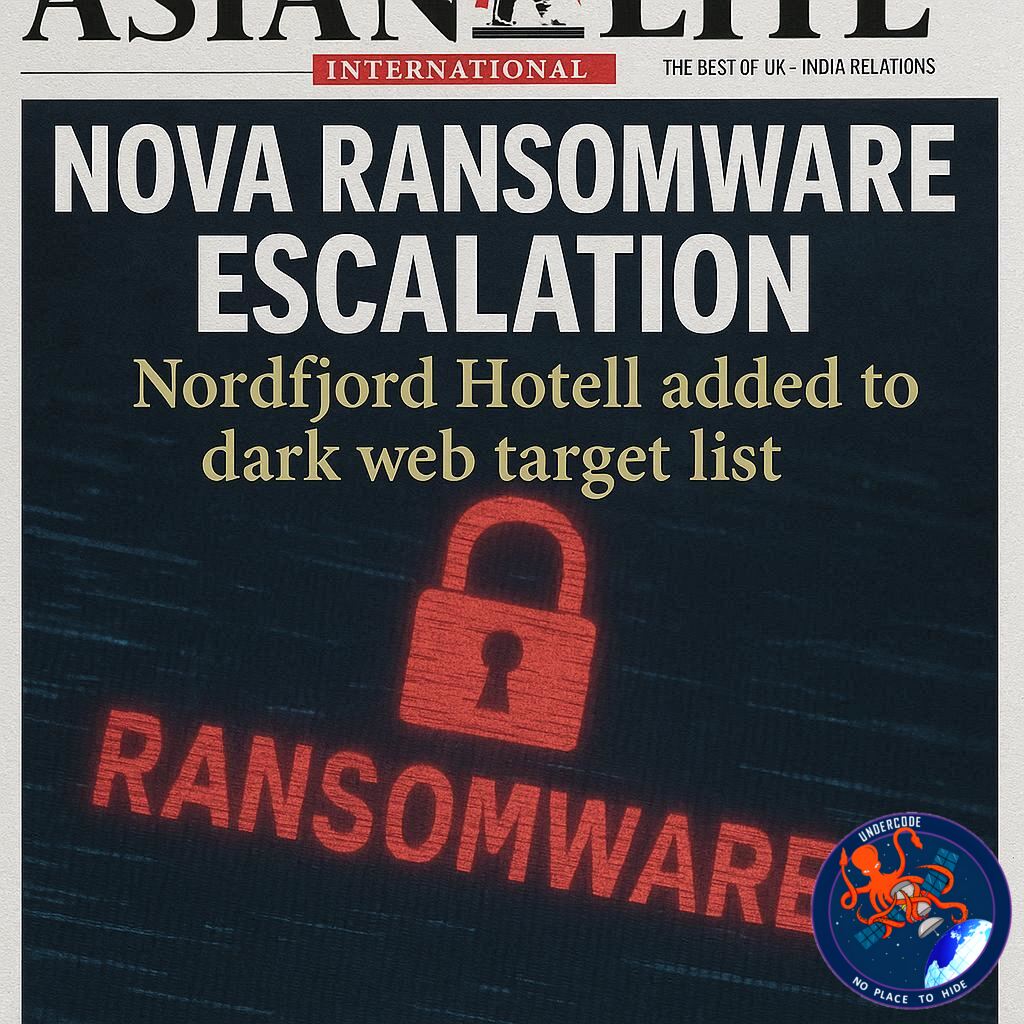
The global ransomware landscape continues to evolve rapidly as threat groups expand their targeting scope across media organizations and hospitality sectors. The latest activity attributed to the “Nova” ransomware group highlights an ongoing pattern of digital extortion campaigns that increasingly rely on public victim listings to pressure organizations into compliance. According to threat intelligence monitoring, two additional entities—Asian Lite International and Nordfjord Hotell—have been added to Nova’s victim roster, signaling both geographic and sector diversity in its operations. This development underscores how ransomware ecosystems are becoming more aggressive, structured, and publicly demonstrative in their attack cycles.
Reported Cyber Incident (Approx. 30-line narrative)
The Nova ransomware group has reportedly expanded its list of targeted victims, with two newly identified organizations being publicly disclosed through dark web monitoring channels. The first victim, Asian Lite International, appears to have been added following a confirmed ransomware-related intrusion event detected by cybersecurity analysts tracking illicit network activity. The second victim, Nordfjord Hotell, a hospitality establishment, was similarly listed shortly after, suggesting a coordinated or sequential campaign of data compromise.
Threat intelligence sources indicate that these listings were identified by monitoring systems specializing in ransomware leak sites and underground communication channels. Nova, a relatively active ransomware actor, is known for publicly naming victims as part of its pressure strategy, often implying data theft or encryption incidents. The timing of the disclosures—within a short interval—suggests either an automated victim posting system or a rapidly executed dual-compromise operation.
Both victims span different industries, with media and hospitality often being attractive ransomware targets due to their reliance on continuous digital operations and sensitive customer data. While no explicit confirmation of data volume or encryption scope has been provided, the public listing alone typically signals an ongoing extortion attempt. In such cases, ransomware groups demand payment in exchange for decryption keys or to prevent the release of stolen information.
The monitoring team behind the detection specializes in aggregating indicators of compromise (IOCs) and command-and-control (C2) activity, which helps attribute attacks to known ransomware families. Nova’s inclusion in this dataset reinforces its presence in the active threat ecosystem.
The exposure of Asian Lite International and Nordfjord Hotell aligns with a broader trend of ransomware groups diversifying targets across regions rather than focusing solely on high-value corporate entities. This reflects a shift toward opportunistic exploitation of weaker cybersecurity infrastructures.
No official confirmation from the affected organizations has been made public at the time of reporting. However, historically, such listings often precede either ransom negotiations or the release of sample data to validate the attackers’ claims.
Cybersecurity experts generally interpret early victim listing as a psychological pressure tactic designed to accelerate ransom payments. By publicly naming organizations, threat actors attempt to damage reputation and create urgency for response.
This incident contributes to an ongoing pattern of ransomware groups leveraging public exposure as part of their operational model, combining technical intrusion with reputational coercion.
What Undercode Say:
Ransomware Visibility as a Strategic Weapon
The Nova group’s decision to publicly list victims reflects a well-established ransomware tactic where exposure itself becomes part of the attack. Instead of remaining silent, modern ransomware operations increasingly rely on visibility to amplify pressure. This shift transforms cyberattacks into hybrid operations combining technical disruption with psychological warfare. The inclusion of Asian Lite International suggests that media organizations remain high-value symbolic targets due to their influence and visibility.
Dual-Sector Targeting Indicates Opportunistic Expansion
The pairing of a media entity and a hospitality business highlights Nova’s lack of sector restriction. This suggests opportunistic scanning rather than narrowly targeted espionage campaigns. Hotels like Nordfjord Hotell often store sensitive guest data, making them attractive for quick monetization attacks. Meanwhile, media outlets provide reputational leverage, which attackers exploit for faster ransom negotiations. This dual-sector strategy increases the probability of successful extortion outcomes.
Dark Web Infrastructure Enhances Operational Reach
Nova’s activity, as observed through dark web monitoring systems, demonstrates how ransomware groups rely on decentralized infrastructure for communication and victim publication. These leak sites function as public-facing dashboards for cybercrime, enabling attackers to scale intimidation globally. The use of structured victim announcements indicates operational maturity, suggesting that Nova is not a fragmented group but rather an organized ransomware-as-a-service operation.
Timing Patterns Suggest Coordinated Campaign Execution
The near-simultaneous listing of both victims suggests a coordinated attack wave rather than isolated incidents. Such timing often points to either shared vulnerabilities exploited across multiple targets or an internal scheduling mechanism for victim publication. This reflects an industrialized model of cyber extortion where attacks are pre-planned and executed in batches to maximize impact and reduce detection windows.
Threat Intelligence Validation Strengthens Attribution Confidence
The identification by ThreatMon-style monitoring systems adds credibility to the attribution of these incidents to the Nova group. These platforms correlate ransomware activity with IOC patterns, strengthening confidence in linking attacks to known threat actors. This reduces ambiguity in the cyber threat landscape and allows defenders to map attacker behavior more precisely over time.
🔍 Fact Checker Results
Verification of Group Activity Claims
The claim that Nova ransomware added victims aligns with typical ransomware leak site behavior, though direct confirmation from the victims themselves is not publicly available.
Assessment of Threat Intelligence Attribution
Threat intelligence platforms frequently detect and report such listings accurately, but attribution should always be considered probabilistic rather than absolute without forensic confirmation.
Accuracy of Victim Listing Interpretation
Public naming of victims is consistent with ransomware extortion tactics, making the report structurally credible within known cybercrime patterns.
📊 Prediction: Future Escalation Trajectory of Nova Operations
The current activity pattern suggests that Nova will likely continue expanding its victim disclosures across multiple industries in short time intervals. If operational momentum continues, increased targeting of mid-tier organizations such as regional media outlets and hospitality groups is expected. This approach indicates a strategy focused on volume-based extortion rather than high-profile strategic intrusions. Over time, such groups often escalate from public naming to actual data dumps if ransom demands are not met, intensifying pressure cycles and increasing global cybersecurity risk exposure.
🕵️📝Let’s dive deep and fact‑check.
References:
Reported By: x.com
Extra Source Hub (Possible Sources for article):
https://www.github.com
Wikipedia
OpenAi & Undercode AI
Image Source:
Unsplash
Undercode AI DI v2
Bing
🔐JOIN OUR CYBER WORLD [ CVE News • HackMonitor • UndercodeNews ]
📢 Follow UndercodeNews & Stay Tuned:
𝕏 formerly Twitter 🐦 | @ Threads | 🔗 Linkedin | 🦋BlueSky | 🐘Mastodon


