
Listen to this Post
Introduction
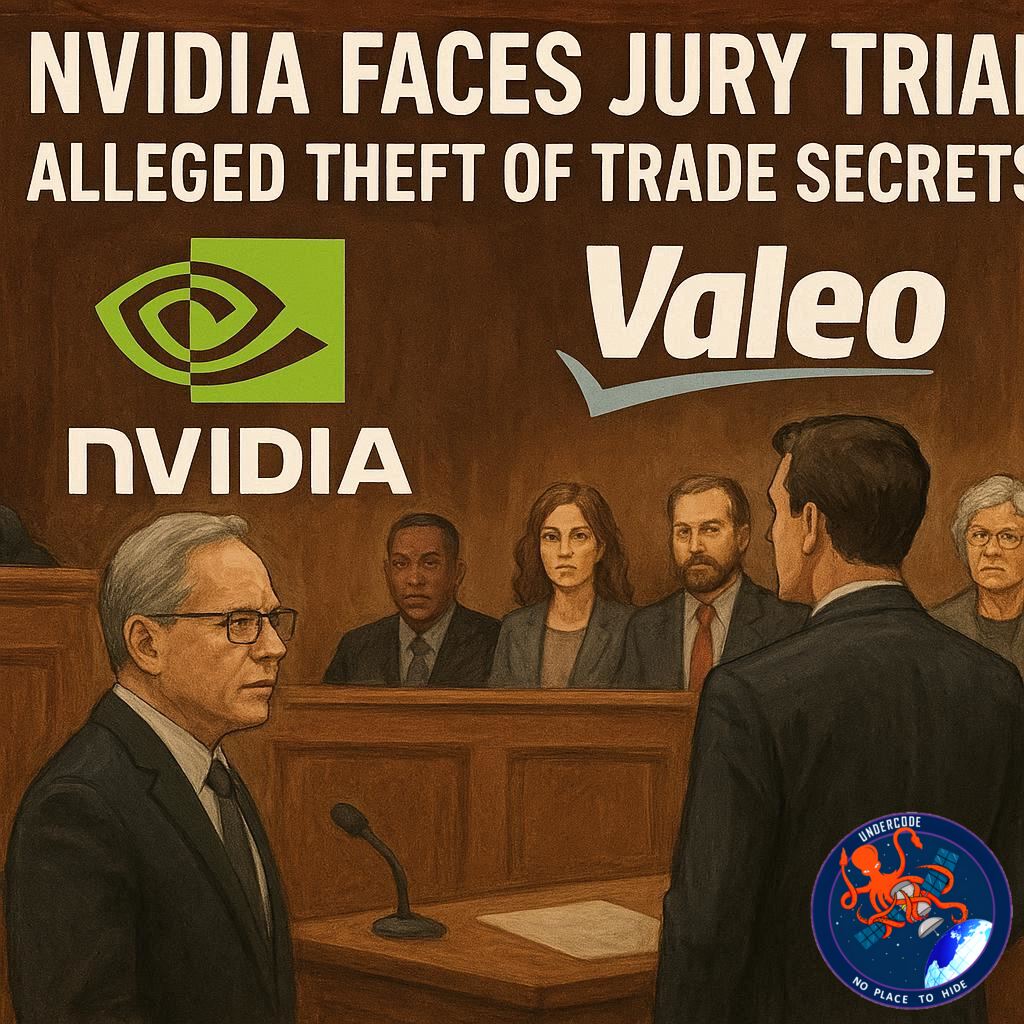
A high-stakes legal battle is unfolding in the United States, placing Nvidia, one of the world’s most influential tech giants, under intense scrutiny. The company is facing a jury trial over accusations that it benefited from confidential technology stolen from European auto parts supplier Valeo SE. At the heart of the case lies a former Valeo engineer who later joined Nvidia, allegedly bringing with him proprietary code that may have fast-tracked Nvidia’s development of parking assistance systems. While Nvidia has firmly denied wrongdoing, the ruling by a U.S. District Judge ensures this case will move to trial in November, potentially reshaping industry conversations about intellectual property protection, corporate responsibility, and the fierce competition within the automotive tech sector.
Case Summary
According to a Bloomberg report, U.S. District Judge Noel Wise in California ruled that sufficient evidence exists to suggest Nvidia may have improperly benefited from Valeo’s trade secrets. The lawsuit, officially titled Valeo Schalter und Sensoren GmbH v. Nvidia Corp., 23-cv-05721, will be heard in the U.S. District Court for the Northern District of California (San Jose).
In a detailed 15-page ruling, Judge Wise highlighted that Valeo presented convincing evidence showing Nvidia’s parking assistance technology developed with unusual speed shortly after the engineer in question joined the company. More importantly, code analysis revealed “numerous functionalities directly paralleling Valeo’s stolen code.” However, the judge dismissed three of Valeo’s seven original claims, leaving four allegations strong enough to proceed to trial.
The origins of this legal saga date back to 2021, during a joint project between Valeo and Nvidia for Mercedes-Benz. Valeo engineers allegedly discovered their own source code on the computer of an employee, Mohammad Moniruzzaman, after he had transitioned from Valeo to Nvidia. They reportedly managed to capture a screenshot before the code was closed, sparking suspicion and eventually leading to legal action.
Valeo officially filed its lawsuit in San Jose in 2023, accusing Nvidia of misappropriating its trade secrets. Judge Wise’s recent decision now paves the way for a November trial, where a jury will weigh in on the claims.
Nvidia’s Defense
Nvidia has denied any wrongdoing. The company claims that once it learned of Moniruzzaman’s misconduct, it terminated his employment and rolled back his contributions to the project. Nvidia also points to previous legal proceedings in Germany, where Moniruzzaman was convicted of infringing business secrets, but where Valeo itself lost its case against Nvidia and was ordered to cover costs.
In a statement to Bloomberg, an Nvidia spokesperson expressed confidence, saying:
“Valeo already lost its case in Germany, and the German court ordered Valeo to pay our costs. We have no reason to believe the outcome in California will be any different, and will keep our focus where it should be — developing groundbreaking new technologies for our customers.”
What Undercode Say:
This lawsuit illustrates the razor-thin line companies walk in a hyper-competitive tech ecosystem where innovation and secrecy are equally vital. Automotive technology, especially advanced driver-assistance systems (ADAS), is one of the most lucrative growth areas for companies like Nvidia. A proven edge in this space could mean dominance in future mobility markets, making trade secrets extraordinarily valuable.
From an ethical standpoint, the case raises pressing questions. If Valeo’s accusations are correct, Nvidia may have gained an unfair head start, jeopardizing not only Valeo’s competitive position but also eroding trust in industry partnerships. Companies often collaborate on joint projects with the expectation that intellectual property will remain secure. Breaches like this create chilling effects, discouraging future collaborations.
For Nvidia, the optics are just as important as the legal outcome. Even if the company prevails in court, the narrative that it may have benefited from stolen technology could tarnish its reputation. This is particularly risky at a time when Nvidia is aggressively expanding into automotive, AI, and robotics markets, where credibility and trust are as important as technical expertise.
From Valeo’s perspective, pursuing the lawsuit is a calculated risk. The company lost in Germany, but U.S. courts may interpret intellectual property rights differently, especially with a jury trial where storytelling and evidence presentation play critical roles. By securing a trial, Valeo signals to the industry that it is willing to defend its innovations at all costs — a stance that may deter competitors from even considering opportunistic behavior in the future.
The case also highlights the vulnerability of global corporations when employees move between competitors. Engineers are often at the frontlines of innovation, and the temptation to bring knowledge — whether consciously or subconsciously — from one employer to another is ever-present. This creates a legal gray area: where does personal expertise end and trade secret theft begin? The trial may set new precedents for how courts view this fine line.
Economically, a verdict against Nvidia could carry significant financial consequences. Beyond damages, it might trigger closer regulatory scrutiny over its practices and partnerships. Investors could grow wary, especially if the case suggests systemic lapses in Nvidia’s internal safeguards. Conversely, a victory for Nvidia would not only neutralize Valeo’s claims but also strengthen Nvidia’s credibility as a trustworthy partner in high-stakes collaborations.
Ultimately, the trial is not just about a single engineer or a set of code snippets — it is about the broader battle for dominance in the automotive tech industry. With AI-driven mobility poised to redefine transportation, the stakes could not be higher.
🔍 Fact Checker Results
✅ Valeo did file the lawsuit in San Jose, California, in 2023.
✅ Nvidia confirmed the dismissal of the engineer and denial of using the code.
❌ Not all trade secret claims were upheld; only four of seven are moving forward.
📊 Prediction
The trial in November is likely to generate massive attention, not just from legal and tech circles but from investors and automakers as well. If the jury finds Nvidia liable, the company may face financial penalties and reputational damage, slowing its automotive ambitions. However, given Nvidia’s prior legal victory in Germany and its swift firing of the engineer, the company has a strong chance of prevailing again. Regardless of the outcome, this case will serve as a landmark in defining how trade secrets are protected in cross-border collaborations, and it may push companies to tighten security measures when employees transition between rivals.
🕵️📝✔️Let’s dive deep and fact‑check.
References:
Reported By: timesofindia.indiatimes.com
Extra Source Hub:
https://www.facebook.com
Wikipedia
OpenAi & Undercode AI
Image Source:
Unsplash
Undercode AI DI v2
🔐JOIN OUR CYBER WORLD [ CVE News • HackMonitor • UndercodeNews ]
📢 Follow UndercodeNews & Stay Tuned:
𝕏 formerly Twitter 🐦 | @ Threads | 🔗 Linkedin | 🦋BlueSky | 🐘Mastodon


