
Listen to this Post
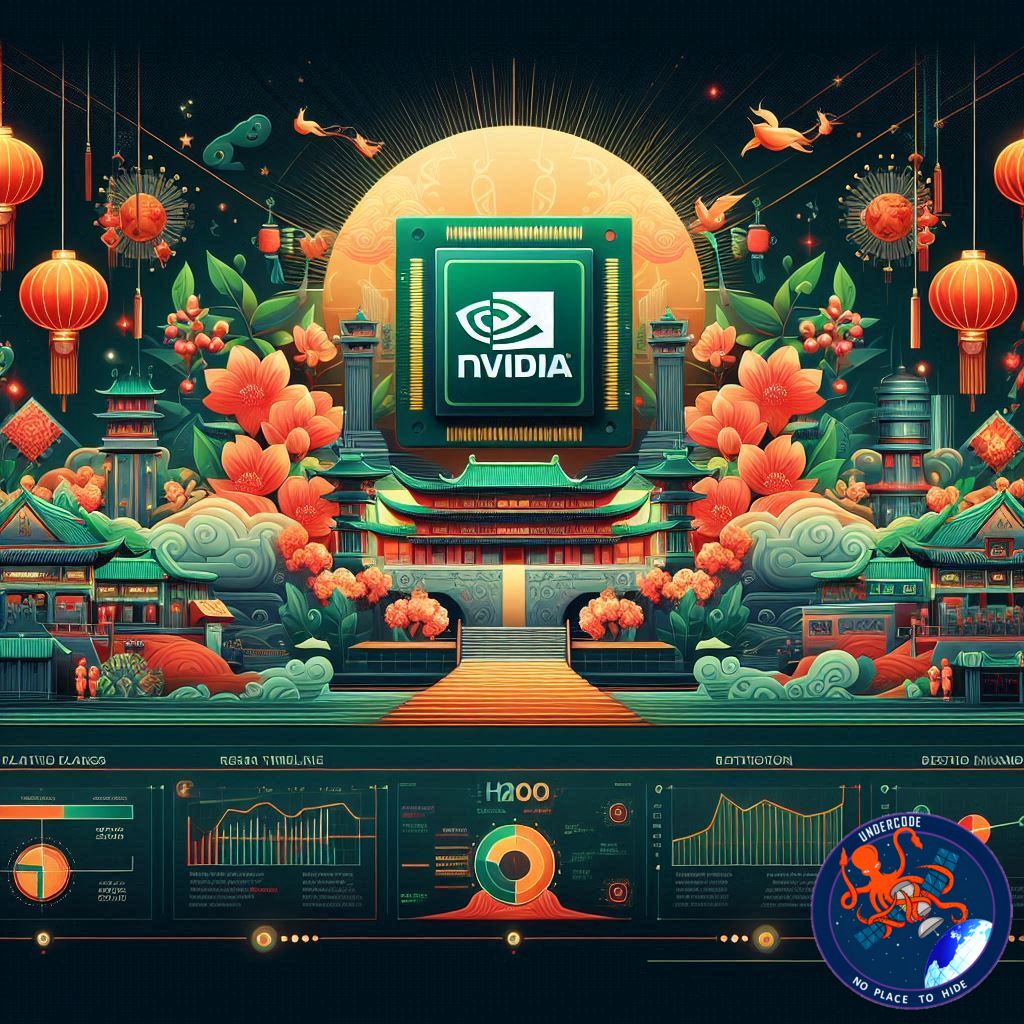
A Sudden Shift in the Global AI Chip Landscape
Nvidia is preparing to resume shipments of one of its most powerful artificial intelligence chips to China, marking a significant change in U.S. technology policy toward Beijing. According to multiple sources cited by Reuters, the company aims to begin delivering its H200 AI chip modules to Chinese customers by mid-February, just ahead of the Lunar New Year holiday. If approved, the move could reshape the balance of AI computing power between the United States and China at a critical moment in the global technology race.
Summary of the Original
Early Shipment Timeline Revealed
Nvidia has informed Chinese clients that it intends to start shipping H200 AI chips to China before mid-February. The plan targets delivery just ahead of the Lunar New Year, a period when logistics slow significantly across the region.
Initial Orders From Existing Inventory
The company plans to fulfill early orders using existing stock. These shipments are expected to include between 5,000 and 10,000 chip modules, translating to roughly 40,000 to 80,000 individual H200 AI chips.
Expansion Plans Already Discussed
Beyond the initial batch, Nvidia has indicated it may add new production capacity for H200 chips. Orders tied to that expanded capacity would reportedly open in the second quarter of 2026.
Approval Still Not Guaranteed
Despite Nvidia’s preparations, uncertainty remains high. Chinese authorities have not yet approved any purchases of the H200 chips, and government decisions could delay or block the plan entirely.
Dependence on Government Authorization
Sources close to the discussions emphasized that the entire strategy depends on regulatory approval. Without an official green light from Beijing, shipments cannot proceed.
Nvidia’s Official Position
Nvidia stated that it continuously manages its supply chain and emphasized that licensed sales of H200 chips to authorized Chinese customers would not impact supply for U.S.-based clients.
Silence From Chinese Regulators
China’s Ministry of Industry and Information Technology did not immediately respond to requests for comment regarding the potential shipments.
Trump Administration Policy Shift
The planned deliveries would mark the first H200 shipments to China since U.S. President Donald Trump announced that Washington would permit such sales, subject to a 25% fee.
Licensing Review Underway
Reuters previously reported that the Trump administration launched an inter-agency review of license applications for H200 sales to China, aligning with Trump’s stated policy direction.
Reversal of Biden-Era Restrictions
This move represents a sharp departure from the previous Biden administration, which had banned advanced AI chip exports to China over national security concerns.
H200 Still in High Demand
Although Nvidia has since introduced newer Blackwell chips, the H200—part of the Hopper architecture—remains widely used in AI workloads and continues to deliver strong performance.
Supply Constraints Remain
Nvidia has shifted most of its production focus to Blackwell and its upcoming Rubin line, making H200 chips relatively scarce on the global market.
China’s Domestic Chip Push
China has been accelerating efforts to build its own AI chip industry, but domestic alternatives still lag behind the H200 in raw performance.
Fears of Slowed Domestic Progress
Some policymakers worry that allowing H200 imports could undermine local chipmakers by reducing incentives to adopt domestic alternatives.
Emergency Meetings in Beijing
Chinese officials reportedly held emergency meetings earlier this month to evaluate whether the shipments should be approved.
Possible Conditions on Imports
One proposal under consideration would require Chinese buyers to bundle H200 purchases with a specific ratio of domestically produced chips.
Big Tech Interest
Major Chinese technology firms, including Alibaba Group and ByteDance, have expressed interest in acquiring H200 chips.
Performance Gap With H20
For these companies, H200 chips would offer computing power roughly six times greater than Nvidia’s H20, a downgraded processor designed to comply with earlier U.S. restrictions.
What Undercode Say:
A Calculated Opening, Not a Free Pass
Nvidia’s planned H200 shipments do not represent a full reopening of the China market, but rather a carefully managed test. The reliance on existing inventory suggests caution, limiting exposure if political winds shift again.
Trump’s Transactional Tech Policy
The 25% fee attached to H200 sales reflects a transactional approach to technology exports. Rather than outright bans, access is being monetized, turning AI chips into both economic and diplomatic tools.
Strategic Value of the H200
Despite being a previous-generation product, the H200 remains highly competitive. Its memory bandwidth and inference performance still outperform most Chinese-made alternatives, making it strategically valuable.
Nvidia’s Inventory Management Play
With production capacity largely allocated to Blackwell and Rubin, clearing H200 inventory through licensed exports may help Nvidia optimize margins without disrupting its next-generation roadmap.
China’s Dilemma: Power vs Independence
Beijing faces a difficult choice. Allowing H200 imports could immediately boost AI capabilities but risks slowing momentum behind domestic chip development.
Bundling as a Policy Compromise
The proposal to bundle H200 purchases with domestic chips signals a hybrid strategy: gain short-term performance while forcing adoption of local hardware.
Pressure From Chinese Tech Giants
Companies like Alibaba and ByteDance operate at scales where access to top-tier AI hardware directly affects competitiveness. Their lobbying power may influence final government decisions.
U.S. Confidence in Technological Lead
Allowing H200 exports suggests confidence that newer Nvidia architectures—such as Blackwell—keep the U.S. well ahead in the AI arms race.
Security Concerns Haven’t Disappeared
While policy has shifted, national security concerns remain unresolved. Licensing reviews and volume limits indicate continued scrutiny over how these chips are used.
A Signal to Global Markets
This move sends a message to allies and competitors alike: AI chip policy is no longer static, and access can be renegotiated based on political leadership.
Risks of Policy Volatility
For Nvidia, the biggest risk is unpredictability. Long-term capacity planning becomes difficult when export rules can change with each administration.
Implications for Global AI Supply Chains
If approved, these shipments may encourage other chipmakers to seek similar exemptions, potentially reshaping global AI hardware flows.
China’s Catch-Up Timeline
Even with H200 access, China remains behind the cutting edge. The gap may narrow operationally, but architectural leadership stays with Nvidia.
Market Reaction Likely Muted, for Now
Because volumes are limited, immediate financial impact may be modest. The real significance lies in precedent, not shipment size.
A Test Case for Future Chips
How regulators handle the H200 could set the tone for decisions involving more advanced processors down the line.
Fact Checker Results
Source Verification
The article is based on reporting from Reuters, a well-established and reliable international news agency. ✅
Policy Context Accuracy
Details regarding the Trump administration’s policy shift and licensing reviews align with previously reported government actions. ✅
Technical Claims Assessment
Statements about the H200’s performance relative to the H20 and domestic Chinese chips are consistent with industry benchmarks. ✅
Prediction
Gradual Approval With Conditions
China is likely to approve limited H200 shipments under strict conditions, possibly including mandatory bundling with domestic chips. 🔍
No Return to Open Trade
Despite approvals, broad unrestricted AI chip exports to China are unlikely to resume in the near term. ⚠️
Policy Whiplash Risk Remains
Future U.S. political changes could once again reshape AI chip export rules, keeping long-term stability uncertain. 🔮
🕵️📝✔️Let’s dive deep and fact‑check.
References:
Reported By: www.deccanchronicle.com
Extra Source Hub (Possible Sources for article):
https://www.github.com
Wikipedia
OpenAi & Undercode AI
Image Source:
Unsplash
Undercode AI DI v2
Bing
🔐JOIN OUR CYBER WORLD [ CVE News • HackMonitor • UndercodeNews ]
📢 Follow UndercodeNews & Stay Tuned:
𝕏 formerly Twitter 🐦 | @ Threads | 🔗 Linkedin | 🦋BlueSky | 🐘Mastodon


