
Listen to this Post
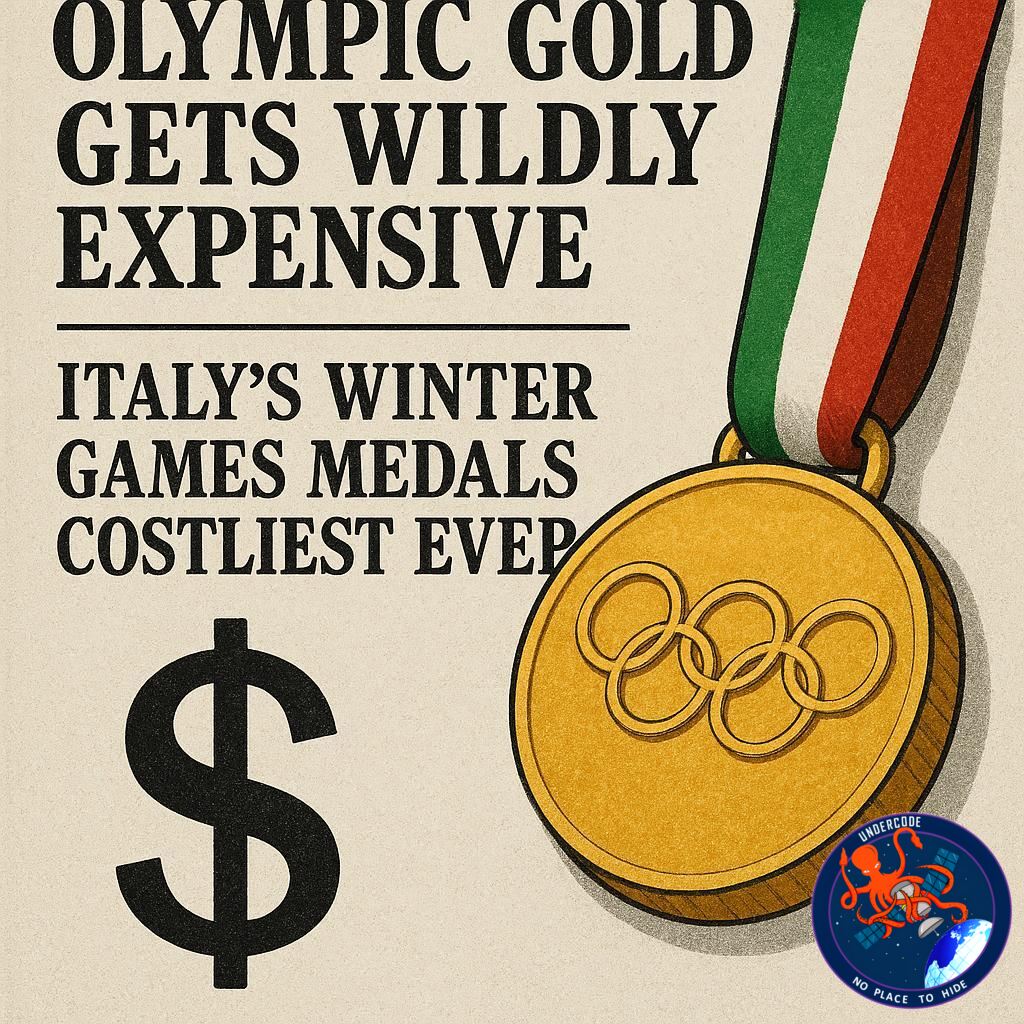
A Podium Worth a Fortune
When athletes step onto the podium at the Winter Olympics in Italy, they won’t just be celebrating sporting glory — they’ll be holding the most expensive medals in Olympic history, at least in raw financial terms. A historic surge in precious metal prices has quietly transformed Olympic hardware into miniature commodities.
The Hidden Economics Behind Olympic Glory
More than 700 medals — gold, silver, and bronze — are being awarded across winter sports ranging from alpine skiing and ice hockey to curling and figure skating. While the emotional value of these medals is priceless, the financial value has never been higher.
Precious Metals Prices Go Parabolic
Since the Summer Olympics in Paris in July 2024, global spot prices for gold and silver have exploded. Gold prices have risen by roughly 107%, while silver has surged by an eye-watering 200%, according to market data cited by FactSet.
Gold Medals Are Now Truly Golden
Thanks to that rally, today’s Olympic gold medals are worth around $2,300 USD based on metal content alone — more than double their estimated value during the Paris Games. Silver medals have seen an even more dramatic jump.
Silver Takes the Spotlight
Second-place silver medals are now valued at nearly $1,400 USD, roughly three times what they were worth just two years ago. Strong retail investor demand has played a major role in silver’s explosive performance.
Why Investors Are Hoarding Metals
Gold’s rise has been driven largely by central banks adding to their reserves and investors fleeing to safe-haven assets amid global political instability. With wars, elections, and debt crises dominating headlines, precious metals have reclaimed their defensive appeal.
Crafted in Italy, Built From Recycled Metal
The medals themselves are being produced by the Italian State Mint and Polygraphic Institute using recycled metals — a symbolic nod to sustainability. But despite their shine, Olympic gold medals are not solid gold.
The Gold Medal Illusion Explained
Out of a total weight of about 506 grams, only 6 grams of an Olympic gold medal is actually pure gold. The rest is silver. Even so, soaring metal prices have pushed their intrinsic value to record levels.
Bronze Medals: Symbolic, Not Valuable
Bronze medals, composed mainly of copper, weigh around 420 grams. Despite their prestige, their metal value is just $5.60 USD per medal — a sharp contrast to their emotional significance.
Olympic Medals Haven’t Been Pure Gold for Over a Century
The last time Olympic gold medals were made entirely from gold was at the 1912 Stockholm Games. Those medals weighed just 26 grams and, at the time, were worth less than $20 USD in gold value.
Inflation Changes Everything
Adjusted for U.S. consumer price inflation, the 1912 gold medals would be worth roughly $530 USD today — still far below the current intrinsic value of modern Olympic gold medals.
Collectors Turn Medals Into Treasures
While their metal value is impressive, Olympic medals can fetch far higher prices as collectibles. Their association with iconic athletes and historic moments often eclipses raw material worth.
Auction Records Tell the Real Story
In 2015, a gold medal from the 1912 Stockholm Olympics sold for approximately $26,000 USD at auction. A year later, even a bronze participation medal from the 1920 Antwerp Games fetched around $875 USD.
Rarity Beats Raw Materials
According to auction experts, many Olympic medals have “no intrinsic value” from a metals perspective, yet command high prices simply because of their Olympic provenance.
Why Athletes Rarely Sell
Despite the lucrative secondary market, most Olympians never part with their medals. Emotional attachment, career legacy, and personal sacrifice make these objects far more than financial assets.
Market Volatility Keeps Pushing Values Higher
Even with recent price swings, analysts believe gold and silver prices could rise further. Persistent geopolitical tension and ballooning government debt continue to underpin demand.
The Next Olympics Could Break Records Again
Commodity strategists suggest that medals awarded at the 2028 Summer Olympics could surpass even today’s record values if current trends hold.
What Undercode Say:
Olympic Medals Are Quietly Becoming Financial Assets
The soaring value of Olympic medals reflects a broader shift in how precious metals are perceived. These medals now sit at the intersection of sport, geopolitics, and global finance, acting as micro barometers of economic anxiety.
Symbolism vs. Substance in Modern Sport
While only a fraction of a gold medal is actually gold, perception matters more than composition. The symbolic weight of “gold” still drives public fascination, even as markets redefine its literal value.
Silver’s Comeback Is the Real Story
Gold may grab headlines, but silver’s 200% rise is the more disruptive force. Retail investor enthusiasm and industrial demand are reshaping silver’s role from secondary metal to strategic asset.
Sustainability Meets Scarcity
Using recycled metals is environmentally progressive, but it also highlights scarcity. As recycling becomes more central to production, the supply narrative around metals tightens further.
Central Banks Are Setting the Tone
The aggressive accumulation of gold by central banks sends a clear message: trust in fiat stability is weakening. Olympic medals are indirectly benefiting from this global hedging behavior.
Athletes Are Holding Portable Wealth
While athletes rarely sell their medals, the reality is that Olympians now walk away with objects that rival high-end luxury watches in intrinsic value.
Collectibles Outperform Commodities
The auction market shows that history, rarity, and story routinely outperform raw material prices. Olympic medals prove that narrative can multiply value far beyond metal content.
Inflation Is Rewriting Historical Comparisons
Looking back at early Olympic medals without adjusting for inflation understates the economic transformation of sport. Modern medals reflect a very different financial era.
The Olympics as an Economic Mirror
The rising cost of medals mirrors the rising cost of everything — from energy to food to defense. The podium has become an unlikely reflection of global economic stress.
Future Games Will Feel Even Pricier
If debt levels rise and geopolitical instability persists, Olympic medals may soon be discussed less as sporting prizes and more as tangible stores of value.
🔍 Fact Checker Results
✅ Gold and silver prices have risen sharply since mid-2024, significantly increasing medal values.
✅ Modern Olympic gold medals are mostly silver with only a small gold content.
❌ Olympic medals are not solid gold, despite common public belief.
📊 Prediction
If current precious metal trends continue, Olympic medals at future Games will increasingly be viewed as hybrid symbols — part athletic achievement, part financial artifact — with intrinsic values that rival luxury assets rather than sporting souvenirs.
🕵️📝✔️Let’s dive deep and fact‑check.
References:
Reported By: edition.cnn.com
Extra Source Hub (Possible Sources for article):
https://www.medium.com
Wikipedia
OpenAi & Undercode AI
Image Source:
Unsplash
Undercode AI DI v2
Bing
🔐JOIN OUR CYBER WORLD [ CVE News • HackMonitor • UndercodeNews ]
📢 Follow UndercodeNews & Stay Tuned:
𝕏 formerly Twitter 🐦 | @ Threads | 🔗 Linkedin | 🦋BlueSky | 🐘Mastodon


