
Listen to this Post
Introduction
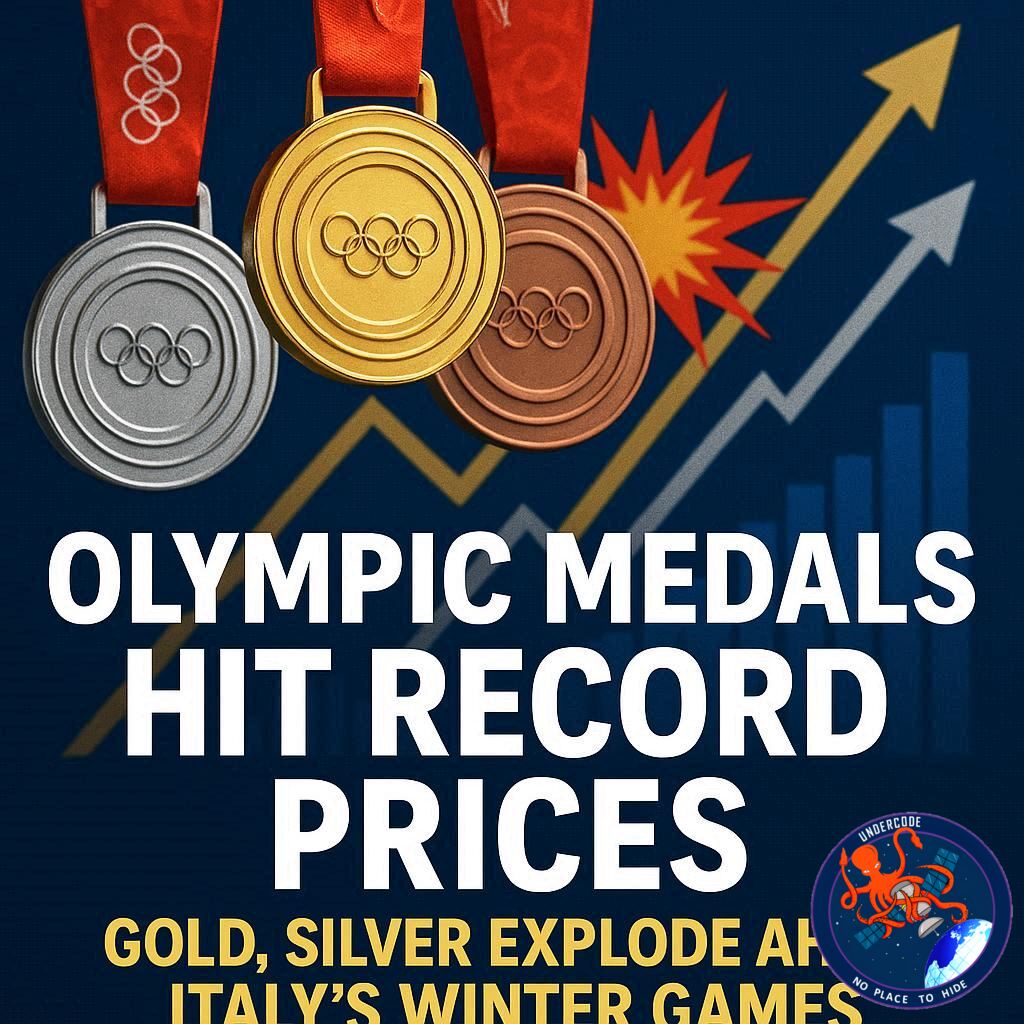
When athletes step onto the podium at the Winter Olympics in Italy this month, they won’t just be receiving symbols of sporting glory — they’ll be holding the most financially valuable Olympic medals ever created. A historic surge in precious metal prices has quietly transformed Olympic hardware into high-value assets, reflecting global economic anxiety, investor behavior, and the enduring allure of gold and silver.
the Original
Athletes competing at the Winter Olympics in Italy will be awarded the most expensive medals in the history of the Games, driven by a dramatic rise in gold and silver prices. More than 700 medals — gold, silver, and bronze — will be distributed across events such as skiing, ice hockey, figure skating, and curling. While the emotional value of Olympic medals is priceless, their raw material value has reached unprecedented levels. Since the Paris 2024 Summer Olympics, gold prices have surged by roughly 107%, while silver prices have jumped nearly 200%, according to FactSet data.
As a result, the metal content alone now places the value of a gold medal at approximately $2,300 USD, more than double its worth during the Paris Games. Silver medals have climbed to nearly $1,400 USD, representing almost triple their value from two years ago. The surge in silver prices has been partly fueled by increased demand from retail investors, while gold’s rise reflects aggressive buying by central banks and investors seeking safety amid geopolitical instability and economic uncertainty.
Despite their name, Olympic gold medals are not made entirely of gold. Each weighs about 506 grams, but only six grams are pure gold; the remainder is silver. Bronze medals, composed mainly of copper and weighing 420 grams, have a modest intrinsic value of about $5.60 USD. The medals for the Italian Games are produced using recycled metals by the Italian State Mint and Polygraphic Institute.
Historically, Olympic gold medals have not been made from solid gold since the 1912 Stockholm Games. Those early medals, weighing just 26 grams, would have been worth less than $20 USD at the time, or around $530 USD when adjusted for inflation today. However, Olympic medals often command far higher prices as collectibles. In one notable sale, a 1912 gold medal fetched $26,000 USD, while a bronze participant medal from the 1920 Antwerp Games sold for $875 USD, despite having little intrinsic metal value.
Most Olympians never sell their medals, valuing their personal and historical significance far above market price. Still, analysts suggest that if gold and silver prices continue to rise amid geopolitical tension and mounting government debt, the financial value of Olympic medals could climb even higher. Some experts believe medals awarded at the 2028 Summer Olympics may surpass even today’s record levels.
What Undercode Say:
The record-breaking value of Olympic medals is more than a quirky financial headline — it’s a snapshot of the global economic mood. When gold and silver prices surge this aggressively, it signals deep-rooted uncertainty across markets. Investors are not just speculating; they are hedging against inflation, political instability, and the erosion of trust in fiat currencies. Olympic medals, unintentionally, have become miniature barometers of global fear and financial stress.
What makes this moment particularly striking is the symbolism. The Olympics are meant to celebrate human excellence, unity, and fair competition, yet the value of the medals is now increasingly shaped by central bank policies, retail investor behavior, and geopolitical risk. Gold’s rise is closely tied to central banks diversifying reserves away from the US dollar, while silver’s rally reflects a mix of industrial demand and speculative enthusiasm from smaller investors chasing returns.
The composition of the medals also exposes a long-standing myth. Many fans still assume Olympic gold medals are solid gold, when in reality they are mostly silver with a thin gold layer. Yet even with just six grams of gold, today’s prices have pushed these medals into record territory. This highlights how extreme the current metals market has become — modest quantities now carry outsized value.
From a historical perspective, the contrast is even sharper. Early Olympic medals were lighter, simpler, and far less valuable in raw terms. Their modern worth came later, driven by rarity and historical significance. Today’s medals, by contrast, derive much of their value immediately, before any legacy or nostalgia sets in. That inversion is telling: markets now assign high value upfront, not decades later.
There is also an uncomfortable tension between intrinsic and symbolic value. Bronze medals, worth only a few dollars in metal, can still change lives and careers. Meanwhile, gold medals worth over $2,300 USD are rarely, if ever, sold. This reinforces the idea that the true worth of an Olympic medal is psychological and cultural, not financial — even in an era of explosive commodity prices.
Looking ahead, the trajectory seems clear. If geopolitical instability persists and government debt continues to rise, precious metals are likely to remain elevated. That would push future Olympic medals into even higher valuation territory, turning them into some of the most expensive sporting prizes ever created by default, not design. The Olympics may not be about money, but global markets are quietly rewriting the economics of victory.
🔍 Fact Checker Results
✅ Gold and silver prices have risen sharply since Paris 2024, significantly increasing medal material value.
✅ Olympic gold medals contain only a small amount of pure gold, with the majority made of silver.
❌ Olympic medals have not been made of solid gold for over a century.
📊 Prediction
If current trends in precious metals persist, Olympic medals at the 2028 Summer Games could set yet another valuation record, with gold medals potentially exceeding $3,000 USD in raw material value alone, further blurring the line between sporting honor and financial asset.
🕵️📝✔️Let’s dive deep and fact‑check.
References:
Reported By: edition.cnn.com
Extra Source Hub (Possible Sources for article):
https://www.stackexchange.com
Wikipedia
OpenAi & Undercode AI
Image Source:
Unsplash
Undercode AI DI v2
Bing
🔐JOIN OUR CYBER WORLD [ CVE News • HackMonitor • UndercodeNews ]
📢 Follow UndercodeNews & Stay Tuned:
𝕏 formerly Twitter 🐦 | @ Threads | 🔗 Linkedin | 🦋BlueSky | 🐘Mastodon


