
Listen to this Post
Introduction: When Online Safety Becomes a Shared Responsibility
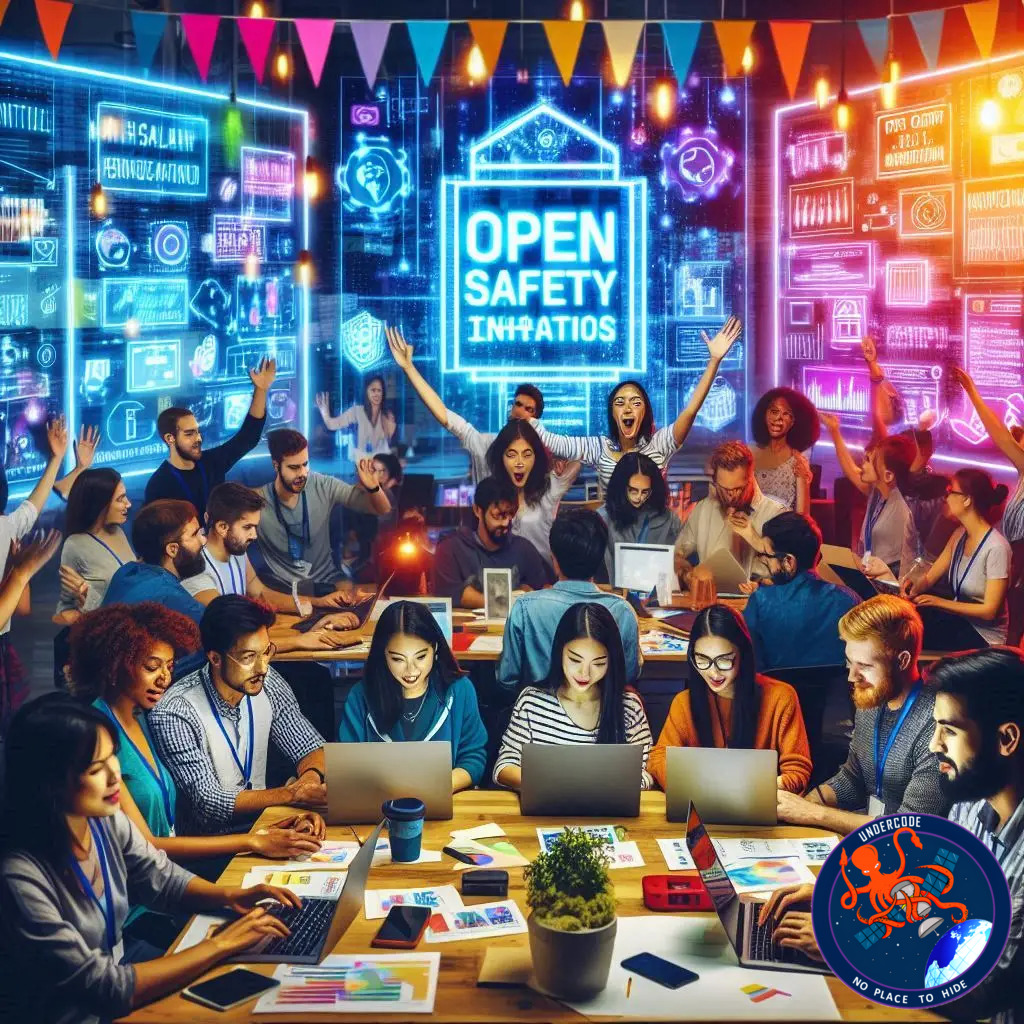
In December, a quiet but important shift took place in San Francisco. Instead of closed briefings or polished demos, engineers, policy experts, researchers, and trust and safety practitioners sat side by side, writing code, breaking models, and questioning assumptions. The Open Safeguard Hackathon, hosted by ROOST, Hugging Face, and OpenAI, was not about showcasing finished products. It was about pressure testing the future of online safety in the open, together, and with urgency.
This event reflected a growing reality. As AI systems scale faster than institutions can adapt, safety can no longer be treated as an internal feature or a competitive advantage. It must become shared infrastructure. The hackathon offered a rare look at what that future might actually look like in practice.
The Context Behind the Hackathon
The Open Safeguard Hackathon was held on December 8 in San Francisco and brought together members of the global AI safety ecosystem. ROOST, Hugging Face, and OpenAI jointly created the space to experiment with open safety tools, motivated by the release of gpt-oss-safeguard, an open-weight reasoning model fine-tuned for safety applications.
The gathering reflected the founding mission of ROOST itself. The organization exists to build open, community-governed safety tools that can address AI-driven online harms at scale. Rather than relying on proprietary systems, ROOST promotes shared infrastructure that allows organizations to adapt safety solutions to their own communities, risks, and policy environments.
Why Open Collaboration Matters for Safety
Both ROOST and Hugging Face operate on principles of openness, transparency, and collaboration. Their partnership has already produced the ROOST Model Community, which connects safety practitioners directly with model creators. This relationship reduces the distance between those who build models and those who must deploy them responsibly in real-world environments.
The release of gpt-oss-safeguard by OpenAI became a catalyst for this collaboration. Instead of positioning the model as a finished answer to safety challenges, the hackathon framed it as a starting point for experimentation, critique, and adaptation.
A Growing Demand for Safety Models
The urgency behind the hackathon was not theoretical. Builders are already relying heavily on safety models. The FalconsAI NSFW image detection classifier, for example, is the second most downloaded model on Hugging Face, reaching over 90 million downloads each month. This demand signals how deeply safety tooling has become embedded in modern platforms.
Other safety-focused models have followed, including ShieldGemma, LlamaGuard, Nvidia’s NemoGuard resources, Zentropi’s CoPE models, and the QwenGuard series. Even though gpt-oss-safeguard launched only in late October, it has already surpassed 40,000 monthly downloads, indicating rapid adoption.
The Hackathon as a Working Laboratory
What made the Open Safeguard Hackathon stand out was its format. It was not designed as a showcase but as a workbench. Many safety practitioners operate in isolation inside their organizations, constrained by internal policies and limited opportunities to collaborate externally. The hackathon created a rare shared environment where experimentation was encouraged and failure was useful.
Participants arrived from technology companies, academic institutions, nonprofits, and policy organizations. In total, 75 individuals with diverse expertise took part, ranging from machine learning research to regulatory design and platform governance.
From Opening Remarks to Real Projects
Opening remarks from ROOST, Hugging Face, and OpenAI leaders set the tone for the day. Instead of presenting solutions, speakers raised questions. Those questions quickly turned into brainstorms, which then became working prototypes.
Teams explored how gpt-oss-safeguard behaved under different policy constraints. Some ran A/B tests on policy language. Others integrated the model directly into existing systems. Several groups focused on red teaming exercises, probing the model’s limits against jailbreak techniques such as crescendo attacks.
Three Tracks, One Core Philosophy
To accommodate the diversity of interests, projects were organized into three main tracks. The policy development track focused on testing and refining moderation policies using open safety models. The model testing track examined performance, benchmarking, and compute tradeoffs. The real-world applications track explored how these models could be integrated into live systems or used to build new safety-focused applications.
Across all tracks, a consistent belief emerged. There is no universal safety model that works equally well in every context. Organizations must be able to adapt tools to their own policies, languages, and communities.
Adaptability Over Perfection
One of the clearest lessons from the hackathon was that high-performing models are not magic solutions. Even advanced systems like gpt-oss-safeguard have limitations depending on context, language, and use case. This reality reinforces the importance of transparency and adaptability.
Open safety models allow practitioners to understand how decisions are made, adjust policies, and evaluate tradeoffs. In contrast, closed systems often obscure these details, making it harder to build trust or correct failures.
Community as Infrastructure
Bringing practitioners together in one room highlighted something that documentation and repositories cannot fully capture. Community itself is a form of infrastructure. Ideas cross-pollinated across sectors, exposing blind spots and revealing shared challenges.
This dynamic helped participants focus on the unique strengths of open safety models. Their value lies not just in performance metrics, but in their ability to be examined, challenged, and reshaped collaboratively.
Projects That Point to the Future
Several projects stood out during the event. Teams explored whether gpt-oss-safeguard would label controversial statements as acceptable without explicit policy guidance, revealing inherent model preferences. Others tested safety assessments on transcribed audio signals, particularly for detecting distress.
Some groups focused on multilingual challenges, highlighting how safety performance can degrade outside English-language contexts. Another team built an appeals copilot to assist trust and safety reviewers. Others experimented with combining reasoning traces and embeddings to improve toxicity clustering.
Transparency from Model Creators
Participants also benefited from direct engagement with the OpenAI team. Questions about model behavior, limitations, and design tradeoffs were addressed openly. OpenAI also provided up to $50,000 in API credits for selected participants, enabling deeper experimentation.
This level of transparency reinforced the event’s central message. Safety improves when model creators and practitioners work together rather than behind closed doors.
This Is Only the Beginning
The hackathon marked the first of many initiatives planned by the ROOST Model Community. The safety ecosystem is at a critical inflection point. AI has amplified existing harms and introduced entirely new ones. Addressing these challenges requires more than incremental fixes.
Future events aim to expand participation, explore new use cases, and refine shared tooling. More hackathons in more regions are planned, alongside continued development of open safety infrastructure.
Building Openly as a Strategic Advantage
The Open Safeguard Hackathon demonstrated that building openly is not a philosophical stance. It is a practical strategy. When safety tools are shared, tested, and adapted in public, they improve faster and serve more communities.
The event also showed that many practitioners are eager for this kind of engagement. They want spaces where assumptions can be challenged, ideas can be tested, and progress can happen in real time.
What Undercode Say:
Open Safety as a Structural Shift
The Open Safeguard Hackathon signals a deeper structural change in how online safety is approached. Safety is moving away from isolated trust teams and toward shared ecosystems. This mirrors the evolution of open-source software, where collaboration ultimately outpaced proprietary alternatives.
The Real Value of Open-Weight Models
Open-weight safety models like gpt-oss-safeguard are not valuable because they are perfect. They are valuable because they are inspectable. Practitioners can see how decisions are made, identify bias, and tune behavior without waiting for vendor updates.
Safety Is Context, Not a Checkbox
One recurring theme from the hackathon is that safety is inherently contextual. A policy that works for a social media platform may fail in humanitarian settings or crisis response systems. Open models allow these differences to be addressed rather than ignored.
Benchmarking Beyond Accuracy
Traditional benchmarks focus on accuracy and recall. The projects at the hackathon highlighted additional dimensions. Compute cost, latency, interpretability, and policy alignment all matter. Open collaboration allows these tradeoffs to be explored transparently.
Multilingual Safety Remains Underserved
Experiments involving non-English policies exposed a persistent gap. Many safety models still reflect the biases of their training data. Addressing global safety challenges will require more inclusive datasets and evaluation frameworks.
Red Teaming as a Community Practice
Red teaming is often treated as an internal exercise. The hackathon reframed it as a community practice. Sharing attack patterns and failure cases openly accelerates collective learning and reduces duplicated effort.
Appeals and Human Oversight
Projects like the appeals copilot highlight a growing recognition that automation alone is insufficient. Safety systems must support human reviewers, not replace them. Open tools make it easier to design workflows that respect this balance.
Transparency Builds Trust
Direct interaction between model creators and practitioners builds trust in ways documentation cannot. The openness shown by OpenAI during the hackathon sets an important precedent for future safety collaborations.
From Tools to Ecosystems
The most important outcome of the hackathon may not be any single project. It is the emergence of an ecosystem mindset. Safety tools are no longer standalone products. They are components within a shared, evolving system.
The Cost of Closed Safety
Closed safety systems slow down innovation and concentrate power. The hackathon demonstrated that openness distributes expertise and reduces systemic risk. This is especially critical as AI systems influence more aspects of public life.
Governance Through Participation
Community-governed safety tools introduce a new model of governance. Instead of top-down rules, norms emerge through participation, testing, and shared accountability.
The Next Phase of AI Safety
As AI capabilities grow, safety cannot remain reactive. Events like the Open Safeguard Hackathon show how proactive, collaborative safety development can become the norm rather than the exception.
Fact Checker Results:
✅ The hackathon took place in December in San Francisco with participation from ROOST, Hugging Face, and OpenAI.
✅ gpt-oss-safeguard is an open-weight safety-focused model released in late October and used during the event.
❌ The hackathon did not present a single definitive safety solution, emphasizing experimentation instead.
Prediction:
Open safety hackathons will become a recurring pillar of AI governance as regulators, platforms, and researchers converge on shared infrastructure. 🤖
Community-driven safety models will increasingly influence policy standards and compliance frameworks. 📊
🕵️📝✔️Let’s dive deep and fact‑check.
References:
Reported By: huggingface.co
Extra Source Hub (Possible Sources for article):
https://www.reddit.com/r/AskReddit
Wikipedia
OpenAi & Undercode AI
Image Source:
Unsplash
Undercode AI DI v2
Bing
🔐JOIN OUR CYBER WORLD [ CVE News • HackMonitor • UndercodeNews ]
📢 Follow UndercodeNews & Stay Tuned:
𝕏 formerly Twitter 🐦 | @ Threads | 🔗 Linkedin | 🦋BlueSky | 🐘Mastodon


