
Listen to this Post
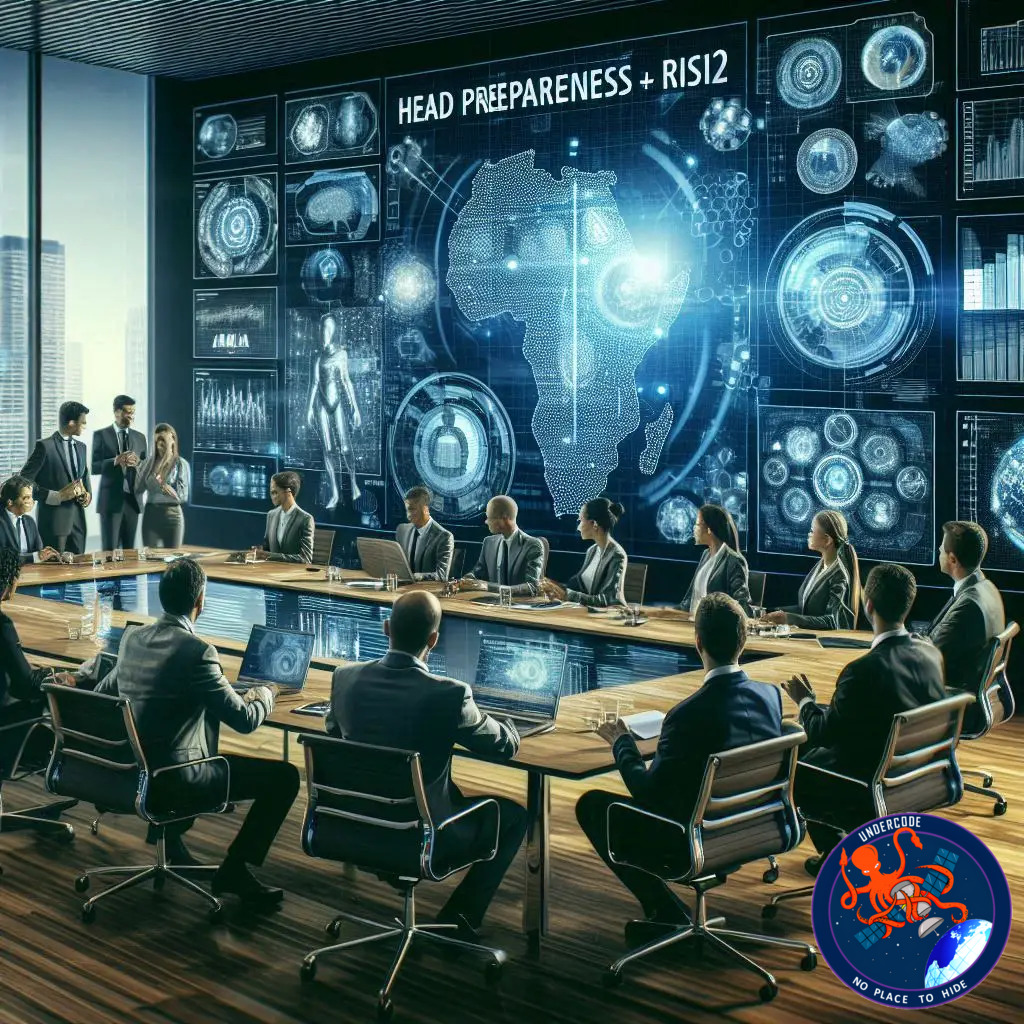
A New Safety-Focused Leadership Role Emerges at OpenAI
OpenAI CEO Sam Altman has publicly announced a new executive-level position that highlights a growing reality in artificial intelligence development. As models become more powerful, the risks surrounding their misuse are no longer theoretical. The company is now hiring a Head of Preparedness, a role designed to sit at the intersection of advanced AI capability, real-world threats, and global safety. With a compensation package reaching up to $555,000 annually plus equity, the position signals both urgency and long-term commitment.
Why OpenAI Says Preparedness Is Now Critical
Altman framed the role as essential at a moment when AI systems are advancing faster than most regulatory, social, and technical guardrails. He emphasized that modern models can already identify software vulnerabilities and influence mental health outcomes, and their trajectory suggests even more profound implications ahead. OpenAI’s leadership believes the challenge is no longer just measuring what AI can do, but understanding how those capabilities could be abused, scaled, or weaponized.
Defining the Preparedness Framework
OpenAI’s official job description reveals that the Head of Preparedness will lead the technical strategy behind its Preparedness framework. This framework is designed to track frontier AI capabilities that could introduce risks of severe harm. The role carries direct responsibility for building capability evaluations, threat models, and mitigation strategies that function together as a scalable safety pipeline.
Leading Capability Evaluations and Threat Models
A central responsibility of the role is the development of frontier capability evaluations. These evaluations must remain precise and robust even as OpenAI’s product cycles accelerate. The goal is not static safety checks, but a dynamic system that evolves alongside the models themselves, continuously testing where new risks might emerge.
Coordinating Mitigations Across High-Risk Domains
The Head of Preparedness will oversee mitigation strategies across major risk areas such as cybersecurity and biological research. This involves ensuring that safeguards are technically sound, aligned with threat models, and capable of preventing misuse without stalling beneficial innovation. The balance between access and restriction sits at the heart of the role.
Turning Safety Signals Into Launch Decisions
Preparedness at OpenAI is not a theoretical exercise. Evaluation results are expected to directly inform launch approvals, internal policies, and formal safety cases. The role requires translating complex technical findings into decisions that affect real-world deployments, often under time pressure and public scrutiny.
Cross-Functional Authority Inside OpenAI
The job description makes it clear that this role will not operate in isolation. The Head of Preparedness will work closely with research teams, engineers, product leaders, policy enforcement units, governance bodies, and external partners. Preparedness is positioned as an organization-wide discipline rather than a siloed safety function.
Altman’s Warning About the Next Phase of AI
In his post on X, Altman described the position as stressful and immediately demanding. He pointed to early warning signs already visible, from AI-driven discoveries of critical software vulnerabilities to subtle but real mental health impacts observed in prior model releases. According to Altman, the world is entering a phase where misuse risks are nuanced, contextual, and difficult to predict with simple rules.
Preparing for Self-Improving Systems
Perhaps the most striking element of Altman’s message is the reference to systems that can self-improve. Gaining confidence in the safety of such systems represents one of the hardest open problems in AI governance. The Head of Preparedness will be expected to confront these challenges head-on, with limited historical precedent to guide decisions.
What Undercode Say:
A Strategic Shift From Reactive Safety to Proactive Risk Engineering
This hiring move reflects a deeper transformation in how OpenAI views safety. Rather than reacting to incidents after deployment, the company is investing in predictive risk engineering. Preparedness, as described here, is closer to threat intelligence and systems resilience than traditional content moderation or alignment research.
Cybersecurity as the Canary in the Coal Mine
Altman’s emphasis on cybersecurity is telling. Software security is one of the first domains where AI capability translates directly into both defensive and offensive power. The fact that models are now uncovering critical vulnerabilities suggests that dual-use risks are no longer abstract. This makes preparedness less about ethics and more about operational security.
Biological Risk Signals a Higher-Stakes Frontier
The inclusion of biological capabilities raises the stakes further. Unlike digital exploits, biological misuse carries irreversible real-world consequences. OpenAI’s framing implies a desire to carefully gate biological knowledge releases while still supporting legitimate research. This is a notoriously difficult balance, and success will depend on rigorous evaluation frameworks rather than trust alone.
Safety as an Organizational Control Layer
What stands out is how deeply embedded preparedness is intended to be in product decisions. This role has influence over launches, policy, and mitigation design, suggesting that safety is being elevated to a control layer comparable to performance or reliability. That is a significant cultural statement inside a fast-moving AI lab.
Stress, Ambiguity, and the Lack of Precedent
Altman’s candid warning about stress is not performative. The Head of Preparedness will be making judgment calls where data is incomplete and consequences are asymmetric. Over-restriction could slow beneficial innovation, while underestimation could lead to global harm. Few roles in technology carry this degree of moral and technical weight simultaneously.
A Signal to Regulators and Partners
This hire also serves an external function. By formalizing preparedness leadership, OpenAI sends a signal to regulators, governments, and enterprise partners that it is taking frontier risks seriously. It positions the company as an active participant in shaping global AI safety norms rather than reacting to external pressure.
The Beginning of a New Safety Profession
Long term, this role may represent the emergence of a new professional discipline. AI preparedness blends security engineering, policy analysis, systems thinking, and ethical judgment. As models continue to scale, similar roles may become standard across leading AI organizations.
Fact Checker Results
✅ Sam Altman publicly announced the Head of Preparedness role on X.
✅ The compensation figure of up to $555,000 plus equity aligns with the official job listing.
❌ No public evidence yet confirms how preparedness findings will be disclosed externally.
Prediction
📊 OpenAI’s Preparedness framework will become a reference model for other AI labs and regulators.
📊 Demand for senior safety and risk leaders will rise sharply across the AI industry.
📊 Preparedness metrics may soon influence not just launches, but public trust and regulatory approval.
▶️ Related Video (80% Match):
🕵️📝✔️Let’s dive deep and fact‑check.
References:
Reported By: timesofindia.indiatimes.com
Extra Source Hub (Possible Sources for article):
https://www.twitter.com
Wikipedia
OpenAi & Undercode AI
Image Source:
Unsplash
Undercode AI DI v2
Bing
🔐JOIN OUR CYBER WORLD [ CVE News • HackMonitor • UndercodeNews ]
📢 Follow UndercodeNews & Stay Tuned:
𝕏 formerly Twitter 🐦 | @ Threads | 🔗 Linkedin | 🦋BlueSky | 🐘Mastodon


