
Listen to this Post
Introduction
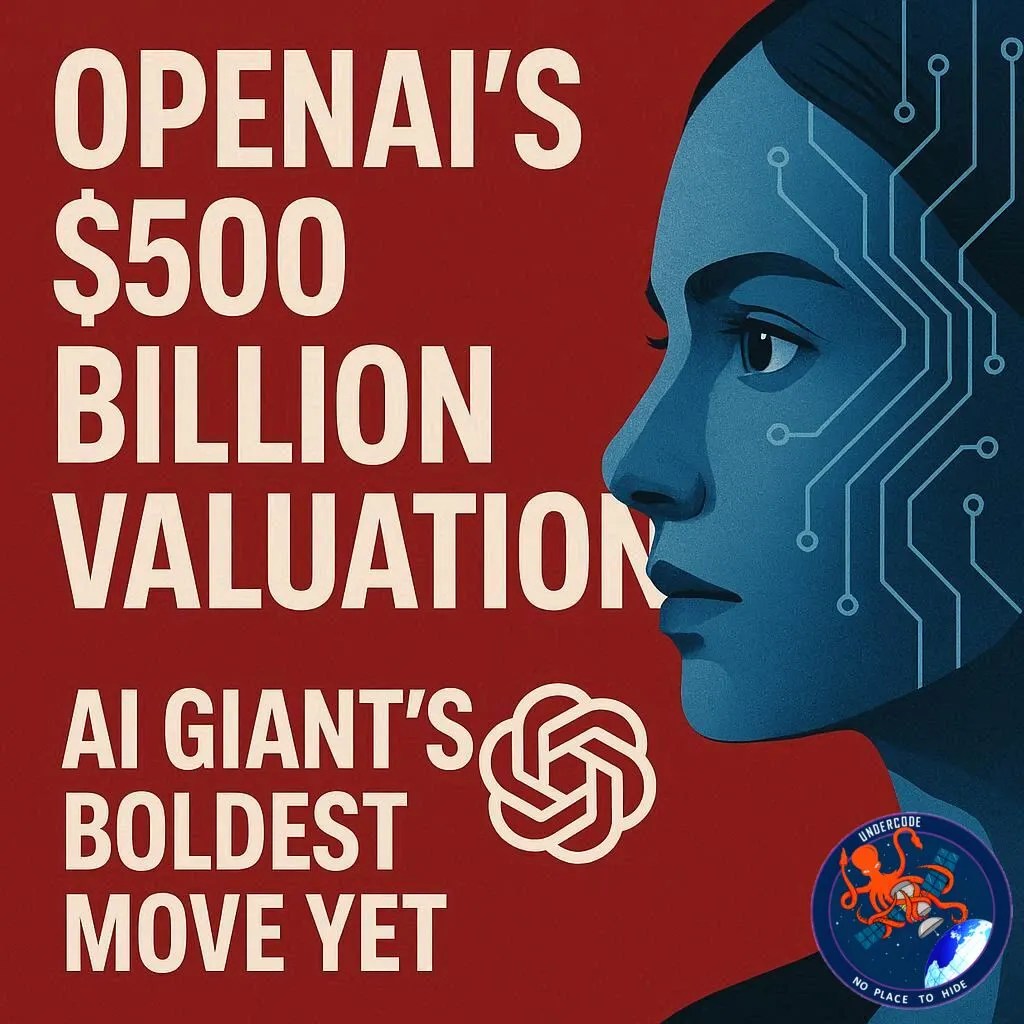
OpenAI, the creator of ChatGPT, is on the verge of becoming the world’s most valuable startup with a staggering \$500 billion valuation. The company is currently in talks for a massive secondary share sale, giving employees the chance to cash out while reinforcing its dominance in the competitive artificial intelligence landscape. This deal, if finalized, will not only shake Silicon Valley but also redefine the global tech hierarchy, surpassing even Elon Musk’s SpaceX in valuation.
The rise of OpenAI is no accident. With soaring revenues, trillion-dollar infrastructure ambitions, and relentless talent wars with rivals like Meta, the company is pushing boundaries at a breakneck pace. But behind the headlines lies a deeper story of financial strategy, cultural clashes, and a high-stakes gamble on the future of AI.
OpenAI’s Secondary Share Sale Explained
OpenAI is negotiating a secondary share sale worth \$6 billion, involving prominent investors such as Thrive Capital, SoftBank Group, and Dragoneer Investment Group. This type of deal allows employees to sell part of their equity, giving them liquidity while keeping OpenAI attractive to top-tier talent.
With a proposed valuation of \$500 billion, OpenAI would leapfrog into becoming the most valuable startup in the world, eclipsing SpaceX. The valuation also highlights the investor confidence in OpenAI’s ability to scale AI services profitably, despite staggering infrastructure costs.
The Fierce War for AI Talent
The AI sector has become a battlefield for talent. OpenAI has lost several key researchers to Meta Platforms, which recently created its own Superintelligence Lab. One of the most high-profile defections is Shengjia Zhao, co-creator of ChatGPT and GPT-4, who is now Meta’s Chief Scientist.
This aggressive poaching has sparked outrage within OpenAI. Sam Altman, the company’s CEO, labeled Meta’s recruitment tactics as “distasteful” and warned employees about the cultural damage of salary-first strategies. Mark Chen, an OpenAI research officer, even compared Meta’s actions to “a home invasion.”
To counter this, OpenAI has rolled out retention bonuses and stock sale opportunities, ensuring employees stay motivated in the face of lucrative offers from rivals.
SoftBank’s Big Bet on AI
SoftBank is positioning itself as one of OpenAI’s biggest backers. The Japanese conglomerate has already poured billions into AI bets, including a \$1 billion purchase of employee shares and a plan to lead a \$40 billion funding round at a \$300 billion valuation.
Now, with the \$500 billion valuation on the table, SoftBank’s stake could cement its influence in shaping OpenAI’s future. For SoftBank, this is more than an investment—it’s a bet that OpenAI will dominate the AI economy much like Google reshaped the internet era.
Revenue Boom and Trillion-Dollar Ambitions
OpenAI’s growth is staggering. Its revenue is projected to triple to \$12.7 billion in 2025, up from \$3.7 billion in 2024. This rapid expansion underscores the surging demand for AI products like ChatGPT and its enterprise solutions.
But the company’s ambitions go far beyond revenue. Sam Altman has openly declared that OpenAI will spend “trillions of dollars” building the infrastructure needed to sustain global AI services. While critics argue this is reckless, Altman insists that OpenAI must move fast to stay ahead.
What Undercode Say:
The story of OpenAI’s rise isn’t just about money—it’s about control of the future. By securing a \$500 billion valuation, OpenAI is sending a clear message: it wants to be the central hub of artificial intelligence.
From a strategic standpoint, this valuation plays multiple roles. First, it reassures investors that OpenAI is a safe long-term bet despite its astronomical spending plans. Second, it acts as a shield against talent raids—employees who can cash out through secondary sales are less likely to jump ship for Meta’s tempting offers.
However, this trajectory raises important questions:
- Sustainability of Growth – Can OpenAI realistically triple revenue year over year without hitting market saturation? AI adoption is growing, but infrastructure costs are equally explosive.
-
Talent Culture Clash – Meta’s approach of offering massive salaries highlights a cultural divide in Silicon Valley. OpenAI frames itself as a mission-driven company, but money still talks. If enough key figures defect, OpenAI risks losing its innovative edge.
-
Investor Overexposure – SoftBank’s history with overhyped startups (like WeWork) raises red flags. While OpenAI’s fundamentals look stronger, the risk of inflated valuation cannot be ignored.
On the other hand, OpenAI has already proven its ability to generate demand that outpaces competitors. Unlike many startups chasing hype, OpenAI has a functioning business model with enterprise contracts, APIs, and consumer products. The revenue figures support the valuation, though perhaps not at the \$500 billion level just yet.
The real wildcard is Altman’s trillion-dollar vision. If OpenAI successfully builds the infrastructure to support global AI adoption, it could become the Google of AI. But if costs spiral out of control or regulators step in, this meteoric rise could face a brutal correction.
🔍 Fact Checker Results
✅ OpenAI is negotiating a \$6 billion secondary share sale.
✅ Valuation discussed is \$500 billion, which would surpass SpaceX.
✅ Revenue forecast: \$12.7 billion in 2025, up from \$3.7 billion in 2024.
📊 Prediction
If the \$500 billion valuation is finalized, OpenAI will enter a new league of influence. Expect:
A surge in AI infrastructure investments, particularly in data centers and chips.
Talent wars to intensify, with Meta, Google, and Anthropic forced to raise compensation.
A likely IPO within 2–3 years, as investor pressure mounts for liquidity at such a high valuation.
OpenAI is no longer just a research lab—it is becoming the backbone of the AI-driven economy. The coming years will decide whether it cements itself as the world’s most important tech company or stumbles under the weight of its own ambitions.
🕵️📝✔️Let’s dive deep and fact‑check.
References:
Reported By: timesofindia.indiatimes.com
Extra Source Hub:
https://stackoverflow.com
Wikipedia
OpenAi & Undercode AI
Image Source:
Unsplash
Undercode AI DI v2
🔐JOIN OUR CYBER WORLD [ CVE News • HackMonitor • UndercodeNews ]
📢 Follow UndercodeNews & Stay Tuned:
𝕏 formerly Twitter 🐦 | @ Threads | 🔗 Linkedin | 🦋BlueSky | 🐘Mastodon


