
Listen to this Post
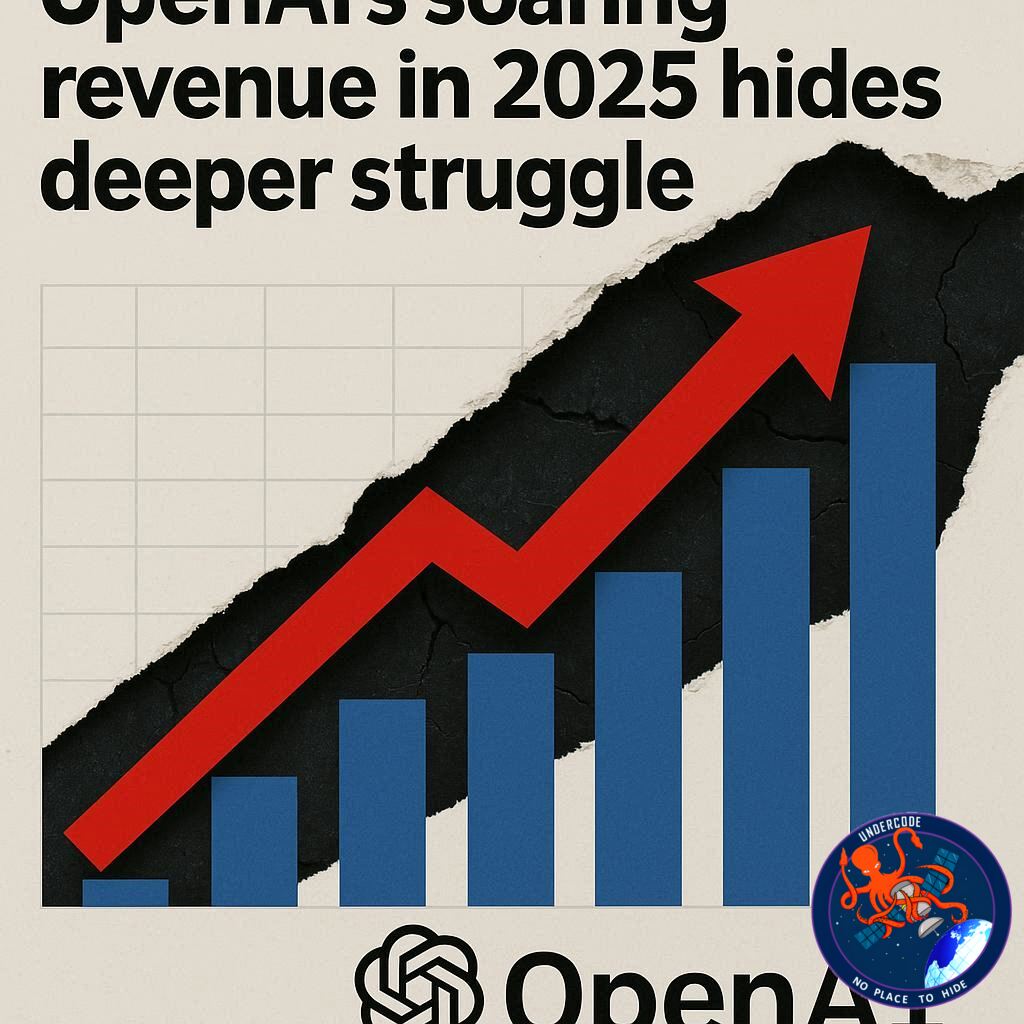
Introduction: A Tech Giant on Fire and Under Pressure
The world of artificial intelligence is advancing faster than ever, and OpenAI stands at the center of this transformation. Famous for creating ChatGPT, the company has quickly become one of the most recognized players in the global AI race. In 2025, reports reveal that OpenAI has achieved remarkable revenue growth, but behind the headlines of billion-dollar milestones lies a more complex financial story. While sales climb at an impressive rate, the cost of innovation and scaling remains a massive burden. This paradox—high revenue paired with heavy spending—defines the unique challenge OpenAI faces as it navigates one of the most competitive tech landscapes in history.
Rising Revenues at Lightning Speed
According to a recent report by The Information, OpenAI recorded a revenue surge of 16% in the first half of 2025. That translated into a staggering $4.3 billion in earnings, driven largely by the booming demand for generative AI solutions.
Flagship Products Leading the Charge
The company’s major drivers remain its flagship offerings: ChatGPT Enterprise and the API services that power countless applications worldwide. These tools have cemented OpenAI’s reputation as both a consumer and enterprise solution provider, serving industries ranging from finance to education.
The Heavy Cost of Progress
Despite these financial gains, the report highlighted a concerning reality: OpenAI’s cash burn reached approximately $2.5 billion in the first half of 2025. This extraordinary spending was largely tied to the company’s relentless push in AI development, as well as the enormous cost of running ChatGPT at global scale.
Massive R&D Investment
The data revealed another striking figure—OpenAI allocated around $6.7 billion to research and development in just six months. Such heavy reinvestment underscores its ambition to stay ahead of rivals but raises pressing questions about sustainability in the long run.
Annual Revenue Target Within Reach
Despite financial strains, the report suggests OpenAI is on track to hit its 2025 revenue target of $13 billion, signaling that demand for generative AI tools shows no signs of slowing down.
Competitive Pressure Heats Up
This growth unfolds in the context of an increasingly fierce competitive landscape. Rivals such as Anthropic, Google DeepMind, and Meta are investing heavily to carve out their share of the AI market. Each player is racing to introduce innovative features and secure enterprise contracts, raising the stakes for OpenAI.
Microsoft’s Crucial Partnership
A major advantage for OpenAI lies in its deep partnership with Microsoft, which has poured billions into the company. By integrating OpenAI’s technology into products like Copilot for Microsoft 365, Microsoft not only scales OpenAI’s reach but also provides the kind of infrastructure support most competitors cannot match.
Setting Records Despite Challenges
Although privately held and not required to disclose official earnings, OpenAI’s trajectory is clear. Analysts note the company already crossed more than $9 billion in annualized revenue in 2024, fueled by subscriptions and enterprise deals. With 2025 showing even stronger momentum, OpenAI seems set for another record-breaking year—even if profitability remains elusive.
What Undercode Say:
OpenAI’s 2025 financial journey highlights a classic contradiction in the tech world: enormous growth accompanied by equally enormous risks. A 16% revenue jump in half a year sounds like a success story, but when paired with billions burned in operations, the narrative becomes more complicated.
One striking detail is the $6.7 billion R&D spend, a figure that dwarfs many competitors’ entire budgets. This aggressive investment strategy is a double-edged sword. On one hand, it ensures OpenAI remains at the forefront of AI innovation. On the other, it creates pressure to maintain rapid growth just to sustain itself.
The $2.5 billion cash burn is also telling. Unlike traditional tech firms that can balance growth with controlled expenses, OpenAI is dealing with an entirely new category of costs. Running ChatGPT at scale demands vast computing power, specialized hardware, and continuous training—expenses that increase as adoption expands. Essentially, the more successful the platform becomes, the more costly it is to operate.
Competition adds another layer of tension. Anthropic’s Claude models are gaining traction, Google DeepMind continues to innovate with its research-heavy approach, and Meta leverages its massive ecosystem to push generative AI adoption. In such a crowded field, even small delays or missteps could translate into significant losses of market share.
The partnership with Microsoft, however, is perhaps OpenAI’s strongest strategic advantage. Beyond capital infusion, Microsoft provides distribution channels that no startup can match. Integrating AI into Office tools, Azure services, and enterprise workflows gives OpenAI a level of visibility and adoption pipelines that rivals cannot easily replicate.
Another important aspect is OpenAI’s ability to convert research breakthroughs into commercial products. This balance—between being an innovation lab and a revenue-generating business—is where many AI firms stumble. So far, OpenAI has done it better than most, but the scale of spending suggests the margin for error is thin.
Looking at the projected $13 billion annual revenue target, the milestone is impressive, but it should not overshadow the financial fragility behind the scenes. If the market tightens or investor sentiment shifts, the company could find itself exposed. Tech history is full of giants who collapsed after rapid expansion due to unsustainable burn rates.
There is also a regulatory dimension to consider. As governments worldwide push for stronger AI oversight, compliance costs and operational restrictions could add even more weight to OpenAI’s financial burden. If such regulations emerge faster than expected, the company may face even greater challenges.
From a broader industry perspective, OpenAI’s story illustrates the arms race nature of AI development. Firms are compelled to spend heavily because falling behind even slightly could mean losing billions in future market share. This makes financial prudence secondary to speed and innovation, at least in the short term.
In conclusion, OpenAI’s 2025 performance looks spectacular on paper, but the underlying financial mechanics tell a more fragile story. Success here depends not just on growing revenue but on managing burn rates, keeping competitors at bay, and ensuring that research translates into sustainable long-term value. The next year will test whether OpenAI’s bold bets pay off—or whether its cash-heavy strategy becomes a dangerous liability.
Fact Checker Results
✅ Revenue growth of 16% in H1 2025 reported by The Information
✅ $2.5 billion cash burn and $6.7 billion R&D spend confirmed
❌ Profitability still not achieved despite rising revenue
Prediction
OpenAI is likely to hit its $13 billion annual revenue target in 2025 🎯, but the company’s future hinges on balancing innovation with financial discipline. If it can leverage Microsoft’s partnership effectively while keeping costs manageable, OpenAI may strengthen its market dominance. However, sustained cash burn at current levels could eventually force the company into tough strategic choices 🔮.
🕵️📝✔️Let’s dive deep and fact‑check.
References:
Reported By: timesofindia.indiatimes.com
Extra Source Hub:
https://www.digitaltrends.com
Wikipedia
OpenAi & Undercode AI
Image Source:
Unsplash
Undercode AI DI v2
🔐JOIN OUR CYBER WORLD [ CVE News • HackMonitor • UndercodeNews ]
📢 Follow UndercodeNews & Stay Tuned:
𝕏 formerly Twitter 🐦 | @ Threads | 🔗 Linkedin | 🦋BlueSky | 🐘Mastodon


