
Listen to this Post
Introduction: A Major Strike Against Digital Exploitation Networks
In a significant international effort to combat online exploitation and cybercrime, law enforcement agencies have dismantled a vast network of fraudulent dark web platforms posing as sources of illegal content. Known as Operation Alice, this coordinated action highlights how cybercriminal ecosystems are evolving, not only exploiting victims but also deceiving offenders themselves. The operation reveals a disturbing dual-layer crime model where illegal intent meets financial fraud, exposing both moral and legal consequences on a global scale.
Summary: How Operation Alice Uncovered a Massive Global Scam
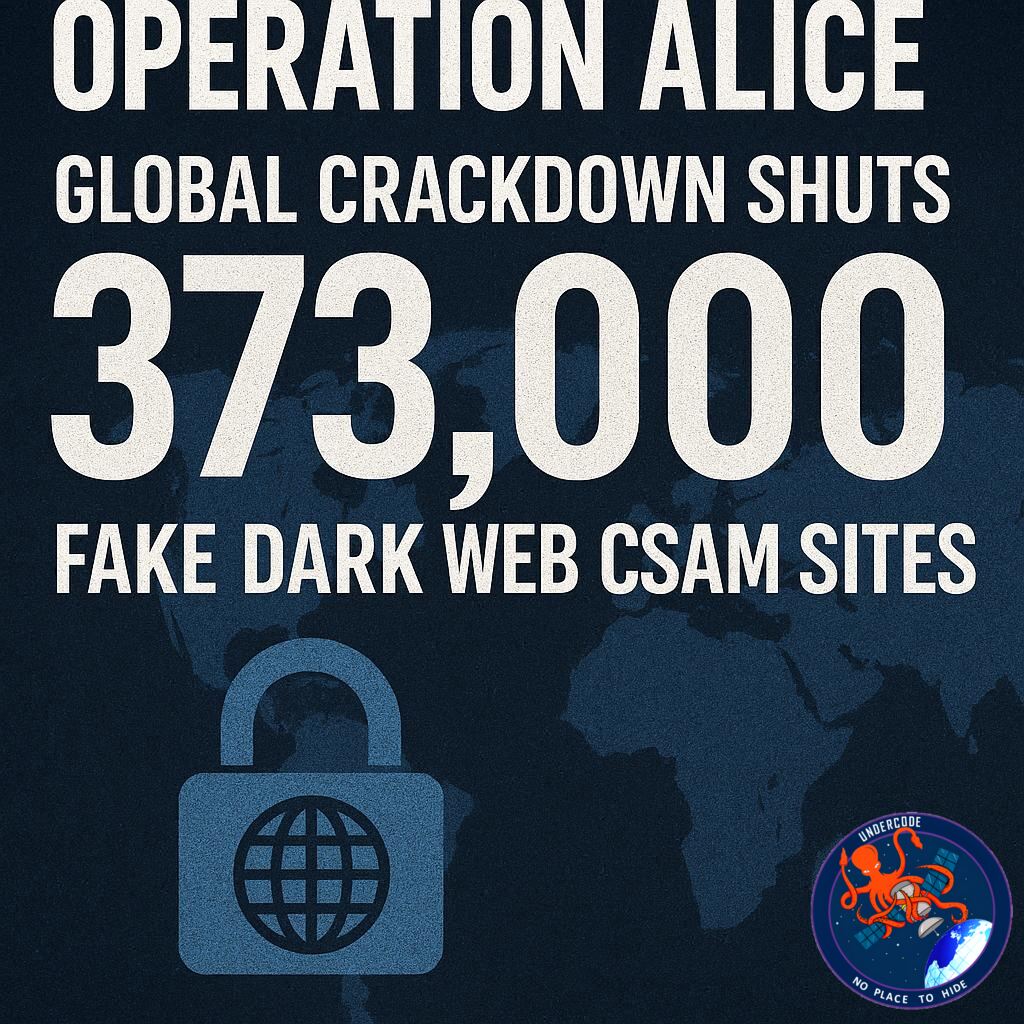
Operation Alice represents one of the largest crackdowns on fake dark web marketplaces in recent years, resulting in the shutdown of over 373,000 websites. These sites falsely advertised child sexual abuse material packages, luring users into paying for content that never existed. The investigation began in mid-2021 and was spearheaded by German authorities with support from Europol, focusing on a central platform known as “Alice with Violence CP,” allegedly operated by a 35-year-old suspect based in China.
The fraudulent ecosystem was highly organized and designed to mimic legitimate dark web marketplaces. Users were shown preview snippets of supposed illegal material, creating a sense of authenticity and urgency. Victims of the scam were asked to provide email addresses and make payments ranging from EUR 17 to EUR 250 in Bitcoin. Despite the promises of large volumes of illegal content, sometimes advertised as several terabytes, buyers received nothing after payment.
Authorities estimate that around 10,000 individuals fell for the scam, collectively paying approximately $400,000. While the platform itself did not distribute actual illegal material, the intent of the users to purchase such content remains a serious criminal offense in many jurisdictions. Law enforcement has identified 440 individuals across 23 countries, with 100 currently under active investigation.
At the infrastructure level, the operation uncovered a network of 287 servers supporting the fraudulent sites, with a significant number located in Germany. All identified servers have since been seized, effectively dismantling the operation’s technical backbone. German authorities have also issued an international arrest warrant for the suspected operator, marking an ongoing effort to bring key figures to justice.
Beyond enforcement, Europol emphasized its continued commitment to child protection through initiatives such as Help4U and the “Stop Child Abuse – Trace an Object” campaign. These programs aim to identify victims and perpetrators by analyzing details within illicit material, leveraging public cooperation to accelerate investigations.
The case also highlights an unusual dynamic where cybercriminals exploit individuals attempting to commit illegal acts, turning them into victims of financial fraud while still holding them accountable for their intent. This dual-layer deception underscores the complexity of modern cybercrime, where morality, legality, and technology intersect in increasingly sophisticated ways.
What Undercode Say: The Rise of Dual-Layer Cybercrime Ecosystems
The most striking aspect of Operation Alice is not just the scale, but the structure of the crime itself. This was not a traditional cybercrime operation targeting innocent victims. Instead, it exploited individuals already attempting to engage in illegal behavior, effectively creating a loop of criminal exploitation.
This reflects a broader shift in cybercrime strategies. Attackers are no longer limiting themselves to clear victim profiles. Instead, they are targeting anyone who can be monetized, including other criminals. This creates an ecosystem where trust is nonexistent, and deception operates at every level.
The use of fake previews is particularly important from a psychological standpoint. It demonstrates how visual triggers can override skepticism, even in high-risk environments like the dark web. Users believed they were interacting with a legitimate service because the interface mimicked known patterns of underground marketplaces.
Another key insight is the reliance on cryptocurrency. Bitcoin payments provided anonymity, speed, and irreversibility, making it ideal for both the scammers and the users. However, this also leaves a traceable blockchain footprint, which law enforcement increasingly leverages to track financial flows and identify suspects.
The infrastructure scale also reveals a high level of operational maturity. Managing hundreds of servers across multiple jurisdictions requires coordination, funding, and technical expertise. This was not a small operation but a well-engineered system designed for longevity and scalability.
Interestingly, this case also highlights how law enforcement is adapting. Instead of focusing solely on content distribution, investigators targeted the entire ecosystem, including infrastructure, financial flows, and user behavior. This holistic approach is becoming essential in dismantling modern cybercrime networks.
From a legal perspective, the operation reinforces the concept of intent as a prosecutable offense. Even though no illegal material was delivered, the act of attempting to purchase it is sufficient for criminal charges in many countries. This sets a strong precedent and serves as a deterrent.
There is also a strategic messaging element here. By publicizing the fact that users were scammed, authorities are indirectly discouraging participation in such activities. It introduces uncertainty and risk, even for those who believe they are operating anonymously.
On the defensive side, this case shows how deception techniques are evolving. Fake marketplaces, fake data leaks, and fake services are becoming common tools in cybercrime. The goal is simple: maximize profit while minimizing effort and risk.
Finally, Operation Alice underscores the importance of international collaboration. Cybercrime does not respect borders, and neither can enforcement efforts. The success of this operation depended on coordination between multiple countries, shared intelligence, and synchronized actions.
Fact Checker Results
✅ Over 373,000 fake sites were confirmed shut down as part of Operation Alice.
✅ Approximately 10,000 users were scammed, generating around $400,000 in payments.
❌ No actual CSAM content was distributed through these specific platforms, despite claims.
Prediction
The future of cybercrime will increasingly involve deception within deception, where even criminals become targets.
Authorities will continue expanding proactive operations, focusing on intent detection and infrastructure disruption.
Expect more AI-driven fake platforms that simulate realism at scale, making detection even more difficult.
🕵️📝✔️Let’s dive deep and fact‑check.
References:
Reported By: www.bleepingcomputer.com
Extra Source Hub (Possible Sources for article):
https://www.digitaltrends.com
Wikipedia
OpenAi & Undercode AI
Image Source:
Unsplash
Undercode AI DI v2
Bing
🔐JOIN OUR CYBER WORLD [ CVE News • HackMonitor • UndercodeNews ]
📢 Follow UndercodeNews & Stay Tuned:
𝕏 formerly Twitter 🐦 | @ Threads | 🔗 Linkedin | 🦋BlueSky | 🐘Mastodon


