
Listen to this Post
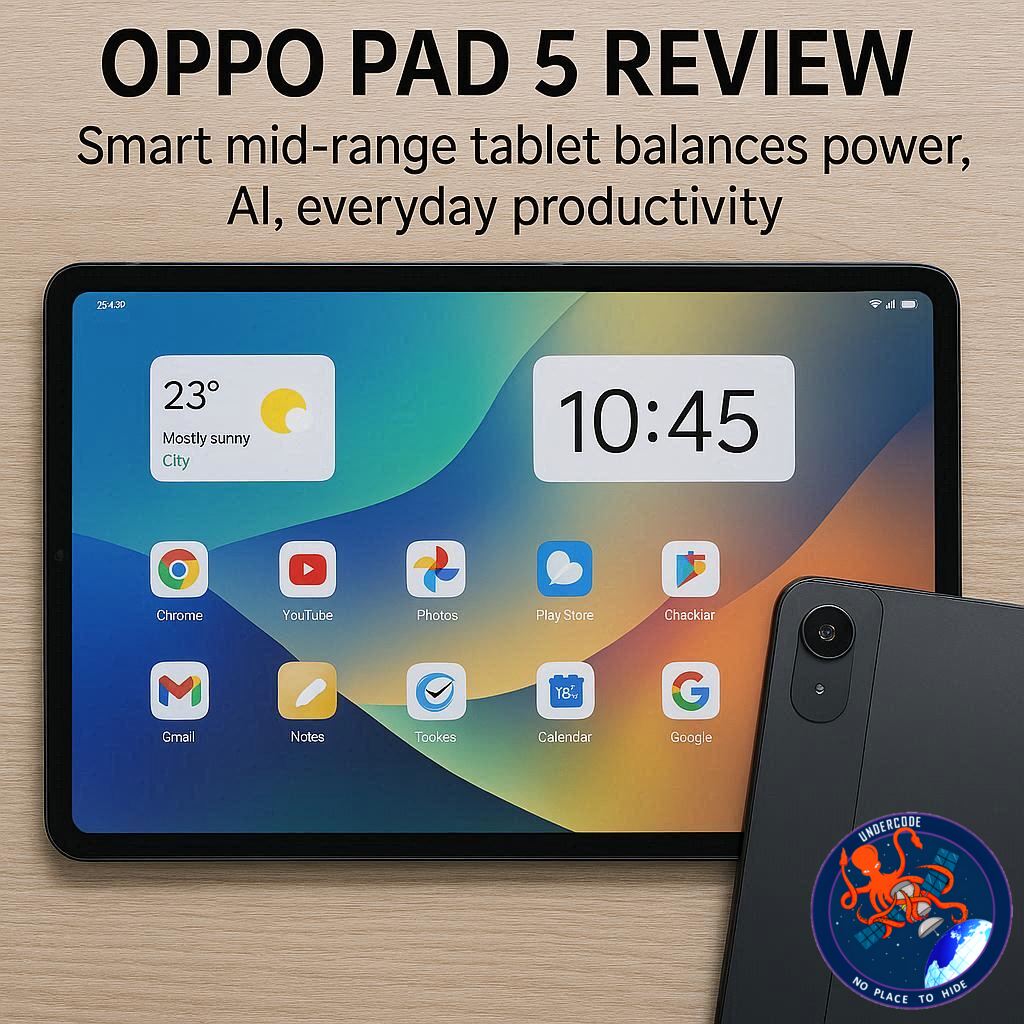
Introduction: A Tablet Built for Modern Needs
In 2026, tablets are no longer just entertainment devices. They are tools for productivity, creativity, and learning. The Oppo Pad 5 enters the competitive mid-range segment with a clear mission: to deliver a balanced experience that meets the needs of students, professionals, and casual users alike. With a stunning 2.8K display, AI-powered features, a reliable chipset, and a massive battery, this tablet positions itself as a versatile companion for daily life.
But does it truly stand out in a crowded market? Let’s break it down.
Summary of the Original Review
The Oppo Pad 5 is designed to offer a complete package for users who want both performance and functionality without stepping into premium pricing. It features a sleek, modern design with a slim profile and rounded edges, making it comfortable for long usage sessions like reading, studying, or watching content. The tablet is available in elegant color options, adding a touch of style to its practical design.
One of its biggest highlights is the large 12.1-inch LCD display with a 2.8K resolution of 2800 × 1980 pixels. The screen supports a 120Hz adaptive refresh rate, ensuring smooth scrolling and fluid navigation. With a brightness of up to 900 nits and a unique 7:5 aspect ratio, it provides excellent visibility and extra vertical space, making it ideal for reading documents, browsing, and multitasking.
Under the hood, the device is powered by the MediaTek Dimensity 7300-Ultra processor, paired with LPDDR5X RAM and UFS 3.1 storage. This combination ensures smooth everyday performance, including multitasking, streaming, note-taking, and video calls. While it is not designed for heavy gaming or high-end workloads, it performs reliably for most daily tasks. The tablet runs on ColorOS 16, which introduces useful features like split-screen multitasking and floating windows.
A key focus of the Oppo Pad 5 is its AI-powered features. Tools like AI Summary help users quickly extract key points from long content, while AI Writer assists in generating written material such as reports or social media posts. It also includes AI handwriting recognition for solving mathematical equations and a Mind Map feature for organizing ideas visually. These tools aim to enhance productivity and make the tablet more useful for learning and work.
In terms of cameras, the tablet includes an 8MP rear camera and an 8MP front camera. While they are not designed for high-end photography, they are sufficient for video calls, document scanning, and casual usage. The video recording is capped at 1080p, which is standard for tablets in this segment.
Battery life is one of the strongest aspects of the device. With a massive 10,050mAh battery, the tablet can easily last a full day on mixed usage, including streaming, browsing, and meetings. It supports 33W fast charging, which is decent but not the fastest available in the market.
For multimedia and connectivity, the Oppo Pad 5 features a quad-speaker setup that delivers immersive sound quality. It supports Wi-Fi 6, Bluetooth 5.4, and USB Type-C, ensuring modern connectivity standards. Additional features like facial recognition and built-in sensors further enhance usability.
Overall, the Oppo Pad 5 offers a balanced mix of design, display quality, performance, and battery life. While it has limitations in camera quality and high-end performance, it still delivers a reliable experience for everyday use, making it a strong contender in the mid-range tablet market.
What Undercode Say:
A Shift Toward AI-Centric Tablets
The most interesting aspect of the Oppo Pad 5 is not its hardware, but its direction. By integrating AI tools like content summarization, writing assistance, and equation solving, Oppo is clearly aligning the device with modern workflows. This reflects a broader industry trend where tablets are evolving into “thinking assistants” rather than just consumption devices.
Productivity Over Raw Power
Unlike flagship tablets that focus on raw performance, the Oppo Pad 5 takes a smarter approach. It prioritizes efficiency and usability over brute force. The MediaTek Dimensity 7300-Ultra is not a powerhouse, but it is optimized for consistent performance and battery efficiency. This makes the tablet more reliable for long sessions of work or study rather than short bursts of heavy tasks.
Display as the Core Experience
The 2.8K display with a 7:5 aspect ratio is a strategic decision. Most tablets still use widescreen formats, but Oppo’s choice improves reading and productivity. This makes a noticeable difference for users who spend hours on documents, PDFs, or web browsing. It feels closer to a digital notebook than a traditional tablet.
The Rise of Hybrid Work Devices
Devices like the Oppo Pad 5 highlight the growing demand for hybrid tools that blur the line between laptops and tablets. With stylus support and multitasking features, it can replace a laptop for many light workflows. However, it still cannot fully compete with laptops in terms of power-intensive tasks.
Battery Life as a Competitive Edge
A 10,050mAh battery is not just a specification, it is a usability advantage. In real-world scenarios, users value consistency more than peak performance. The ability to go through a full day without charging is a major selling point, especially for students and professionals who are constantly on the move.
Limitations That Matter
Despite its strengths, the tablet does have clear boundaries. The chipset limits its ability to handle heavy gaming or professional-grade applications. The cameras are basic, which is expected but still worth noting. Charging speed is also slightly behind competitors, which could be a concern for power users.
The Real Target Audience
This device is not trying to impress tech enthusiasts. Instead, it targets practical users: students attending online classes, professionals managing documents, and casual users consuming content. For this audience, the balance it offers is more important than raw specifications.
Market Positioning Strategy
Oppo’s strategy with this tablet is clear: deliver premium-like features in a mid-range package. By focusing on display quality, AI tools, and battery life, it creates a strong value proposition without significantly increasing cost.
Long-Term Relevance
The inclusion of AI features gives the Oppo Pad 5 a longer lifespan compared to traditional tablets. As AI tools improve through updates, the device may actually become more useful over time, which is a significant advantage in the mid-range segment.
Final Analytical Take
The Oppo Pad 5 is not revolutionary, but it is intelligently designed. It reflects a shift in how tablets are being used today. Instead of chasing high-end specs, it focuses on real-world usability, which is exactly what most users need.
Fact Checker Results
✅ The 2.8K resolution and 120Hz refresh rate are accurately presented as key display strengths.
✅ AI features like summary and writing tools align with current tablet software trends in 2026.
❌ The charging speed, while decent, is not competitive compared to some fast-charging rivals.
Prediction
🔮 Tablets like the Oppo Pad 5 will push more brands to integrate AI as a standard feature rather than a premium add-on.
🔮 Mid-range tablets may soon replace entry-level laptops for students and remote workers.
🔮 Future versions could focus on stronger chipsets and faster charging to eliminate current limitations.
🕵️📝✔️Let’s dive deep and fact‑check.
References:
Reported By: zeenews.india.com
Extra Source Hub (Possible Sources for article):
https://www.instagram.com
Wikipedia
OpenAi & Undercode AI
Image Source:
Unsplash
Undercode AI DI v2
Bing
🔐JOIN OUR CYBER WORLD [ CVE News • HackMonitor • UndercodeNews ]
📢 Follow UndercodeNews & Stay Tuned:
𝕏 formerly Twitter 🐦 | @ Threads | 🔗 Linkedin | 🦋BlueSky | 🐘Mastodon


