
Listen to this Post
A Growing Crisis for Australia’s Telecom Giant
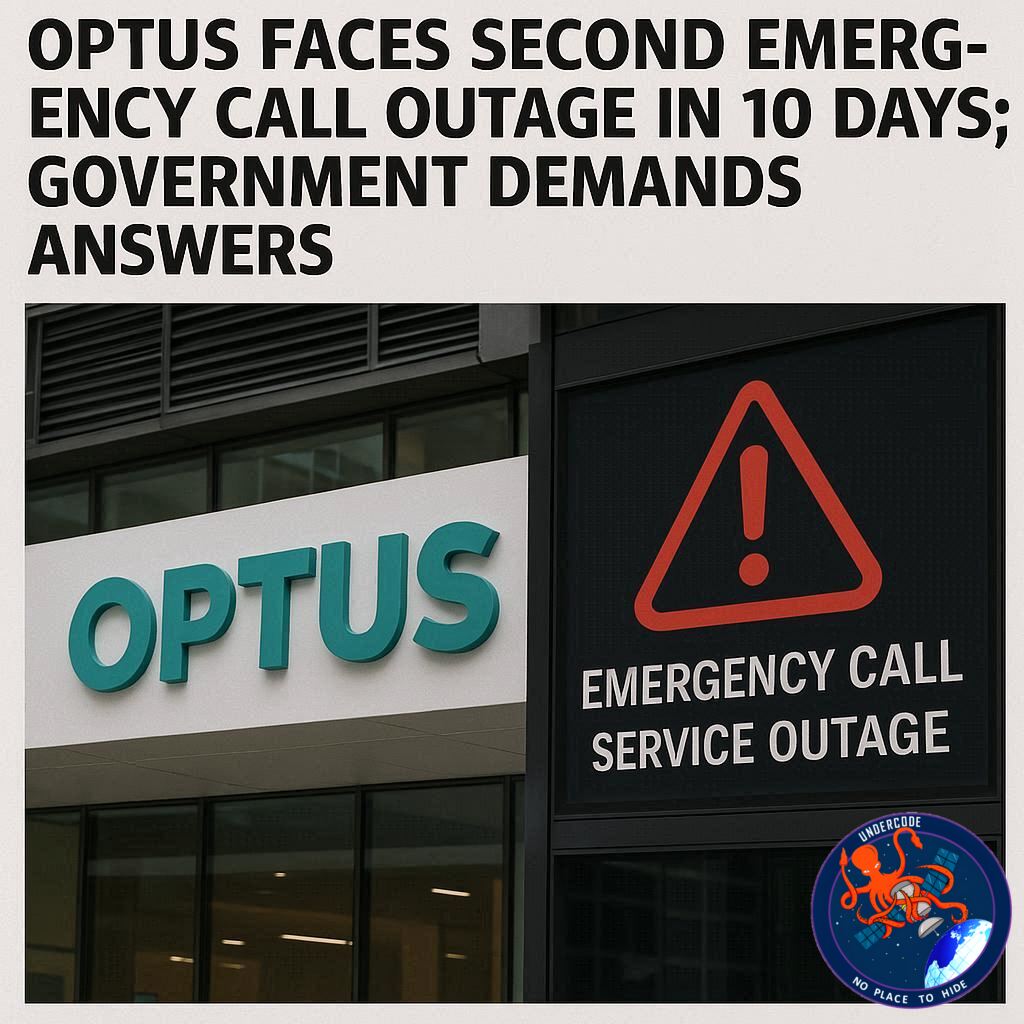
Australia’s second-largest telecommunications provider, Optus, has again found itself under the national spotlight after another emergency call outage, the second in just ten days. The latest disruption struck early Sunday morning in Dapto, about 100 kilometers south of Sydney, leaving approximately 4,500 customers unable to connect to emergency services.
The outage has reignited public anger and government scrutiny over the reliability of Australia’s telecom infrastructure. According to Reuters, the issue stemmed from a faulty mobile tower that temporarily disrupted critical communications, including access to triple-zero (000) emergency numbers. Optus later confirmed that the problem was resolved and that “all callers who attempted to contact emergency services are OK.”
A spokesperson for Optus’ parent company, Singtel, assured that the firm “takes this matter seriously” and will “extend full cooperation” to the Australian government and relevant authorities. The company insists it is still investigating the root cause while emphasizing that full service has been restored.
Mounting Political and Public Pressure
This latest failure has deepened the government’s frustration. The Australian Prime Minister, Anthony Albanese, previously labeled the company’s earlier 13-hour outage on September 18 as “completely unacceptable.” That incident crippled emergency services across two states and the Northern Territory, sparking widespread concern about public safety and national infrastructure resilience.
To address the ongoing crisis, Singtel Group CEO Yuen Kuan Moon, Optus Chairman John Arthur, and Optus CEO Stephen Rue are expected to meet with Communications Minister Anika Wells this week. The agenda is clear: accountability, prevention, and public trust.
A Pattern of Failures and Fines
This marks Optus’ second major emergency call disruption in less than two years. In 2023, the company faced a A$12 million fine for failing to maintain access to emergency call services during a nationwide outage and for neglecting mandatory welfare checks for affected customers.
Optus, owned by Singapore Telecommunications, has struggled with a series of damaging crises in recent years. A 2022 cyberattack exposed sensitive data from 9.5 million Australians, followed by the 2023 national outage, which led to the resignation of then-CEO Kelly Bayer Rosmarin. Her successor, Stephen Rue, took over in November 2024 with a promise to rebuild public trust.
Now, those promises face their toughest test yet.
Prime Minister Albanese, speaking from New York, refrained from calling for Rue’s resignation but hinted that the government has “action at its disposal” once investigations conclude. The Australian Communications and Media Authority (ACMA) has already launched a formal inquiry, which could result in fines exceeding $10 million and further penalties.
Optus maintains that it will fully cooperate with all regulatory reviews while also conducting an internal investigation, the results of which it has pledged to make public.
What Undercode Say:
Optus’ repeated failures reveal a deeper structural weakness within Australia’s telecommunications ecosystem. This isn’t merely a technical issue; it’s a crisis of accountability and public confidence. When citizens can’t reach emergency services, it’s more than an inconvenience—it’s a breakdown of societal trust in critical infrastructure.
From an analytical standpoint, several layers of dysfunction are apparent. The first is technical fragility. A single mobile tower failure should not be capable of paralyzing emergency access for thousands. This indicates poor redundancy planning, outdated infrastructure, and an insufficient crisis-response protocol.
Second, there’s a corporate culture problem. The recurrence of crises under different leadership suggests systemic inertia—a pattern of reacting rather than preventing. Optus’ repeated apologies and pledges for reform ring hollow without visible, structural change.
Third, the government’s role is now under scrutiny. Australia’s regulatory framework for telecom resilience has long been reactive rather than anticipatory. After the 2022 cyberattack and the 2023 outage, stricter compliance standards and emergency failover systems should have been mandated industry-wide. Yet, here we are again.
Optus’ parent company, Singtel, must also shoulder its share of the blame. Operating one of the region’s most profitable telecom networks, Singtel has the resources to invest in fail-safe systems. Its reluctance to do so until now suggests a prioritization of shareholder confidence over customer safety.
From a leadership lens, Stephen Rue’s tenure faces a defining moment. The decision to be transparent, cooperate fully, and publicly accept responsibility could either stabilize the company’s image or accelerate its decline. If Rue adopts a reform-first approach—emphasizing system resilience, transparent communication, and third-party audits—Optus might still recover. But failure to act decisively could brand the company as a symbol of national unreliability.
The broader implication is alarming: Australia’s emergency communications system is too dependent on private corporations. When these entities fail, lives are at risk. A public-private resilience model—perhaps managed jointly by government and telecom providers—could mitigate such vulnerabilities in the future.
This latest outage is not an isolated glitch; it’s a warning bell. Unless Optus and regulatory bodies respond with radical transparency and infrastructural reform, the next emergency might not end “OK.”
🔍 Fact Checker Results
✅ Optus confirmed two major outages in 10 days, disrupting emergency services.
✅ Australian authorities, including ACMA, have launched formal investigations.
✅ Singtel and Optus executives are meeting with Communications Minister Anika Wells.
📊 Prediction
If Optus fails to implement substantial reforms by mid-2026, it risks losing significant market share to competitors like Telstra and TPG. Public sentiment will continue to erode, and government intervention could intensify, possibly leading to new regulations on emergency call reliability.
💡 Expect a stronger legislative push for telecom accountability and infrastructure resilience across Australia in the coming year.
🕵️📝✔️Let’s dive deep and fact‑check.
References:
Reported By: timesofindia.indiatimes.com
Extra Source Hub (Possible Sources for article):
https://www.quora.com/topic/Technology
Wikipedia
OpenAi & Undercode AI
Image Source:
Unsplash
Undercode AI DI v2
Bing
🔐JOIN OUR CYBER WORLD [ CVE News • HackMonitor • UndercodeNews ]
📢 Follow UndercodeNews & Stay Tuned:
𝕏 formerly Twitter 🐦 | @ Threads | 🔗 Linkedin | 🦋BlueSky | 🐘Mastodon


