
Listen to this Post
Introduction: A Tech Giant Under Pressure
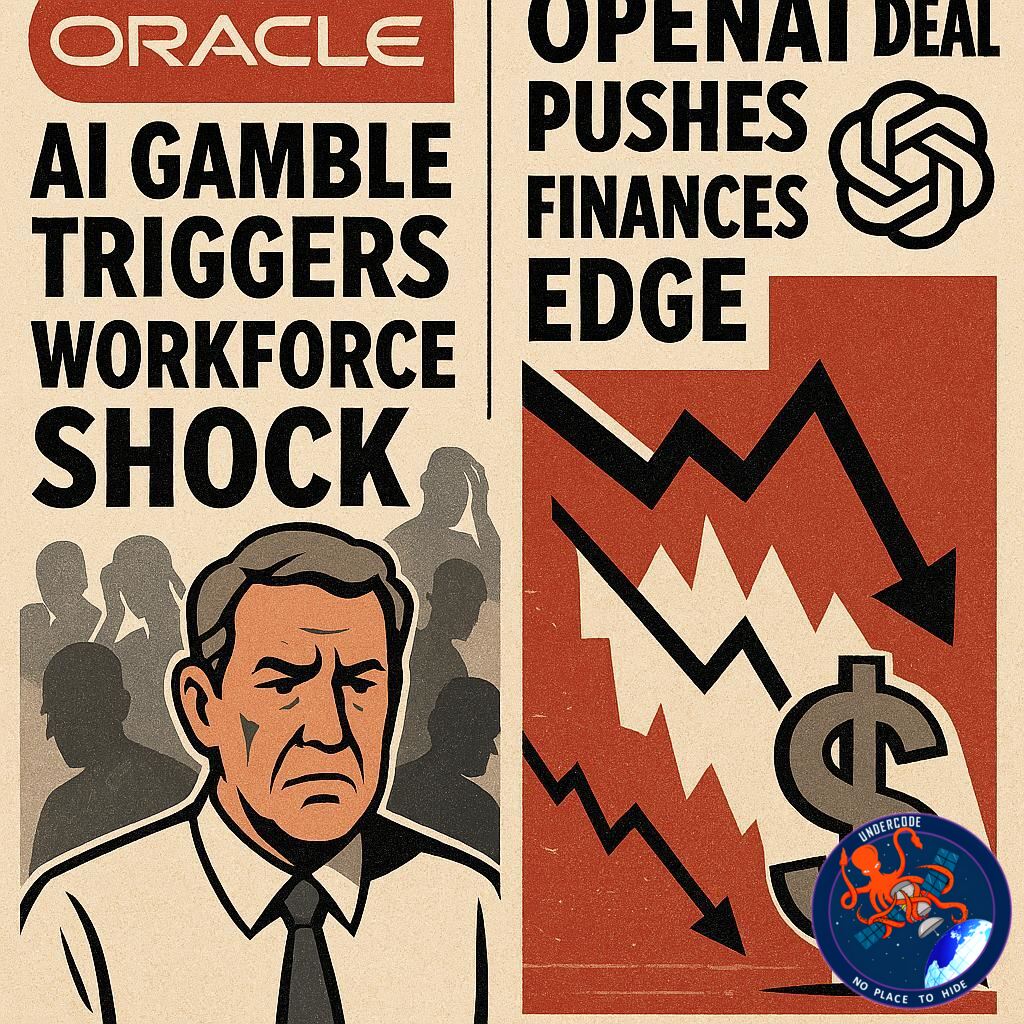
Oracle is entering one of the most turbulent chapters in its corporate history. Once known for conservative enterprise software dominance, the company is now racing headfirst into the capital-intensive world of artificial intelligence infrastructure. At the center of this transformation sits a massive partnership with OpenAI, a deal so large and costly that it is forcing Oracle to reconsider its workforce, balance sheet, and long-term strategy. What initially looked like a bold bet on the future of AI is now exposing deep financial strain, raising questions about sustainability, execution, and risk management.
the Original Report: Inside Oracle’s Financial Crunch
Oracle is reportedly considering the largest workforce reduction in its history, with potential layoffs ranging between 20,000 and 30,000 employees. According to investment bank TD Cowen, these cuts could unlock between USD 8 billion and USD 10 billion in cash flow, funds Oracle urgently needs to sustain its rapidly expanding AI data center ambitions. The primary driver behind this pressure is Oracle’s partnership with OpenAI, a relationship that demands enormous upfront capital and ongoing infrastructure investment.
TD Cowen estimates that Oracle’s total commitment tied to OpenAI could reach approximately USD 156 billion in capital expenditures, including the deployment of nearly 3 million GPUs. In just two months, Oracle has already taken on USD 58 billion in new debt, allocating USD 38 billion to data centers in Texas and Wisconsin and another USD 20 billion to a major campus in New Mexico. This spending spree has pushed Oracle’s total debt beyond USD 100 billion, and even that figure represents only a fraction of what may ultimately be required.
The market reaction has been severe. Since peaking in September 2025, Oracle’s stock has lost more than half its value, erasing roughly USD 463 billion in market capitalization. This decline reflects growing investor concern over leverage, execution risk, and the long-term profitability of Oracle’s AI infrastructure strategy.
Financing conditions have also deteriorated sharply. Several US banks have quietly pulled back from lending on Oracle-related data center projects. Interest rate premiums charged to Oracle have roughly doubled since September, pushing borrowing costs into levels typically associated with junk-rated companies. As a result, multiple data center lease negotiations have stalled, leaving Oracle unable to guarantee the capacity its customers, particularly OpenAI, expect. While some Asian banks remain open to financing, the pullback in the US poses a serious obstacle, given that most of Oracle’s expansion is planned domestically.
To cope with tightening liquidity, Oracle has begun demanding up to 40 percent of contract value upfront from new customers, effectively asking them to co-finance infrastructure development. The company is also exploring “bring your own chip” models, shifting hardware costs onto clients. Additionally, Oracle is reportedly considering the sale of Cerner, the healthcare software business it acquired in 2022 for USD 28.3 billion, signaling a potential retreat from non-AI priorities.
TD Cowen also notes that OpenAI has already redirected some near-term capacity needs to Microsoft and Amazon, suggesting growing doubts about Oracle’s ability to deliver on schedule. Oracle has not publicly commented on the reported layoffs or financing challenges.
What Undercode Say: Strategic Overreach Meets Financial Reality
Oracle’s situation highlights a fundamental tension in today’s AI arms race. Infrastructure scale is becoming the decisive factor, but scale demands capital, and capital comes with unforgiving expectations. Oracle’s bet on OpenAI is not just large, it is structurally different from its historical business model. The company has moved from high-margin software and predictable enterprise contracts into a world of hyperscale construction, commodity hardware, and long payback cycles.
The estimated USD 156 billion commitment tied to OpenAI is staggering, even by big tech standards. For comparison, this level of spending rivals the combined annual capital expenditures of the largest cloud providers, yet Oracle lacks the same balance sheet flexibility as Microsoft, Amazon, or Google. Those firms can absorb short-term losses through diversified revenue streams and entrenched cloud dominance. Oracle, by contrast, is concentrating risk into a narrower strategic corridor.
The workforce reduction discussion is not merely about cost efficiency. It is a signal to creditors and markets that Oracle is willing to sacrifice organizational stability to preserve liquidity. Cutting up to 30,000 jobs may improve near-term cash flow, but it also risks eroding internal execution capacity at a time when project management, engineering discipline, and operational precision are critical.
The retreat of US banks is perhaps the most alarming indicator. When lenders demand junk-level premiums from a company of Oracle’s stature, it suggests deeper concern about cash flow visibility and downside risk. Data center projects are capital-hungry, slow to monetize, and sensitive to delays. If financing friction persists, Oracle may find itself unable to fulfill contractual promises, which could further strain relationships with flagship partners like OpenAI.
The move to require 40 percent upfront payments and experiment with customer-supplied hardware reflects a company under pressure to offload risk. While these tactics can stabilize cash flow, they also make Oracle less competitive against rivals who can offer turnkey solutions with minimal upfront burden. In cloud and AI infrastructure, convenience and speed often outweigh marginal cost differences.
The potential sale of Cerner underscores a strategic narrowing. Healthcare software was once positioned as a long-term growth pillar for Oracle. Now, it appears expendable. This pivot suggests that management views AI infrastructure not as one initiative among many, but as the defining battle for Oracle’s future. That level of focus can be powerful, but it leaves little margin for error.
OpenAI’s reported shift of some workloads to Microsoft and Amazon should be read carefully. It does not necessarily mean a full retreat, but it does imply hedging. For Oracle, perception matters. Any hint that its flagship AI partner lacks confidence in delivery timelines can ripple through investor sentiment, lender behavior, and customer negotiations.
Ultimately, Oracle is confronting the limits of aggressive transformation. The company is attempting to leapfrog into hyperscale relevance in a market dominated by players with deeper pockets and more integrated ecosystems. Whether this gamble pays off depends on execution speed, financing stability, and the willingness of partners to stay the course under mounting pressure.
Fact Checker Results
✅ TD Cowen reported potential layoffs of 20,000 to 30,000 roles and estimated USD 8 to USD 10 billion in freed cash flow.
✅ Oracle’s recent debt increase of USD 58 billion and total debt exceeding USD 100 billion align with reported figures.
❌ No official confirmation from Oracle has been issued regarding layoffs or a Cerner sale.
Prediction
📊 Oracle is likely to proceed with targeted layoffs and asset divestments to stabilize short-term liquidity.
📊 Financing pressure may slow US data center expansion, increasing reliance on foreign lenders.
📊 The OpenAI partnership will remain intact but with shared risk and reduced exclusivity as Oracle recalibrates.
▶️ Related Video (80% Match):
🕵️📝✔️Let’s dive deep and fact‑check.
References:
Reported By: timesofindia.indiatimes.com
Extra Source Hub (Possible Sources for article):
https://www.instagram.com
Wikipedia
OpenAi & Undercode AI
Image Source:
Unsplash
Undercode AI DI v2
Bing
🔐JOIN OUR CYBER WORLD [ CVE News • HackMonitor • UndercodeNews ]
📢 Follow UndercodeNews & Stay Tuned:
𝕏 formerly Twitter 🐦 | @ Threads | 🔗 Linkedin | 🦋BlueSky | 🐘Mastodon


