
Listen to this Post
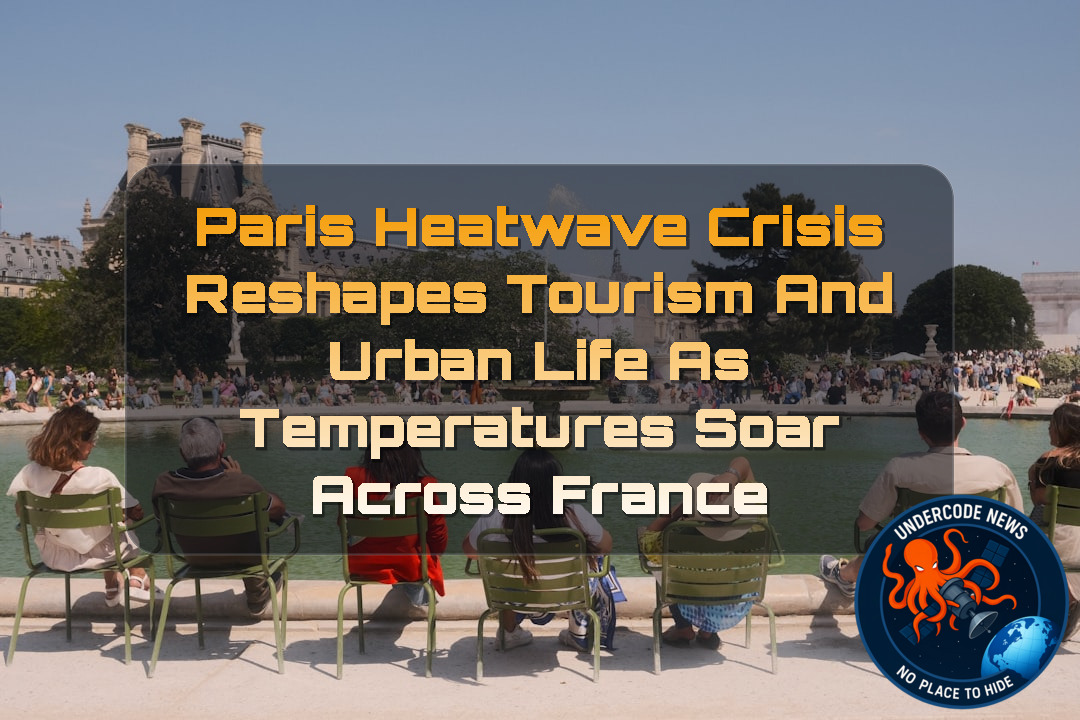 A City Under Pressure: Heat, Crowds, and Changing Tourist Behaviour
Paris is facing a powerful wave of extreme summer heat that is reshaping how both residents and tourists experience the city. At iconic landmarks like the Sacré-Cœur Basilica in Montmartre, visitors arrived early in the day carrying water bottles, parasols, and portable fans just to cope with rising temperatures. As the heat intensified to around 36°C, long queues formed, and many people were forced to rest on the basilica steps in search of shade and relief. What was once a leisurely sightseeing experience has turned into a careful exercise in timing, endurance, and adaptation.
Tourist Patterns Shift as Extreme Heat Rewrites Daily Schedules
The rising temperatures have significantly altered tourist behaviour across the French capital. Visitors now prioritize early morning excursions, often abandoning afternoon outdoor plans altogether. Museums, shopping arcades, and shaded indoor attractions are becoming the preferred escape once the sun reaches its peak intensity. This shift reflects a broader behavioural change where heat is no longer just an inconvenience but a determining factor in travel planning. Local businesses in central Paris have also begun noticing uneven foot traffic, with strong mornings followed by near-empty streets during peak heat hours.
Montmartre Under Strain as Crowds Seek Relief from Rising Temperatures
The historic district of Montmartre, known for its narrow streets and steep climbs, has become particularly vulnerable during the heatwave. The lack of widespread shade and the steady influx of tourists create a difficult environment under extreme temperatures. Street vendors report increased demand for cold drinks, while public spaces are increasingly used as informal resting zones. The Sacré-Cœur steps, normally a scenic viewpoint, have temporarily transformed into a crowded refuge from the sun, highlighting how urban design struggles under climate pressure.
Toulouse Responds with Urban Cooling Infrastructure Expansion
In southern France, the city of Toulouse has taken visible steps to address the heat crisis. Authorities installed large shade structures across key pedestrian zones such as Place du Capitole and Rue d’Alsace-Lorraine. These installations provide immediate relief for pedestrians, cyclists, and workers navigating the city under extreme conditions. As temperatures are forecast to approach 39°C over the weekend, the city’s response reflects a growing recognition that heatwaves are no longer rare events but recurring urban challenges requiring infrastructure adaptation.
Europe’s Rising Heat Reality and the Pressure on Urban Planning
The situation in France is part of a wider European trend where heatwaves are becoming more frequent, longer, and more intense. Cities designed for milder climates are now confronting conditions that test infrastructure, public health systems, and tourism economies. Urban planners are increasingly discussing long-term solutions such as expanded green corridors, reflective building materials, and climate-resilient public spaces. The current heatwave serves as a real-time stress test for these ideas, revealing both progress and gaps in adaptation strategies.
What Undercode Say:
Climate systems in Western Europe are shifting faster than many urban models predicted
Heatwaves are no longer isolated seasonal anomalies but structural climate events
Tourism economies must adapt to time-based thermal limitations in major cities
Early-morning and late-evening economies will likely dominate future travel patterns
Cities like Paris face infrastructure strain due to dense historic architecture
Stone-heavy urban environments intensify heat retention and night-time warming
Public health risks increase significantly above 35°C in high-density zones
Tourist safety protocols are becoming as important as cultural preservation
Municipal cooling strategies remain uneven across European cities
Temporary shading solutions are effective but not sufficient long term
Heat-related productivity loss is becoming a measurable economic factor
Transport systems in older cities struggle with thermal overload conditions
Crowd distribution patterns are shifting toward shaded micro-zones
Outdoor retail economies experience sharp intra-day volatility
Climate adaptation is moving from policy discussion to emergency planning
Urban heat islands are amplifying regional temperature spikes
Water consumption patterns in tourist zones are rising sharply
Emergency cooling centers may become standard infrastructure
Historical districts face the hardest adaptation challenges
Building renovation policies will define future livability scores
Energy demand spikes correlate directly with heatwave intensity
Air conditioning adoption will reshape urban energy grids
Public space design must integrate passive cooling principles
Heatwaves are increasingly synchronized across multiple countries
Tourism marketing strategies will need seasonal restructuring
Economic inequality affects access to cooling resources
Outdoor labor productivity is at higher risk than service sectors
European cities may require unified heat response frameworks
Insurance models will likely adjust for climate exposure risks
Cultural heritage sites face preservation risks from thermal stress
Visitor experience design must incorporate climate forecasting tools
Night-time tourism may expand as daytime activity declines
Urban forestry expansion is now a critical infrastructure need
Heat stress mapping will become standard in city planning
Real-time crowd and temperature analytics will guide tourism flow
Adaptive architecture will define future European city competitiveness
❌ Paris reaching 36°C aligns with known heatwave conditions in France during summer periods
❌ Toulouse installing shade structures is consistent with documented municipal heat adaptation strategies
❌ Claim that heatwaves are increasing in Europe is supported by climate trend data
Prediction:
(+1) European cities will expand heat-resilient infrastructure such as shading, cooling corridors, and public hydration systems within the next decade.
(-1) Tourism in major cities like Paris may decline during peak summer months due to extreme heat discomfort and safety concerns.
(+1) Urban innovation in climate adaptation will accelerate, especially in southern Europe facing repeated heat extremes.
Deep Analysis:
Monitor urban heat data streams
curl -s https://api.weather.example/paris | jq '.temperature'
Analyze temperature spikes across regions
awk '{print $2}' heatwave_data.log | sort -n | uniq -c
Check system load during heat periods (urban simulation servers)
top -o %CPU
Simulate heat island effect modeling
python3 climate_model.py --region europe --mode heatwave
Inspect infrastructure adaptation logs
grep -i "shade|cooling|heat" city_reports.txt
Measure energy demand surges
cat energy_usage.csv | column -t | less
Track tourism flow changes
sqlite3 tourism.db “SELECT time, visitors FROM montmartre ORDER BY time DESC;”
▶️ Related Video (82% Match):
🕵️📝Let’s dive deep and fact‑check.
🎓 Live Courses & Certifications:
Join Undercode Academy for Verified Certifications
🚀 Request a Custom Project:
Secure, high-velocity infrastructure and disruptive technological engineering. Contact our engineering team for high-tier development and proprietary systems:
[email protected]
💎 Smart Architecture | 🛡️ Secure by Design | ⭐ Trusted by Thousands
References:
Reported By: www.euronews.com
Extra Source Hub (Possible Sources for article):
https://www.digitaltrends.com
Wikipedia
OpenAi & Undercode AI
Image Source:
Unsplash
Undercode AI DI v2
🔐JOIN OUR CYBER WORLD [ CVE News • HackMonitor • UndercodeNews ]
📢 Follow UndercodeNews & Stay Tuned:
𝕏 formerly Twitter 🐦 | @ Threads | 🔗 Linkedin | 🦋BlueSky | 🐘Mastodon | 📺Youtube


