
Listen to this Post
Introduction: A New Phase in Cyber Espionage Warfare
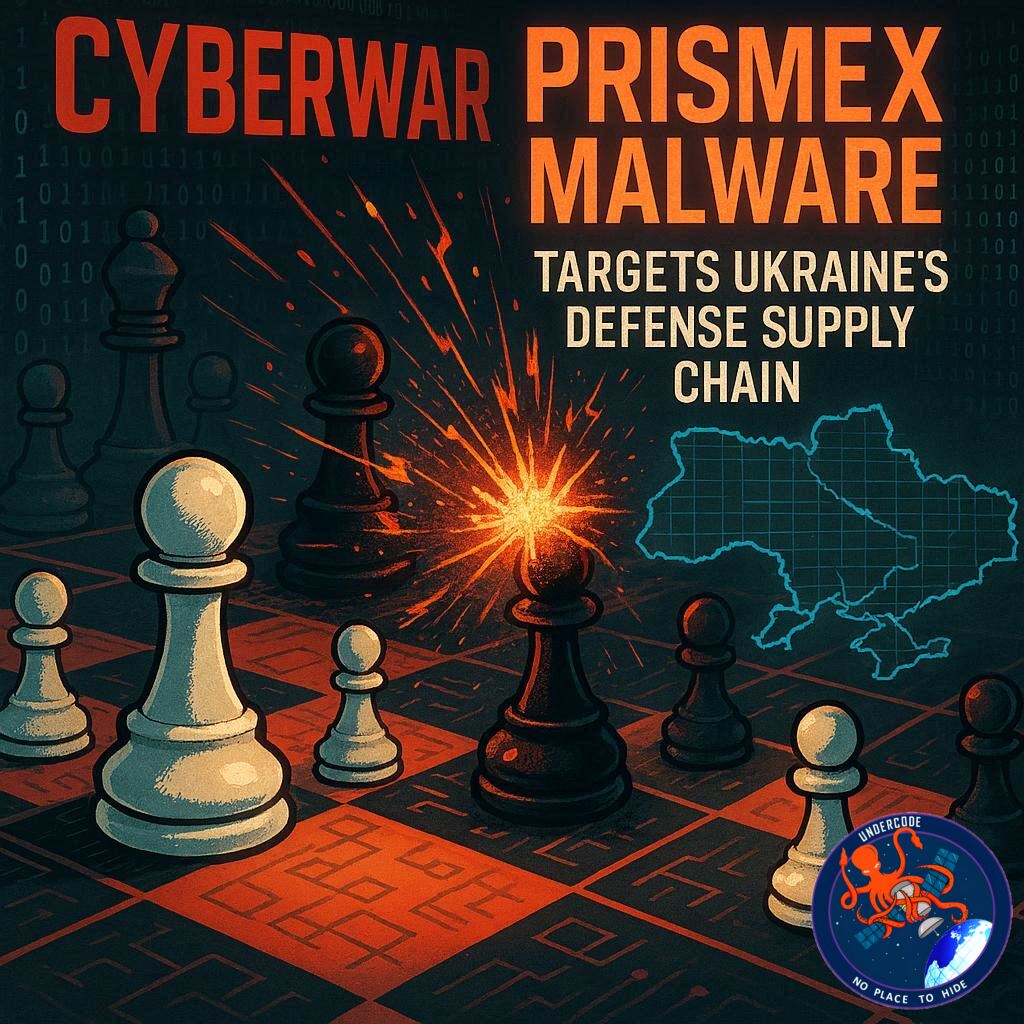
Cyber warfare has entered a more aggressive and calculated phase, where advanced threat actors are no longer just stealing data but actively shaping battlefield conditions. The latest campaign attributed to the notorious Pawn Storm group reveals a sophisticated blend of espionage, sabotage potential, and rapid exploitation of vulnerabilities. With the deployment of a new malware framework called PRISMEX, attackers have shifted focus toward Ukraine’s defense supply chain and its supporting allies. This campaign is not just another cyberattack, it is a strategic operation designed to disrupt logistics, intelligence, and operational readiness across multiple nations.
Summary of the Original
The report highlights a large-scale cyber campaign conducted by Pawn Storm, a Russia-aligned Advanced Persistent Threat group also known as APT28. This campaign introduces PRISMEX, a modular malware toolkit designed to infiltrate and persist within targeted systems while evading modern detection technologies.
The attacks primarily target Ukraine’s defense supply chain along with supporting countries such as Poland, Romania, Slovakia, Slovenia, Turkey, and the Czech Republic. These regions play a critical role in logistics, humanitarian aid, and military coordination. The campaign has been active since late 2025 but saw a significant escalation in early 2026.
PRISMEX operates through multiple interconnected components, including droppers, loaders, and a final-stage implant based on the Covenant command-and-control framework. The malware relies heavily on advanced steganography techniques, embedding malicious payloads within seemingly harmless image files. It also abuses legitimate cloud services to hide communication with command servers, making detection extremely difficult.
One of the most notable aspects of the campaign is its exploitation of vulnerabilities. Attackers used CVE-2026-21509, a flaw in Microsoft Office’s OLE mechanism, to deliver malicious files without requiring user interaction beyond opening a document. This vulnerability allows attackers to execute remote files automatically, bypassing standard security protections.
Additionally, a second vulnerability, CVE-2026-21513, was exploited as a zero-day. This flaw enables attackers to bypass browser security mechanisms and execute malicious code through manipulated HTML structures. Evidence suggests these two vulnerabilities may be chained together, creating a highly effective two-stage attack process.
The attack begins with spear-phishing emails containing malicious RTF attachments. Once opened, the system connects to a remote server, downloads a malicious shortcut file, and executes it. This leads to the deployment of PRISMEX or an alternative malware chain.
PRISMEX includes several components such as PrismexSheet, which uses Excel macros to extract hidden payloads, PrismexDrop for persistence, PrismexLoader for decoding hidden data from images, and PrismexStager for command-and-control communication. These components work together to maintain stealth, execute payloads in memory, and avoid detection by endpoint security systems.
The campaign also demonstrates advanced preparation. Infrastructure linked to the attack was set up weeks before the vulnerabilities were publicly disclosed, indicating prior knowledge. This level of preparation highlights the group’s resources and intelligence capabilities.
Targets include government agencies, military organizations, logistics hubs, and even meteorological services. Weather data is particularly important for military operations, especially for drone usage and artillery planning. By compromising such systems, attackers gain both intelligence and potential disruption capabilities.
The report concludes that this campaign represents a shift from pure espionage to operational disruption, with evidence of both data collection and destructive capabilities such as file-wiping commands. Organizations are advised to patch vulnerabilities, restrict macro usage, monitor unusual system behavior, and adopt proactive threat detection strategies.
What Undercode Say:
This campaign is not just another example of cyber espionage, it represents a strategic evolution in how digital attacks are integrated into real-world conflict. Pawn Storm is no longer operating as a passive intelligence collector but as an active participant in shaping operational outcomes.
The use of PRISMEX shows a clear move toward modular and adaptable malware ecosystems. Instead of relying on a single payload, attackers deploy a chain of components that can be adjusted depending on the target environment. This flexibility makes the campaign far more dangerous because it allows attackers to pivot quickly once inside a network.
One of the most alarming aspects is the use of steganography at scale. Hiding malicious code inside images is not new, but the “Bit Plane Round Robin” technique demonstrates a level of sophistication rarely seen in public threat reports. It distributes payload data across an entire file, making detection extremely difficult even for advanced security tools.
Another critical factor is the abuse of legitimate cloud services. By using trusted platforms for command-and-control communication, attackers effectively blend in with normal traffic. This tactic bypasses traditional security measures that rely on domain reputation or blacklisting. It forces defenders to rethink how they monitor network activity.
The rapid exploitation of vulnerabilities also highlights a major issue in cybersecurity defense. The fact that infrastructure was prepared before public disclosure suggests either insider knowledge or highly advanced vulnerability research capabilities. This creates a scenario where defenders are always reacting, while attackers are already several steps ahead.
The targeting strategy further reinforces the campaign’s strategic intent. Instead of focusing solely on military systems, Pawn Storm is going after the entire ecosystem that supports military operations. Logistics hubs, weather services, and humanitarian organizations are all critical components of modern warfare. Disrupting them can have a cascading effect on the battlefield.
The inclusion of destructive capabilities such as wiper commands adds another layer of concern. This indicates that the attackers are not just gathering intelligence but are prepared to cause damage when needed. This dual-purpose approach makes the campaign far more dangerous than traditional espionage operations.
From a defensive standpoint, this campaign exposes the limitations of traditional security models. Signature-based detection and perimeter defenses are no longer sufficient. Organizations need to adopt behavior-based monitoring and assume that breaches will occur. The focus must shift from prevention to detection and response.
It also highlights the importance of supply chain security. Many organizations underestimate their role in a larger ecosystem. Even if they are not direct military targets, their compromise can provide attackers with access to critical systems or information. This makes every organization in the supply chain a potential entry point.
Ultimately, PRISMEX represents a blueprint for future cyber operations. It combines stealth, adaptability, and strategic targeting in a way that aligns closely with real-world military objectives. This is not just a technical threat, it is a geopolitical one.
Fact Checker Results
✅ The campaign’s use of CVE-2026-21509 and CVE-2026-21513 is consistent with documented vulnerability exploitation patterns.
✅ Evidence supports the use of steganography and cloud services as key evasion techniques.
❌ The exact linkage between the two vulnerabilities in a single attack chain remains unconfirmed.
Prediction
The next phase of similar campaigns will likely involve deeper integration with physical operations, where cyberattacks directly support battlefield timing and logistics disruption. ⚠️
Advanced threat groups will continue leveraging zero-day vulnerabilities, reducing the response window for defenders even further. 🔐
Expect increased targeting of indirect assets such as infrastructure, suppliers, and service providers rather than frontline systems. 🌍
🕵️📝✔️Let’s dive deep and fact‑check.
References:
Reported By: www.trendmicro.com
Extra Source Hub (Possible Sources for article):
https://www.quora.com/topic/Technology
Wikipedia
OpenAi & Undercode AI
Image Source:
Unsplash
Undercode AI DI v2
Bing
🔐JOIN OUR CYBER WORLD [ CVE News • HackMonitor • UndercodeNews ]
📢 Follow UndercodeNews & Stay Tuned:
𝕏 formerly Twitter 🐦 | @ Threads | 🔗 Linkedin | 🦋BlueSky | 🐘Mastodon


