
Listen to this Post
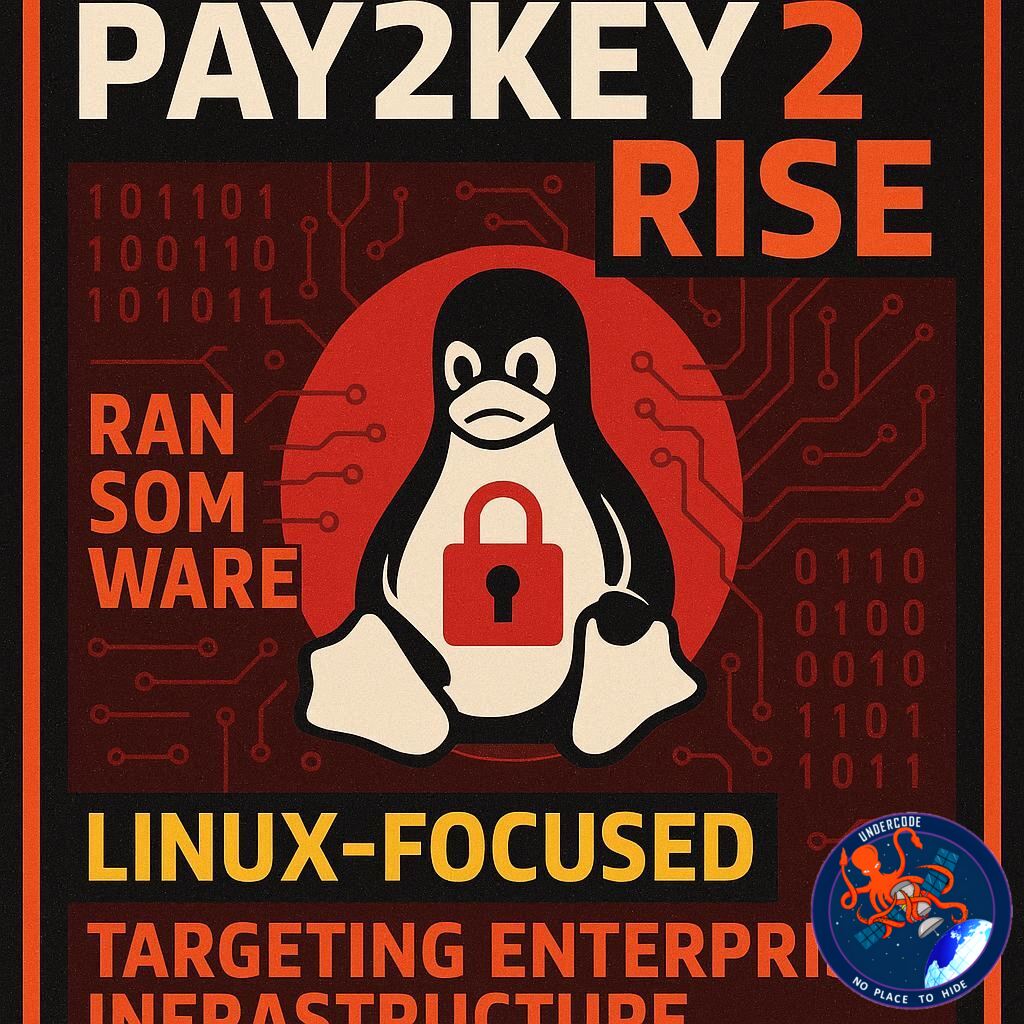
Introduction: A Silent Shift Toward Linux Attacks
Linux has long been the backbone of enterprise IT environments, quietly powering critical servers, virtualization platforms, and cloud infrastructure across the globe. For years, ransomware campaigns largely focused on Windows systems, leaving Linux comparatively underexplored in public research. That gap is now closing fast. Cybercriminals are evolving, recognizing that disrupting Linux systems can cause far greater operational damage. The emergence of the Pay2Key I2 ransomware variant marks a significant turning point, signaling a more strategic and calculated approach to attacking enterprise core systems.
Summary of the Original
The article highlights the growing importance of Linux environments in enterprise infrastructure and the increasing attention they are receiving from ransomware operators. While Linux-based threats have historically been less documented, attackers are now actively exploiting this blind spot. One of the most notable examples is the Pay2Key I2 ransomware variant, first observed in the wild in late August 2025, which represents a sophisticated evolution in ransomware capabilities tailored specifically for Linux systems.
The Pay2Key Linux build is designed with scalability and flexibility in mind. It requires root-level privileges to operate, ensuring it has complete control over the infected system. Once executed, the ransomware relies on a structured JSON configuration file that determines its behavior, including which files to target and how aggressively it should operate. This level of configurability allows attackers to customize their campaigns based on the target environment.
Before initiating encryption, the malware takes deliberate steps to weaken system defenses. It stops active services, terminates competing processes, and disables key Linux security frameworks such as SELinux and AppArmor. These actions ensure that the ransomware can execute without interruption, significantly reducing the chances of detection or interference.
For encryption, Pay2Key uses the ChaCha20 algorithm, known for its speed and efficiency. It operates in two modes: full encryption, which locks entire files, and partial encryption, which encrypts only segments of files to accelerate the attack. Each file is encrypted with a unique key, which is then stored in an obfuscated metadata block appended to the file.
Researchers discovered an unusual hardcoded string within the malware, “DontDecompileMePlease,” which serves as both a functional component in key derivation and a subtle attempt to obscure a design flaw in how encryption keys are handled. After completing the encryption process, the ransomware leaves a ransom note directing victims to a clearnet portal, with an alternative access point via the I2P network.
Interestingly, the malware does not rely on command-and-control servers or data exfiltration techniques. Instead, it operates entirely locally, managing attack data within the infected system. This approach reduces its network footprint, making detection more challenging.
The article concludes by emphasizing the difficulty of defending against such threats. Once ransomware gains root access on a Linux system, the time window for response becomes extremely limited. Traditional detection methods often fail because they react too late. As a result, organizations are encouraged to adopt proactive security strategies, such as Automated Moving Target Defense, which disrupts attack execution before encryption can occur.
What Undercode Say:
The Real Target Is Not Linux, It Is Downtime
What makes Pay2Key I2 particularly dangerous is not just its technical sophistication, but its strategic intent. Attackers are no longer chasing endpoints; they are targeting uptime. Linux servers often host mission-critical workloads, and even a few minutes of disruption can translate into massive financial and operational losses.
Root Access Changes Everything
The requirement for root privileges might seem like a limitation, but in reality, it reflects attacker confidence. By the time ransomware reaches root access, the battle is already half lost. This suggests that Pay2Key is likely deployed after initial compromise through other vectors such as credential theft or misconfigured services.
Configuration-Driven Ransomware Is the Future
The use of a JSON configuration file is a clear indicator of where ransomware is heading. This modular approach allows attackers to adapt quickly without rewriting code. It also enables targeted attacks where different victims receive customized encryption strategies based on their infrastructure.
Defense Evasion Is Now Standard Practice
Disabling SELinux and AppArmor is not a bonus feature; it is a necessity for modern ransomware. Attackers understand that built-in defenses are often the last line of protection, so neutralizing them early ensures smoother execution. This highlights a critical weakness in relying solely on native security tools.
Speed Over Perfection
The dual-mode encryption approach reveals a key priority: speed. Partial encryption allows attackers to lock systems quickly, minimizing the chance of intervention. In high-value environments, attackers do not need to encrypt everything; they only need to cause enough disruption to force payment.
Local Operations Reduce Visibility
The absence of command-and-control communication is a clever design choice. By avoiding network traffic, the malware significantly reduces its detection surface. Many security systems rely on identifying suspicious outbound connections, and Pay2Key sidesteps this entirely.
The “DontDecompileMePlease” Clue
The presence of this string is both humorous and revealing. It suggests that even sophisticated malware can contain flawed logic. However, relying on such flaws for defense is risky. Attackers continuously refine their tools, and weaknesses may disappear in future versions.
Traditional Security Is Too Slow
Behavior-based detection systems are reactive by nature. By the time they identify malicious activity, encryption may already be underway. In Linux environments, where operations happen at high speed, this delay can be catastrophic.
Prevention Must Replace Detection
The article’s mention of Automated Moving Target Defense points to a broader shift in cybersecurity philosophy. Instead of trying to detect every threat, organizations must make their systems unpredictable, forcing attackers to fail before execution.
Linux Is No Longer a Safe Haven
For years, Linux benefited from a perception of security through obscurity. That era is over. As enterprises continue to rely on Linux, attackers will invest more in developing specialized malware for this ecosystem.
Enterprises Need Linux-Specific Security Strategies
Security teams often apply Windows-centric approaches to Linux systems, which is a mistake. Linux requires its own set of tools, monitoring techniques, and defensive strategies tailored to its architecture.
Ransomware Is Becoming More Surgical
Pay2Key I2 demonstrates that ransomware is evolving from blunt-force attacks into precise, calculated operations. Attackers are no longer just encrypting data; they are engineering maximum impact with minimal effort.
Fact Checker Results
✅ Pay2Key I2 targeting Linux systems aligns with current ransomware evolution trends
✅ Use of ChaCha20 encryption is consistent with modern high-speed ransomware techniques
❌ Lack of data exfiltration is uncommon, as many ransomware groups now use double extortion
Prediction
🔮 Linux-targeted ransomware will become a primary threat vector within enterprise environments
🔮 Future variants will likely combine encryption with data exfiltration for double extortion
🔮 Defensive technologies will shift heavily toward proactive and architecture-level security controls
🕵️📝✔️Let’s dive deep and fact‑check.
References:
Reported By: cyberpress.org
Extra Source Hub (Possible Sources for article):
https://www.discord.com
Wikipedia
OpenAi & Undercode AI
Image Source:
Unsplash
Undercode AI DI v2
Bing
🔐JOIN OUR CYBER WORLD [ CVE News • HackMonitor • UndercodeNews ]
📢 Follow UndercodeNews & Stay Tuned:
𝕏 formerly Twitter 🐦 | @ Threads | 🔗 Linkedin | 🦋BlueSky | 🐘Mastodon


