
Listen to this Post
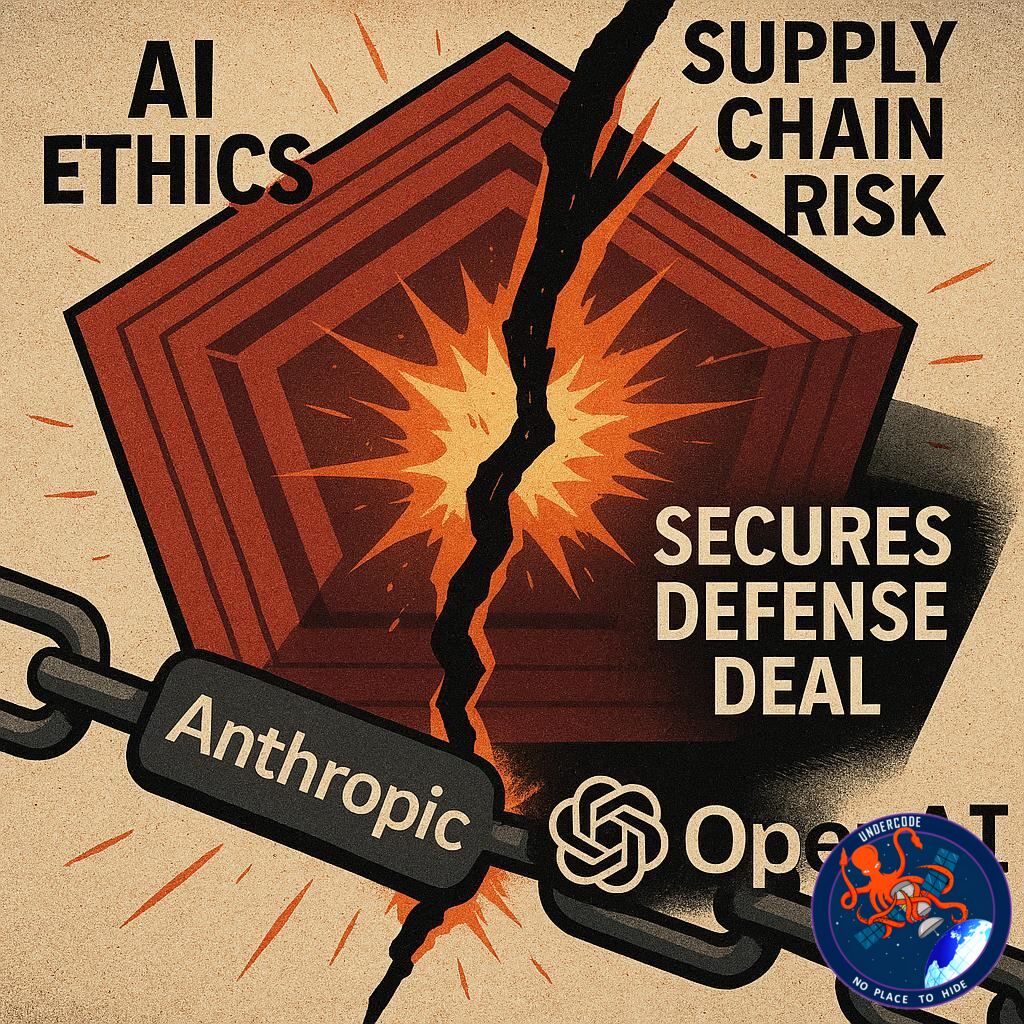 Introduction: A Quiet AI Dispute Turns Into a National Security Flashpoint
A short post on X ignited a much larger debate inside Washington’s defense and technology circles. What looked like a routine cybersecurity update revealed a deep fracture between the U.S. military establishment and one of the world’s most influential AI labs. At the center of the controversy: ethical red lines, military ambition, and the future role of artificial intelligence in surveillance and warfare.
the Original Report
The report, shared by Cybersecurity News Everyday (@TweetThreatNews), claims that the U.S. defense establishment has officially labeled Anthropic as a supply chain risk after negotiations collapsed over the use of its Claude AI models. According to the post, talks failed because Anthropic allegedly refused to allow its AI to be deployed in mass domestic surveillance programs and autonomous weapons systems.
The situation escalated when the Department of War — a term historically replaced by the modern Department of Defense — reportedly moved to restrict Anthropic’s role in sensitive government supply chains. In contrast, OpenAI is said to have reached a separate agreement with the U.S. Department of Defense, positioning it as a more compliant partner for defense-related AI initiatives.
The post originated from content published on HendryAdrian.com and amplified by the cybersecurity-focused X account, which routinely tracks cyber threats, data breaches, and state-level digital risks. While the post gained modest engagement, its implications are far-reaching: an apparent split in how leading AI companies approach military collaboration, ethical boundaries, and national security demands.
The claim suggests that AI ethics are no longer a theoretical debate but an operational fault line, influencing which companies gain or lose access to lucrative and strategically critical government contracts.
What Undercode Say:
This incident, if accurate, marks a pivotal moment in the militarization of artificial intelligence. For years, AI companies have publicly pledged commitments to “responsible AI,” yet government defense agencies increasingly view such commitments as obstacles rather than safeguards. Labeling Anthropic a “supply chain risk” does not necessarily imply technical insecurity; it signals political and strategic non-alignment.
From a defense perspective, the logic is cold and pragmatic. Any supplier unwilling to support full-spectrum military use — including surveillance and autonomous combat — can be seen as unreliable in wartime scenarios. In this context, ethical resistance becomes a liability, not a virtue. That framing alone should concern anyone watching the fusion of Silicon Valley and the Pentagon.
Anthropic has consistently positioned itself as an AI safety-first company, emphasizing controlled deployment, alignment research, and strict usage policies. If the reported breakdown is real, it suggests the company refused to compromise those principles even under immense government pressure. That stance may protect its long-term credibility but risks short-term exclusion from defense ecosystems.
OpenAI’s reported deal with the Department of Defense highlights the opposite trajectory: strategic accommodation. Whether this means fewer restrictions, narrower definitions of “acceptable use,” or classified safeguards remains unclear. What is clear is that defense agencies prefer partners who adapt quickly to operational demands, especially as global military AI competition intensifies.
There is also a geopolitical dimension. As rival states accelerate autonomous weapons development, U.S. defense planners are unlikely to tolerate hesitation from domestic AI suppliers. This creates an environment where ethical AI labs may be sidelined in favor of more flexible, less restrictive actors — including foreign or defense-native contractors.
The term “supply chain risk” is particularly revealing. It places AI governance disputes in the same category as compromised hardware, foreign semiconductor dependence, or backdoored software. In effect, ethical disagreement is being reframed as a national security vulnerability.
If this trend continues, AI companies will be forced into a binary choice: align with defense imperatives or accept exclusion from state power and funding. The middle ground — collaboration with strict moral limits — may be disappearing faster than most policymakers are willing to admit.
Fact Checker Results
The U.S. Department of War no longer exists; the correct authority is the Department of Defense, suggesting either shorthand usage or reporting imprecision.
No public confirmation from Anthropic or the Department of Defense currently verifies the “supply chain risk” designation.
OpenAI has acknowledged government and defense-related collaborations in the past, but details of any new deal remain undisclosed.
Prediction
If defense agencies continue prioritizing unrestricted AI capability over ethical constraints, the AI industry will fracture into two camps: military-aligned giants and ethics-driven independents. Over time, national security pressure is likely to erode voluntary AI safety commitments, transforming “responsible AI” from a principle into a competitive disadvantage.
🕵️📝✔️Let’s dive deep and fact‑check.
References:
Reported By: x.com
Extra Source Hub (Possible Sources for article):
https://www.digitaltrends.com
Wikipedia
OpenAi & Undercode AI
Image Source:
Unsplash
Undercode AI DI v2
Bing
🔐JOIN OUR CYBER WORLD [ CVE News • HackMonitor • UndercodeNews ]
📢 Follow UndercodeNews & Stay Tuned:
𝕏 formerly Twitter 🐦 | @ Threads | 🔗 Linkedin | 🦋BlueSky | 🐘Mastodon


