
Listen to this Post
Introduction
The relationship between artificial intelligence companies and governments is becoming one of the defining geopolitical stories of this decade. As AI rapidly evolves into a strategic asset for cybersecurity, military operations, intelligence analysis, and national defense, governments are racing to partner with the most influential technology firms in the world.
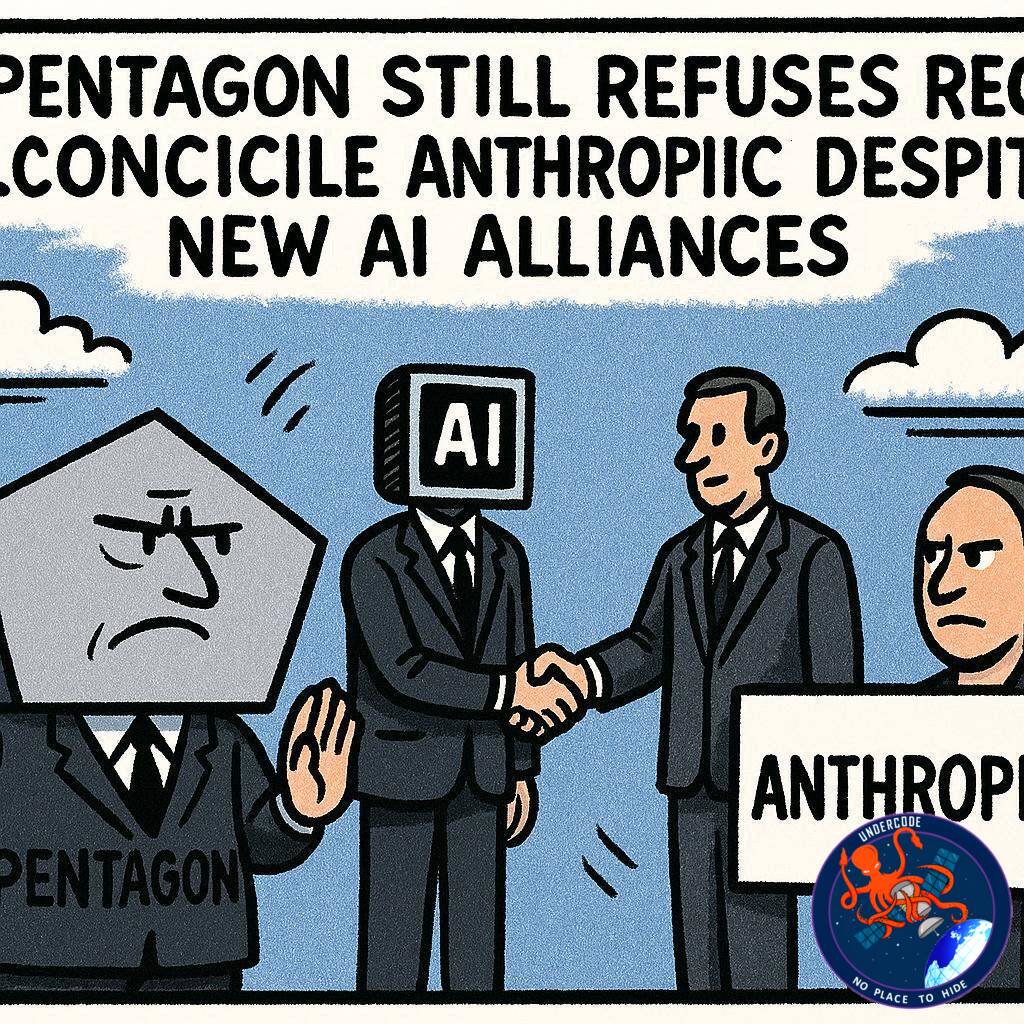
However, not every AI company is currently aligned with Washington’s defense agenda. While several major tech giants recently strengthened their relationships with the Pentagon, Anthropic appears to remain isolated from those agreements. The latest comments from former defense official and current chief technology officer Emil Michael reveal that tensions between Anthropic and the U.S. Department of Defense are far from resolved.
The controversy highlights a larger battle over ethics, regulation, military AI deployment, and the future role of private technology companies in warfare and national security infrastructure.
Pentagon Keeps Distance From Anthropic
During a conference appearance in Washington alongside New York Times national security correspondent David Sanger, Emil Michael made it clear that the Pentagon still has no intention of rebuilding its relationship with Anthropic anytime soon.
His remarks arrived shortly after a wave of major AI and technology companies announced formal agreements with the Department of Defense. Among the companies involved were Google, Microsoft, Amazon Web Services, Nvidia, OpenAI, Reflection, and SpaceX.
These partnerships are widely viewed as a strategic signal that Silicon Valley and frontier AI developers are increasingly willing to support U.S. national security operations.
Michael described the agreements as more than ordinary business contracts. According to him, they represented a unified declaration from the most powerful AI companies in the world that they support the U.S. government and approve of lawful military use of their technologies.
He explained that this stance sharply contrasts with previous resistance from parts of the AI industry. The Pentagon, according to Michael, sees these agreements as proof that the technology sector broadly wants to cooperate with American defense agencies.
When asked directly whether Anthropic’s conflict with the government could eventually be resolved, Michael gave a blunt response. He stated that reconciliation would not happen “at the Department of War,” signaling that trust between both sides remains deeply damaged.
AI Industry Shifts Toward Defense Cooperation
The recent Pentagon agreements mark a major shift in the AI landscape. Only a few years ago, many technology workers and executives strongly opposed military AI projects.
Google employees famously protested Project Maven in 2018, arguing that AI should not be used for warfare applications. Similar ethical debates spread throughout Silicon Valley as engineers questioned whether advanced machine learning systems should contribute to surveillance, targeting systems, or autonomous military capabilities.
Today, the environment looks dramatically different.
Rising tensions between global superpowers, escalating cyber warfare threats, and rapid AI advancements have pushed governments and corporations closer together. National security agencies increasingly view frontier AI systems as essential tools for intelligence gathering, cyber defense, and strategic competition.
The participation of OpenAI, Nvidia, Microsoft, and Amazon Web Services in Pentagon-related initiatives demonstrates how deeply AI is becoming integrated into defense policy.
Anthropic’s position appears increasingly isolated within this changing environment.
Mythos and the Regulation Debate
Despite its strained relationship with the Pentagon, Anthropic remains one of the most influential AI companies in the world. Its cyber-focused AI model, Mythos, reportedly shifted conversations around AI regulation in Washington.
The model intensified fears regarding offensive cyber capabilities, autonomous hacking assistance, and AI-powered digital warfare. Policymakers became increasingly concerned about how advanced models could potentially be weaponized by both nation-states and criminal organizations.
Ironically, while Anthropic helped spark deeper discussions about AI safety and regulation, those same concerns may have complicated its own relationship with defense agencies.
Governments want powerful AI systems, but they also want reliability, compliance, and strategic alignment. Any perception that a company may resist military collaboration or impose ethical restrictions can create friction with agencies focused on national security priorities.
This tension now sits at the center of the Pentagon-Anthropic divide.
White House Considering New AI Safety Actions
The situation could eventually evolve due to new discussions inside the White House surrounding AI testing and safety standards.
Reports suggest the administration is exploring executive actions aimed at regulating frontier AI systems while also creating frameworks for secure government cooperation.
If implemented, those policies could establish clearer guidelines for how agencies interact with companies developing advanced AI technologies.
Such rules may eventually create a pathway for Anthropic to re-enter defense-related collaborations. However, Michael’s latest comments indicate that no immediate breakthrough is expected.
For now, the Pentagon appears far more comfortable partnering with firms that openly support military integration of their technologies.
What Undercode Say:
The divide between Anthropic and the Pentagon reveals a deeper transformation happening inside the AI industry. This is no longer simply about software innovation or commercial competition. AI has become a geopolitical weapon, and governments are now evaluating companies based not only on technical capability but also on political alignment and strategic loyalty.
The Pentagon’s recent agreements with major AI firms send a very intentional message. Washington wants dependable partners willing to provide infrastructure, cloud computing, cyber defense systems, autonomous analytics, and potentially battlefield-related technologies without hesitation.
Anthropic’s situation demonstrates how quickly an AI company can become politically isolated if its position on military cooperation differs from prevailing national security priorities.
The mention of Mythos is particularly important. Cyber-focused AI models are among the most sensitive technologies currently being developed. These systems can potentially automate vulnerability discovery, accelerate offensive cyber operations, and dramatically increase the speed of digital espionage campaigns.
Governments recognize that whoever controls advanced cyber AI may gain a strategic advantage in future conflicts.
That reality changes everything.
For years, AI ethics conversations centered around bias, misinformation, and labor displacement. Now the focus is shifting toward national defense, cyber supremacy, and technological sovereignty.
The Pentagon’s willingness to embrace OpenAI, Microsoft, Nvidia, and SpaceX also reflects the growing convergence between civilian technology ecosystems and military infrastructure.
Cloud providers are becoming defense contractors.
AI labs are becoming strategic assets.
Semiconductor manufacturers are becoming national security priorities.
This transformation mirrors earlier historical periods when aviation, nuclear research, and satellite technologies moved from civilian innovation into defense dominance.
Another critical aspect is public perception. Governments understand that partnerships with trusted consumer technology companies help normalize military AI adoption. When globally recognized firms openly support defense projects, resistance inside the tech industry becomes weaker over time.
Anthropic may have underestimated how rapidly political expectations around AI would change.
The company built much of its reputation around AI safety and responsible deployment. But in today’s environment, safety alone is not enough for defense agencies. Strategic reliability matters just as much.
There is also an economic dimension behind these partnerships. Pentagon contracts related to AI infrastructure, cybersecurity, simulation systems, and autonomous technologies could eventually be worth billions of dollars annually. Companies excluded from these ecosystems may face long-term disadvantages in both revenue and influence.
The White House’s interest in AI testing and safety frameworks adds another layer to the story. Regulation could become a mechanism not only for safety enforcement but also for determining which companies gain privileged access to government partnerships.
That creates a future where AI regulation may indirectly shape market winners and losers.
Meanwhile, international competitors are watching closely.
China, Russia, and other nations are aggressively investing in military AI systems. U.S. officials increasingly fear that fragmented relationships between American AI firms and defense agencies could weaken national competitiveness.
This pressure encourages closer collaboration between government and private industry.
The Pentagon’s current stance toward Anthropic therefore appears less emotional and more strategic. Defense agencies want certainty. They want companies that publicly commit to cooperation during a time when AI is becoming central to intelligence, cyber warfare, and global power projection.
If Anthropic eventually wants reconciliation, it may need to publicly redefine its position regarding military collaboration.
Otherwise, the company risks remaining outside one of the fastest-growing and most politically important sectors in artificial intelligence.
Fact Checker Results
✅ Emil Michael confirmed that multiple major technology companies recently announced agreements with the Pentagon.
✅ Anthropic remains in conflict with the Department of Defense according to Michael’s public remarks during the Washington conference appearance.
❌ There is currently no confirmed evidence that Anthropic and the Pentagon are actively negotiating reconciliation behind closed doors.
Prediction
🔮 AI companies will increasingly divide into two categories: firms willing to integrate deeply with national defense systems and firms attempting to maintain stricter ethical independence.
🔮 Pentagon partnerships with frontier AI developers will expand significantly over the next five years, especially in cybersecurity, intelligence automation, and autonomous systems.
🔮 Regulatory frameworks introduced by the White House could eventually determine which AI companies gain strategic government access and which become politically marginalized.
🕵️📝Let’s dive deep and fact‑check.
References:
Reported By: axioscom_1778184248
Extra Source Hub (Possible Sources for article):
https://www.quora.com/topic/Technology
Wikipedia
OpenAi & Undercode AI
Image Source:
Unsplash
Undercode AI DI v2
Bing
🔐JOIN OUR CYBER WORLD [ CVE News • HackMonitor • UndercodeNews ]
📢 Follow UndercodeNews & Stay Tuned:
𝕏 formerly Twitter 🐦 | @ Threads | 🔗 Linkedin | 🦋BlueSky | 🐘Mastodon


