
Listen to this Post
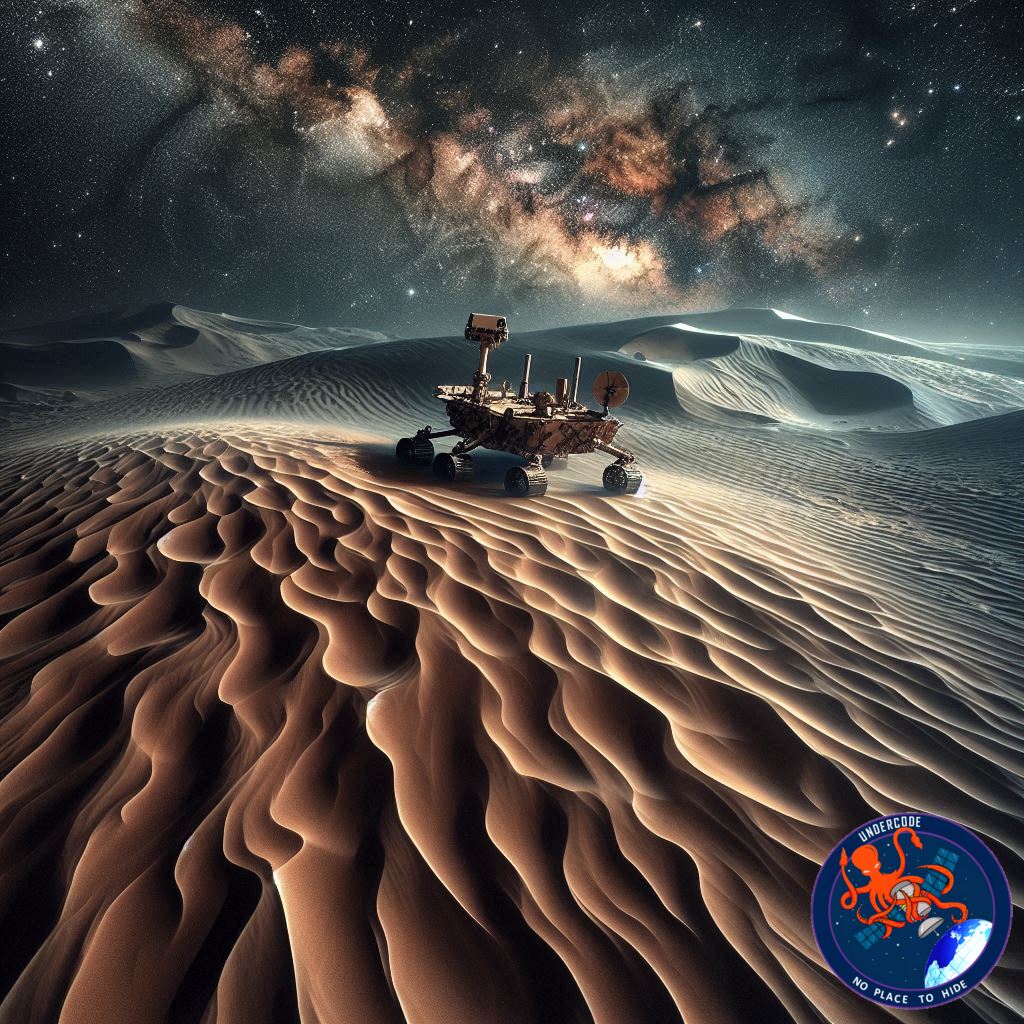
Introduction: Why Martian Megaripples Matter
Mars often appears frozen in time, a planet defined by ancient rivers, long-dried lakes, and geological scars billions of years old. Yet, beneath this seemingly static surface, subtle processes are still at work. One of the most revealing clues comes not from rocks carved by water, but from sand shaped by wind. Recent observations by NASA’s Perseverance rover show that massive sand formations known as megaripples are more than relics of Mars’ distant past. They are records of atmospheric behavior, climate interaction, and surface evolution that may still be unfolding today.
Summary of the Original
Focus Beyond Ancient Water
Much of Perseverance’s scientific mission is dedicated to studying ancient Martian rocks that preserve evidence of rivers and lakes. However, megaripples provide a unique opportunity to observe geological processes that may still be active on Mars today.
What Are Megaripples
Megaripples are large wind-formed sand ripples that can grow up to two meters tall. They are primarily shaped by wind, but their surfaces can become stabilized when atmospheric water interacts with dust, forming a salty and dusty crust.
Why Most Megaripples Are Considered Inactive
Once this crust forms, wind struggles to move the sand beneath it. As a result, most Martian megaripples are believed to be inactive, preserving evidence of past wind directions and atmospheric conditions rather than reflecting ongoing motion.
Signs of Possible Reactivation
Despite this inactivity, some megaripples show signs of erosion or subtle movement. Scientists suggest that rare periods of high wind speeds could partially erode these crusts and temporarily reactivate the ripples.
Wind as a Modern Martian Force
Even with an atmosphere only about 2% as dense as Earth’s, wind remains one of the dominant forces shaping Mars’ surface. It erodes bedrock, produces sand-sized grains, and transports them across vast ripple fields.
Importance for Future Human Missions
Understanding megaripples is not only scientifically valuable but also practically important. The chemistry, cohesion, and mobility of Martian soils will directly affect rover navigation, astronaut movement, and future resource extraction.
From Kerrlaguna to Honeyguide
After studying dusty and largely inactive megaripples at a site called “Kerrlaguna,” Perseverance moved on to a much larger and more dramatic megaripple field named “Honeyguide.”
Why Honeyguide Stands Out
The Honeyguide region contains some of the tallest and most extensive megaripples observed so far. Their crests are sharply defined and aligned in a consistent orientation, suggesting long-term winds blowing predominantly north to south.
The Hazyview Megaripple Investigation
At Honeyguide, Perseverance focused on a specific megaripple named “Hazyview.” More than 50 observations were collected using multiple instruments, including SuperCam, Mastcam-Z, MEDA, PIXL, and WATSON.
What Scientists Looked For
These observations targeted grain movement, early morning frost, and changes in mineral composition from the ripple crest down into the trough.
Building on Previous Findings
The Hazyview study builds directly on the earlier Kerrlaguna investigation, allowing scientists to compare inactive and potentially more dynamic megaripples.
Why These Observations Matter
Together, these measurements represent the most detailed examination of Martian megaripples to date and will serve as a key reference as Perseverance continues along the crater rim.
A Planet Still Changing
Ultimately, the study highlights that Mars is not entirely dormant. Even today, wind-driven processes continue to reshape the planet, grain by grain.
What Undercode Say:
Megaripples as Climate Archives
Megaripples function like natural data logs, preserving evidence of wind strength, direction, and atmospheric moisture over long periods. Their size and structure suggest stable wind regimes rather than chaotic weather patterns.
Thin Atmosphere, Strong Impact
Mars proves that atmospheric density alone does not determine geological influence. Persistent winds, even in a thin atmosphere, can reshape landscapes over time through consistency rather than force.
Crust Formation Changes Everything
The salty, dusty crust that forms on megaripples is a critical factor. It transforms loose sand into semi-rigid structures, effectively freezing a moment in Martian climate history.
Reactivation Is the Key Question
If megaripples can be reactivated during rare high-wind events, it suggests Mars experiences episodic environmental extremes rather than constant stability.
Why Honeyguide Is Special
The uniform orientation of Honeyguide’s megaripples points to remarkably stable wind patterns over extended timescales, possibly spanning thousands of years.
Instrument Synergy Matters
Using multiple instruments simultaneously allows scientists to connect visual changes with chemical, thermal, and atmospheric data, producing a far more complete picture.
Frost as a Hidden Player
Early morning frost may seem minor, but repeated freeze-thaw cycles could influence surface cohesion and sediment stability more than previously thought.
Implications for Rover Mobility
Understanding soil cohesion is essential for rover safety. Crusted megaripples could support weight differently than loose sand, influencing route planning.
Lessons for Human Exploration
Future astronauts will rely on accurate models of soil behavior for landing, walking, drilling, and building. Megaripple studies feed directly into these models.
Mars Is Quiet, Not Dead
The biggest takeaway is subtle but powerful: Mars is not a geologically dead world. Its changes are slow, quiet, and driven by atmosphere rather than water.
Grain-by-Grain Evolution
Instead of dramatic floods or eruptions, modern Mars evolves through incremental processes that accumulate significance over time.
Perseverance’s Strategic Value
By studying both ancient rocks and modern surface features, Perseverance bridges Mars’ deep past with its present behavior.
Setting a Baseline for the Future
The Honeyguide observations establish a benchmark that future missions can revisit to detect real-time changes.
Rethinking “Inactive” Landscapes
What we label as inactive may simply operate on timescales longer than human observation, challenging how planetary activity is defined.
Wind as a Planetary Sculptor
Mars reminds us that wind, given enough time, can rival water in shaping a world.
Fact Checker Results
✅ Megaripples are correctly described as large, wind-formed sand features on Mars.
✅ The role of atmospheric water and crust formation aligns with current Martian science.
❌ Definitive proof of widespread megaripple reactivation remains unconfirmed.
Prediction
🔮 Future rover revisits to Honeyguide may detect subtle changes in crest shape or sediment distribution.
🔮 Improved atmospheric models will likely link rare high-wind events to megaripple modification.
🔮 Megaripples may become key indicators for identifying safe zones for human surface operations.
🕵️📝✔️Let’s dive deep and fact‑check.
References:
Reported By: science.nasa.gov
Extra Source Hub (Possible Sources for article):
https://www.digitaltrends.com
Wikipedia
OpenAi & Undercode AI
Image Source:
Unsplash
Undercode AI DI v2
Bing
🔐JOIN OUR CYBER WORLD [ CVE News • HackMonitor • UndercodeNews ]
📢 Follow UndercodeNews & Stay Tuned:
𝕏 formerly Twitter 🐦 | @ Threads | 🔗 Linkedin | 🦋BlueSky | 🐘Mastodon


