
Listen to this Post
Introduction
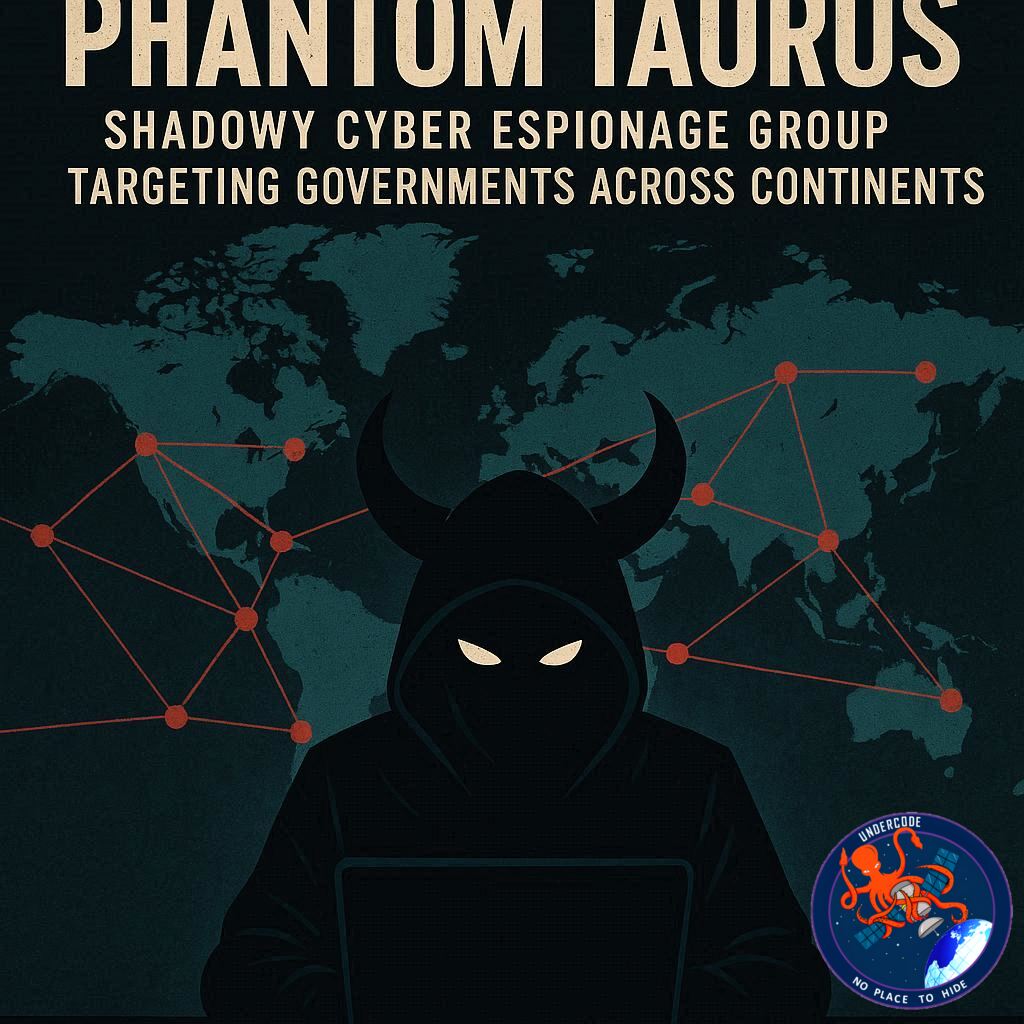
A mysterious hacking group, recently identified as Phantom Taurus, has been quietly infiltrating government and telecommunications organizations across Africa, the Middle East, and Asia. This China-aligned cyber-espionage actor has operated in the shadows for more than two years, focusing on ministries, embassies, and sensitive diplomatic communications. Cybersecurity experts warn that Phantom Taurus is not just another threat actor—it represents a sophisticated, stealth-driven campaign with far-reaching geopolitical implications.
the Original Report
Phantom Taurus has emerged as a previously undocumented state-backed hacker group linked to China. Over the last two and a half years, the group has primarily targeted foreign ministries, embassies, military operations, and geopolitical events. Palo Alto Networks’ Unit 42 revealed that the hackers’ main objective is espionage, seeking long-term intelligence access to confidential government data.
Originally tracked under the codename CL-STA-0043, Phantom Taurus was later reclassified as a new advanced threat actor due to the scale and persistence of its attacks. Investigations show that its operations align closely with China’s economic and geopolitical interests, often coinciding with major regional security events.
One of Phantom Taurus’ most alarming weapons is NET-STAR, a custom-built malware suite written in .NET. Designed to target IIS web servers, it features fileless backdoors, encrypted communications, and sophisticated evasion tactics. Among its tools are:
IIServerCore – executes commands and payloads in memory with timestomping capabilities to mislead investigators.
AssemblyExecuter V1 – loads .NET payloads directly in memory.
AssemblyExecuter V2 – an advanced upgrade bypassing Microsoft’s Antimalware Scan Interface (AMSI) and Event Tracing for Windows (ETW).
The group typically exploits Microsoft Exchange and IIS vulnerabilities, such as ProxyLogon and ProxyShell, to gain access. Once inside, Phantom Taurus moves beyond emails, directly extracting SQL database records with scripts that export data into CSV files. This data often relates to countries like Afghanistan and Pakistan, pointing to specific intelligence-gathering missions.
Interestingly, while Phantom Taurus shares infrastructure similarities with well-known groups like APT41, Mustang Panda, and Iron Taurus, their operations remain compartmentalized—suggesting tight operational secrecy within China’s broader cyber ecosystem.
The evolution of Phantom Taurus highlights the growing reliance of nation-states on cyber warfare as a tool of diplomacy and intelligence, making it one of the most pressing digital threats today.
What Undercode Say: 🔍
Phantom Taurus is not just another cyber group—it is a case study in modern digital warfare. Its emergence reflects how cyber espionage has become a frontline weapon in international politics. By targeting governments, ministries, and embassies, Phantom Taurus is essentially trying to control the flow of geopolitical intelligence.
The reliance on custom malware (NET-STAR) showcases China’s willingness to invest in bespoke digital weapons, rather than relying solely on off-the-shelf exploits. This indicates strategic planning at a state level, rather than ad-hoc cybercrime. The timestomping capabilities of IIServerCore, for instance, suggest that Phantom Taurus is well aware of forensic investigation methods and is preemptively countering detection techniques.
Another key observation is their pivot to databases. While many espionage groups focus on email theft, Phantom Taurus’ direct SQL targeting demonstrates a higher level of sophistication. By extracting structured government records, they gain access to raw intelligence, not just communications.
The timing of attacks—synchronized with regional tensions and global events—suggests a tactical intelligence agenda. For example, the focus on Afghanistan and Pakistan fits into broader Chinese strategic interests in South Asia, including the Belt and Road Initiative and regional security monitoring.
Operational compartmentalization within the Chinese cyber ecosystem is also telling. While Phantom Taurus shares technical resources with groups like Mustang Panda, its separate infrastructure suggests specialized missions assigned to this unit. This division of labor is similar to how military branches operate, each tasked with distinct but complementary missions.
From a cybersecurity perspective, Phantom Taurus represents a triple threat:
1. Persistence – they maintain long-term undetected access.
2. Stealth – their tools evade traditional defenses.
- Adaptability – they evolve tactics rapidly to counter security patches.
If governments do not act, Phantom Taurus’ tactics could spread beyond state espionage, eventually being adapted by cybercriminal groups for financial gain. The weaponization of IIS and Exchange vulnerabilities proves how fragile critical infrastructure remains, especially in regions with limited cybersecurity resources.
The rise of Phantom Taurus is a wake-up call that modern espionage is no longer limited to spies and intelligence agencies. Today, servers, databases, and communication networks are the new battlefields, and those who control them hold power over diplomacy, security, and global influence.
Fact Checker Results ✅❌
✅ Phantom Taurus has been officially documented by Palo Alto Networks’ Unit 42 as a China-linked cyber actor.
✅ NET-STAR is a confirmed custom malware suite used against IIS web servers.
❌ No verified evidence directly links Phantom Taurus’ operations to financial cybercrime—it remains an espionage-driven campaign.
Prediction 🔮
Phantom Taurus is likely to expand its footprint in 2026, shifting from ministries and embassies to critical infrastructure sectors such as energy, aviation, and finance. As global elections and diplomatic tensions rise, the group will intensify operations during high-stakes geopolitical events, cementing cyber espionage as one of the most powerful tools in international power struggles.
🕵️📝✔️Let’s dive deep and fact‑check.
References:
Reported By: thehackernews.com
Extra Source Hub:
https://www.discord.com
Wikipedia
OpenAi & Undercode AI
Image Source:
Unsplash
Undercode AI DI v2
🔐JOIN OUR CYBER WORLD [ CVE News • HackMonitor • UndercodeNews ]
📢 Follow UndercodeNews & Stay Tuned:
𝕏 formerly Twitter 🐦 | @ Threads | 🔗 Linkedin | 🦋BlueSky | 🐘Mastodon


