
Listen to this Post
Introduction: A Familiar Attack With Costly Consequences
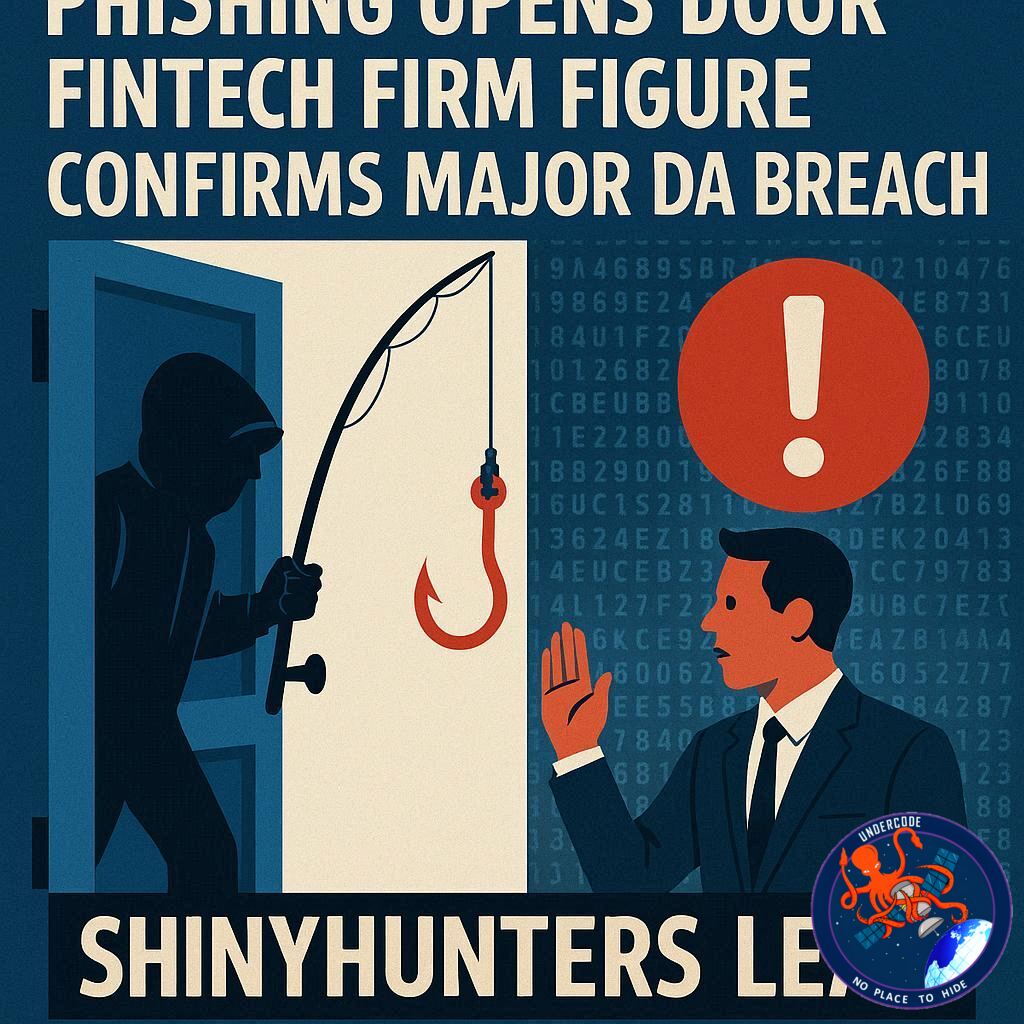
A single phishing email was enough to trigger a serious cybersecurity incident at a major fintech firm, once again highlighting how human error remains one of the weakest links in digital security. In mid-February 2026, reports surfaced that sensitive customer data had been stolen and later dumped online by a well-known hacker collective. While the breach did not originate from a system vulnerability, its impact is significant, affecting thousands of individuals and reigniting concerns about how financial technology companies handle internal security and employee awareness.
the Original Report
According to information shared by Cybersecurity News Everyday via its @TweetThreatNews account, fintech firm Figure disclosed a data breach following a successful phishing attack targeting one of its employees. The attacker managed to compromise internal access, allowing the extraction of personal customer information.
The stolen data reportedly includes full names, home addresses, and dates of birth—details that are particularly valuable for identity theft and financial fraud. Shortly after the intrusion, the hacker group ShinyHunters released approximately 2.5GB of data online, confirming the breach was not just theoretical but fully realized.
Figure acknowledged the incident publicly and stated that affected individuals have been notified. While no direct mention was made of financial data such as bank account numbers or Social Security details, the exposed information is still considered highly sensitive. The breach was attributed specifically to employee phishing rather than a flaw in Figure’s infrastructure, emphasizing the role of social engineering in modern cyberattacks.
The incident quickly gained traction in cybersecurity circles and on social media, serving as another reminder that even well-funded fintech firms remain vulnerable to basic attack vectors. The disclosure aligns with a growing trend in which threat actors prioritize data theft and public leaks over silent exploitation, using exposure as leverage and reputation damage as a weapon.
What Undercode Say:
This breach fits into a wider and increasingly troubling pattern across the fintech sector. Phishing remains effective not because defenses are weak, but because humans are predictable. Attackers no longer need zero-day exploits when a convincingly written email can bypass millions of dollars in security investments.
What stands out in the Figure incident is not the scale of the data—2.5GB is relatively modest compared to mega-breaches—but the type of information exposed. Names, addresses, and birth dates form the backbone of identity profiles used in account takeovers, SIM-swapping attacks, and long-term fraud campaigns. Even without direct financial credentials, this data dramatically lowers the barrier for future attacks against victims.
The involvement of ShinyHunters is also notable. The group has built a reputation around public data releases rather than quiet resale on underground markets. Their strategy relies on visibility, embarrassment, and pressure, which often forces companies into rapid disclosure cycles and reputational damage control. From a threat-actor perspective, this approach maximizes impact with minimal operational complexity.
From a corporate security standpoint, the breach suggests that employee security training remains reactive rather than adaptive. Annual phishing simulations and compliance checkboxes are no longer enough. Attackers continuously refine their lures using real-world context, leaked data, and AI-generated language that mimics internal communication styles.
There is also a regulatory angle to consider. Fintech firms operate in a space where trust is everything, and repeated incidents like this may accelerate stricter oversight around internal access controls and employee risk profiling. Zero-trust models are frequently discussed, but this breach shows that implementation often stops at infrastructure, not behavior.
Ultimately, the Figure breach reinforces a hard truth: cybersecurity failures in 2026 are less about technology and more about psychology. Until companies treat human risk with the same seriousness as system vulnerabilities, phishing-driven breaches will remain a constant headline.
🔍 Fact Checker Results
✅ Figure publicly disclosed a data breach linked to an employee phishing attack.
✅ ShinyHunters released approximately 2.5GB of stolen data online.
❌ No confirmed evidence suggests direct financial account numbers were exposed.
📊 Prediction
Phishing-driven breaches in the fintech sector will continue to rise throughout 2026, with hacker groups increasingly favoring public data leaks over silent monetization, forcing companies toward faster disclosures and more aggressive employee-focused security controls.
🕵️📝✔️Let’s dive deep and fact‑check.
References:
Reported By: x.com
Extra Source Hub (Possible Sources for article):
https://www.facebook.com
Wikipedia
OpenAi & Undercode AI
Image Source:
Unsplash
Undercode AI DI v2
Bing
🔐JOIN OUR CYBER WORLD [ CVE News • HackMonitor • UndercodeNews ]
📢 Follow UndercodeNews & Stay Tuned:
𝕏 formerly Twitter 🐦 | @ Threads | 🔗 Linkedin | 🦋BlueSky | 🐘Mastodon


