
Listen to this Post
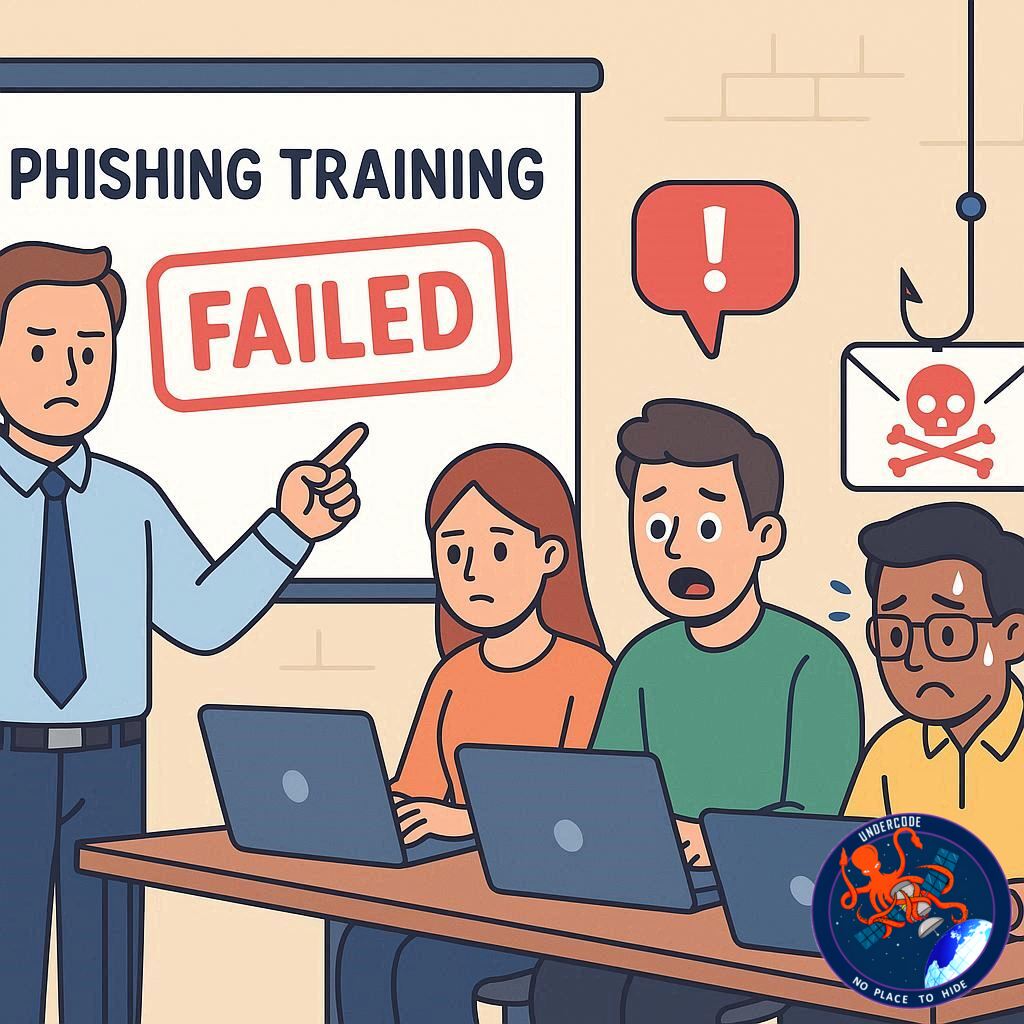
The Hidden Reality of Employee Cybersecurity Training
Phishing remains one of the most dangerous threats to businesses worldwide. Organizations spend millions every year on awareness campaigns, training modules, and simulated phishing tests, all in the hope of preventing a single careless click from triggering a catastrophic breach. Yet, new research has revealed a harsh truth: phishing training is not working. Despite the endless webinars, video tutorials, and mandatory compliance checklists, employees continue to fall victim to cleverly disguised scams.
The latest study from UC San Diego Health and Censys researchers found virtually no measurable difference between employees who had completed phishing training and those who had not. Over an eight-month experiment involving nearly 20,000 employees, repeated phishing campaigns showed that people were just as likely to click on fake links regardless of prior training. The difference between trained and untrained groups was a mere 2% — far too small to justify the cost and time invested.
This is a disturbing revelation, especially when phishing is the leading entry point for ransomware, data theft, and corporate espionage. The more phishing attempts were conducted, the higher the failure rate climbed, with click-throughs soaring from 10% in the first month to over 50% by the eighth. Training alone clearly does not create resilience. Instead, it highlights a growing need for stronger technical safeguards, better engagement methods, and a rethink of how organizations approach human error in cybersecurity.
Why Training Is Failing Employees
The study broke down exactly why employees were still falling prey to phishing. The content of the email made all the difference. Hardly anyone was fooled by an Outlook password reset email, but more than 30% fell for a fake HR update about vacation policy. This demonstrates that phishing is not just about spotting “dodgy” emails — it is about psychological manipulation, exploiting trust, and capitalizing on curiosity or fear.
Traditional awareness training, often delivered as monotonous videos or endless PowerPoint slides, has minimal engagement. Some employees spend less than a minute on the material, treating it as a box to tick rather than knowledge to absorb. Unsurprisingly, this approach leads to negligible improvements in behavior. Worse, when phishing simulations are conducted, repeated exposure doesn’t seem to build immunity. Instead, over time, the rate of failure increases as complacency sets in.
This undercuts the widely held belief that practice makes perfect. In cybersecurity training, practice without engagement just creates fatigue. Employees don’t grow smarter; they grow tired of constant testing.
The Rising Threat of Phishing
Phishing is more than an inbox nuisance — it is a global cybercrime industry. According to recent reports, phishing is the primary driver of ransomware and identity theft, responsible for countless breaches across enterprises, small businesses, and individuals alike. Attackers leverage automation, infostealers, and even AI tools to craft more convincing scams, making it harder than ever for employees to distinguish between legitimate communication and fraudulent attempts.
Organizations are especially vulnerable because phishing preys on urgency and trust. A single click can open the door to stolen credentials, financial losses, reputational harm, and even regulatory penalties. The stakes are far higher than a temporary IT headache — they can threaten the survival of an entire business.
Why Companies Still Rely on Training
Despite the evidence, companies continue to pour money into training programs because they provide a sense of control. Compliance departments love them, regulators expect them, and executives view them as a “must-have” defense mechanism. But as the UC San Diego study shows, they may be little more than corporate theater.
Training does have potential if it evolves. The researchers recommend more engaging approaches such as gamification, role-based scenarios, and live workshops that encourage active participation. Employees are more likely to retain knowledge when they interact with content rather than passively consume it. However, engagement alone is not enough without complementary technical safeguards.
Toward a Better Defense
The study urges organizations to pivot away from blind faith in training and invest in stronger technical solutions. Measures such as multi-factor authentication (MFA), endpoint security controls, and restricting credential use to trusted domains can significantly reduce the damage of phishing. Unlike human error, these safeguards don’t rely on an employee’s mood, attention span, or memory.
For many businesses, the future of phishing defense lies in layered security: combining modest awareness efforts with strict technical barriers. This hybrid approach acknowledges that humans are fallible but ensures that a single slip does not compromise the entire organization.
What Undercode Say:
Phishing training has long been treated as the “holy grail” of corporate defense, but the numbers tell a different story. A failure rate that increases over time rather than decreases is not just disappointing — it is alarming. It shows that employees are being overwhelmed by constant testing and underwhelmed by poor training design.
Organizations are guilty of relying too heavily on compliance-driven exercises that do little more than check a regulatory box. If 30% of employees can be tricked by something as simple as a fake vacation policy, the system is broken. Cybersecurity training needs to shift from being a passive lecture to an active, dynamic, and even entertaining process. Gamified phishing tournaments, role-based simulations, and real-time coaching could make employees more alert than yet another dull video module.
But beyond rethinking training, companies need to accept the limits of human attention. No amount of education can fully protect against evolving threats that exploit trust and urgency. This is where technical safeguards become the real hero. Enforcing MFA across all accounts, implementing stricter domain whitelisting, and using real-time email filtering with AI can cut down phishing success rates dramatically. These measures don’t replace humans — they back them up.
The rise of AI-powered phishing makes the issue even more urgent. Automated scams can now generate highly convincing personalized messages at scale, meaning employees are more vulnerable than ever. Relying solely on traditional training is like bringing a knife to a gunfight. Instead, the future lies in layered defenses: partial training for awareness, combined with powerful automation and security protocols that minimize the blast radius of a mistake.
There is also a psychological dimension. Employees under constant simulated attacks may start to resent their employer, seeing training as punishment rather than protection. This erodes trust and engagement, ultimately making people less cooperative. Cybersecurity must be reframed as a team effort, not a game of “catch the employee off guard.” Companies that adopt collaborative, empathetic approaches will have far better outcomes than those that treat staff as liabilities.
In the end, phishing resilience is not about eliminating mistakes — it is about limiting their consequences. Employees will always be fallible, but organizations don’t have to be. Those who adapt their strategies, combining human engagement with technical resilience, will stand the best chance of surviving the phishing storm.
Fact Checker Results
✅ Phishing is confirmed as the leading entry point for ransomware.
❌ Training alone does not significantly reduce click rates.
✅ Technical safeguards such as MFA and domain restrictions are proven to be more effective.
Prediction
Phishing attacks will only become more sophisticated as AI-driven scams rise. Within the next three years, companies that rely solely on traditional awareness training will face higher breach rates, while those that invest in layered defenses — blending smart training with technical controls — will emerge far more resilient. 🚨
🕵️📝✔️Let’s dive deep and fact‑check.
References:
Reported By: www.zdnet.com
Extra Source Hub:
https://www.github.com
Wikipedia
OpenAi & Undercode AI
Image Source:
Unsplash
Undercode AI DI v2
🔐JOIN OUR CYBER WORLD [ CVE News • HackMonitor • UndercodeNews ]
📢 Follow UndercodeNews & Stay Tuned:
𝕏 formerly Twitter 🐦 | @ Threads | 🔗 Linkedin | 🦋BlueSky | 🐘Mastodon


