
Listen to this Post
Introduction
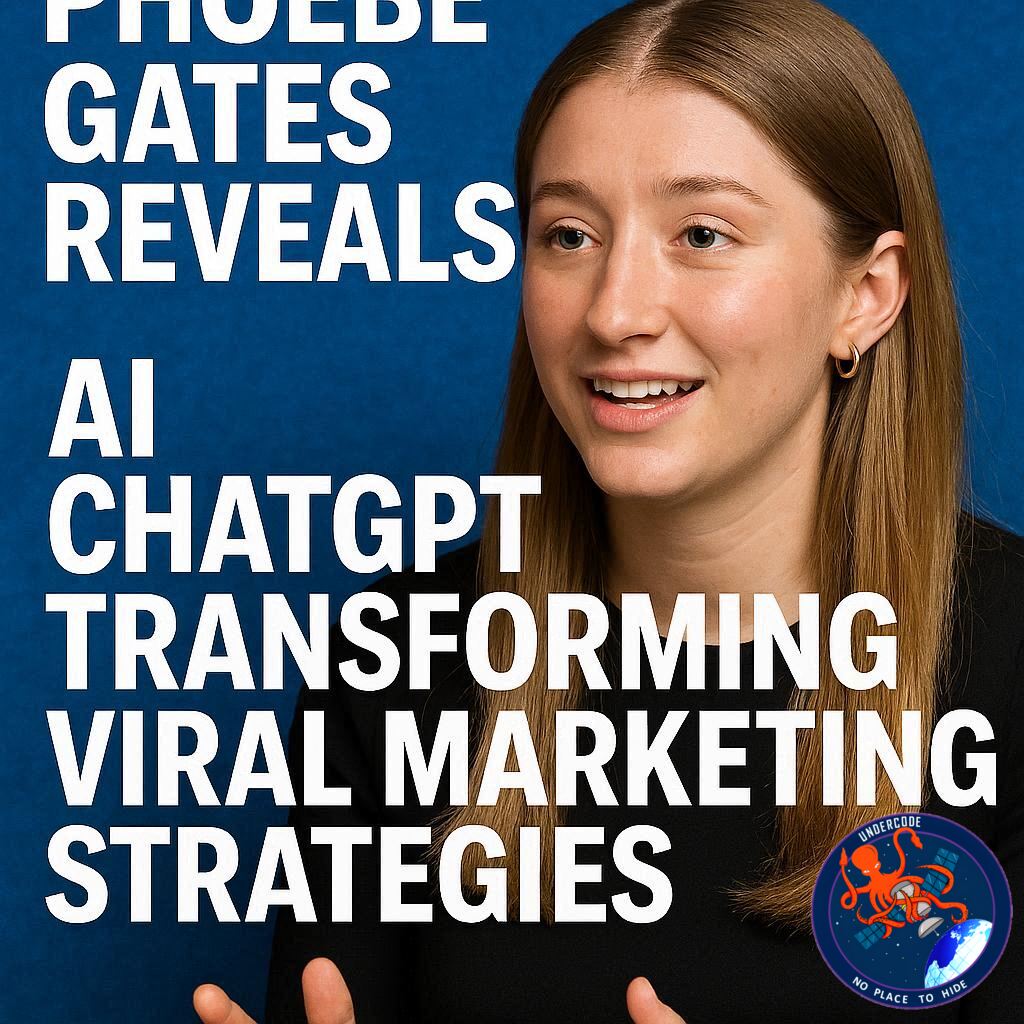
In the ever-evolving world of social media marketing, cracking the code behind viral content has become both an art and a science. Phoebe Gates, daughter of tech icon Bill Gates, recently opened a window into this process, revealing how she leverages AI tools like ChatGPT to dissect and recreate content that resonates online. Her insights, shared during the podcast The Burnouts, provide a glimpse into how next-generation entrepreneurs are blending data, creativity, and artificial intelligence to amplify their reach and impact.
Reverse Engineering Virality: The Method Behind Phia’s Marketing
Phoebe Gates and her cofounder Sophia Kianni are applying advanced AI techniques to marketing their fashion tech startup, Phia. On The Burnouts, they explained that their approach begins with identifying high-performing videos on social media. They compile these into an Excel sheet, noting what makes each video successful—timing, structure, hooks, pacing, and narrative style. By “reverse engineering” these viral videos, they can isolate patterns and understand the elements that drive engagement.
Once these patterns are identified, Gates and Kianni input the information into ChatGPT. They feed the AI transcript data and video insights to generate scripts tailored specifically for Phia’s branding and messaging. This method ensures that even simple founder videos carry the hallmarks of viral content without starting entirely from scratch. Kianni emphasizes that using the internet as a learning tool is not just efficient—it is essential.
The duo’s workflow highlights a larger trend in modern entrepreneurship: blending AI tools with traditional content creation processes to optimize engagement. Gates notes that AI supercharges her productivity, saying she uses it “almost every single day.” Their approach demonstrates a careful balance between creativity and algorithmic insight, showing how understanding social media mechanics can transform ordinary content into highly shareable material.
Phia itself, launched in April by Gates and Kianni—who were Stanford roommates—is a fashion comparison platform scanning 40,000 websites to help users find better clothing deals. Gates also shared that unlike her father, she was required to finish her degree before fully launching her venture, highlighting a contrast between legacy tech pathways and the new generation of student entrepreneurs leveraging AI.
What Undercode Say: Strategic AI in Modern Content Creation
Phoebe Gates’ method underscores a critical evolution in marketing: AI is no longer just an accessory; it is a strategic collaborator. By reverse engineering viral content, Gates and Kianni move beyond imitation, turning AI into a lens through which to understand audience behavior. Their use of Excel to map trends and patterns illustrates a systematic approach, blending quantitative analysis with creative intuition.
Viral content is rarely random. Successful videos share common elements—captivating hooks, relatable narratives, and emotionally resonant endings. By deconstructing these components, Gates leverages predictive insight rather than guesswork. ChatGPT then functions as an accelerant, converting these insights into executable content efficiently. This workflow demonstrates the practical benefits of AI in iterative content development, enabling startups to punch above their weight in competitive social media ecosystems.
Moreover, this method highlights how data literacy and AI fluency are becoming indispensable for entrepreneurs. Understanding virality patterns is akin to understanding market demand; it allows founders to predict engagement outcomes and adapt strategies proactively. The ethical and creative dimension is equally important—reverse engineering does not replace originality but provides a scaffold to innovate within proven frameworks.
Phia’s broader vision—offering price transparency across 40,000 fashion websites—also benefits from AI integration. Beyond marketing, AI can be applied to pricing algorithms, user personalization, and predictive modeling, demonstrating how AI can touch every aspect of a startup’s operations. Gates’ frequent use of AI reflects a cultural shift where young founders see technology not as a tool but as an integral partner in growth.
The podcast also highlights generational contrasts in entrepreneurship. While Bill Gates famously dropped out to build Microsoft, Phoebe Gates had to navigate institutional requirements before fully committing to Phia. This duality reflects the evolving entrepreneurial landscape where AI accelerates opportunity, but structured learning remains valued. AI thus serves as both a creative amplifier and a strategic equalizer, allowing new founders to compete on the same level as established players.
Phoebe and Kianni’s approach also provides insights for marketers outside tech. Brands seeking virality can adopt similar AI-driven frameworks, analyzing successful campaigns, breaking down storytelling techniques, and leveraging machine learning tools to create tailored content. The model is scalable and adaptable across industries, making it a template for the future of content marketing.
Their strategy also raises questions about the future of creative labor. If AI can efficiently replicate the mechanics of virality, human creativity may increasingly focus on ideation, ethical framing, and brand authenticity rather than execution. This hybrid human-AI workflow could redefine how startups, influencers, and large brands approach content strategy in the coming decade.
In essence, Gates’ and Kianni’s methodology demonstrates that understanding virality is as much about patterns and analytics as it is about creativity. AI is a force multiplier, enabling smaller teams to operate like large-scale content factories, provided they combine insight with innovation. This reflects a broader trend in AI adoption: tools that augment human intelligence rather than replace it, especially in fields that merge art, psychology, and technology.
Fact Checker Results
✅ Phoebe Gates cohosts The Burnouts podcast with Sophia Kianni.
✅ Phia scans prices across ~40,000 websites to compare clothing costs.
✅ Gates and Kianni use ChatGPT to help draft marketing content.
Prediction
📊 AI-driven content creation will become standard practice for startups in fashion, tech, and lifestyle sectors. Tools like ChatGPT will allow small teams to generate high-engagement videos rapidly, making virality a predictable outcome rather than a lucky accident. Expect more founders to adopt reverse engineering strategies, blending data analytics and AI to optimize marketing ROI within the next 3–5 years. AI-powered creativity will evolve into a core competitive advantage, shifting the focus from sheer production volume to precision, relevance, and audience insight.
If you want, I can also create a more punchy, SEO-rich version of this article that’s ready to post for maximum traffic. Do you want me to do that next?
▶️ Related Video (84% Match):
🕵️📝✔️Let’s dive deep and fact‑check.
References:
Reported By: timesofindia.indiatimes.com
Extra Source Hub (Possible Sources for article):
https://stackoverflow.com
Wikipedia
OpenAi & Undercode AI
Image Source:
Unsplash
Undercode AI DI v2
Bing
🔐JOIN OUR CYBER WORLD [ CVE News • HackMonitor • UndercodeNews ]
📢 Follow UndercodeNews & Stay Tuned:
𝕏 formerly Twitter 🐦 | @ Threads | 🔗 Linkedin | 🦋BlueSky | 🐘Mastodon


