
Listen to this Post
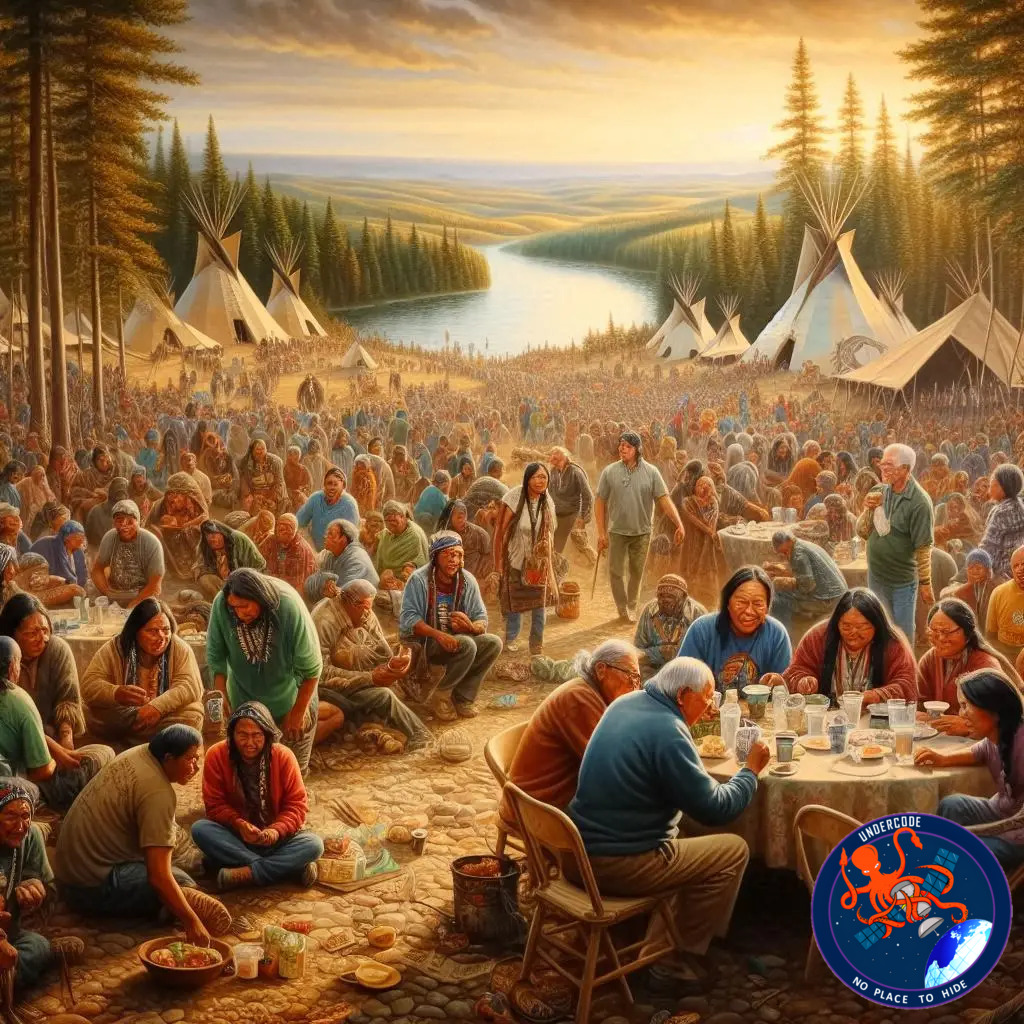
In the rolling plains and rugged badlands of South Dakota lies the Pine Ridge Reservation, home to the Oglala Sioux Tribe and a stark portrait of resilience amidst relentless hardship. As the federal government shutdown disrupts the Supplemental Nutrition Assistance Program (SNAP), families here are confronting an urgent reality: food insecurity is escalating, and survival is increasingly uncertain. For many, basic necessities have become scarce, and the social safety nets meant to sustain them are fraying under unprecedented stress.
A Community on the Brink: Food Shortages and Economic Strain
A four-pack of dogs wandered the streets near the reservation’s lone grocery store, a subtle reminder that hunger affects all living beings here. The residents of Pine Ridge are facing severe food shortages, heightened by the halted delivery of SNAP benefits due to the federal shutdown. Many families, like single mother Chiffon Two Bulls and her four children, are scraping by with only bread and a small amount of meat left in the house. Judge orders to resume SNAP funding have been met with appeals, meaning aid could still take days to reach those in need.
Pine Ridge spans 2.1 million acres, yet its population contends with some of the highest poverty rates in the United States. Tribal leaders report unemployment exceeding 80% in certain districts, and opportunities for work or advancement are scarce. With only one major grocery store—Buche Foods—serving a 50-mile radius, residents face inflated prices and limited access to nutritious food. Store owner RF Buche highlights the stark price disparity compared to urban centers: small, independent grocers bear higher costs that are inevitably passed onto the community.
Transportation compounds the problem. Many residents lack reliable vehicles, leaving them dependent on friends, neighbors, or even their own two feet for essential errands. Katherine Water, a 59-year-old great-grandmother, struggles to reach the store due to mobility challenges and a broken car transmission. She supplements her income by making star quilts, which she sells for barely enough to cover utilities, supplies, and now increasingly, food.
Others, like Nathaniel Waters, face similar economic uncertainty. With no stable employment and reduced SNAP benefits, he relies on odd jobs and long trips to nearby towns for additional income. For families like Two Bulls, whose benefits have been drastically cut, winter looms as a threat, not just due to the cold, but because they lack the financial means to repair their homes or heat them adequately.
Local support systems are doing their best, but the gap is overwhelming. Organizations like Team Buche Cares and the Conscious Alliance Food Sovereignty Center are providing groceries and limited aid, but these efforts barely scratch the surface. SNAP is irreplaceable for most families, and the delay or reduction of benefits exposes the fragility of the reservation’s food system. Commodity food programs (FDPIR) provide some relief, yet these too are stretched thin amid the influx of residents abandoning SNAP due to uncertainty.
Treaty obligations further complicate the picture. The Fort Laramie treaties of 1851 and 1868 mandated that the U.S. government provide food and essential supplies in exchange for land cessions and peace. Tribal leaders argue that these commitments remain unmet, as federal programs falter and communication with government agencies fails. The resulting chaos leaves families vulnerable, and desperation among residents is palpable. Yet amid the hardship, a sense of resilience persists—anchored in culture, community, and enduring spirit.
What Undercode Say: Analyzing Pine Ridge’s Food Crisis
Pine Ridge Reservation is emblematic of the systemic inequities that persist in America’s marginalized communities. The combination of historical displacement, treaty violations, and modern policy failures has created an environment where basic survival is an uphill battle. The SNAP disruption demonstrates the reservation’s reliance on federal programs not as a privilege but as a lifeline. This dependency underscores a deeper structural vulnerability: without consistent, reliable support, residents face immediate threats to nutrition and health, while longer-term socioeconomic outcomes worsen.
Local grocers like Buche Foods highlight a critical tension between cost and accessibility. Rural, independent stores bear higher wholesale costs, which ultimately burdens the very families most in need. Price discrepancies with large chains in urban centers reflect structural inequalities in the supply chain that have been overlooked in national policy discussions. For residents, access is not simply a matter of affordability—it is also a logistical challenge shaped by vehicle availability, harsh weather, and geographic isolation.
Individual coping strategies—like Water’s quilting business or Waters’ odd jobs—reflect resourcefulness but also illuminate systemic insufficiencies. These solutions are temporary patches in a landscape where consistent income, healthcare, transportation, and infrastructure remain scarce. With winter approaching, families confront compounded risks: housing in disrepair, insufficient heating, and dwindling food supplies.
Policy changes such as tightened SNAP work requirements, even if partially exempt for Native Americans, create administrative hurdles that disproportionately affect communities already struggling with employment scarcity. Meanwhile, federal government delays expose gaps between legal obligations (treaty rights) and practical enforcement. This disconnect fuels mistrust and highlights the failure of safety nets intended to protect vulnerable populations.
Moreover, the emotional toll cannot be overstated. Anxiety, hopelessness, and fear of hunger are pervasive, reflecting not only immediate physical needs but also long-term psychological stressors that can impede community resilience. Social programs, charitable efforts, and tribal leadership are all mobilizing to address these gaps, yet the root causes—historical dispossession, underfunding, and policy neglect—remain largely unaddressed.
To truly stabilize Pine Ridge, systemic interventions are necessary: equitable food distribution policies, transportation access, fair pricing in rural markets, expanded employment opportunities, and enforcement of treaty rights. Without these measures, stopgap aid—while critical—can only delay the inevitable strain on families already living on the edge.
The resilience and cultural strength of Pine Ridge residents are undeniable. Yet hope alone cannot substitute for structural reform. Addressing the underlying inequities is essential, not only to avert immediate hunger but to enable future generations to thrive without being shackled by historical neglect and contemporary policy failures.
Fact Checker Results
✅ SNAP benefits are crucial to survival for the majority of Pine Ridge residents.
❌ Current federal shutdown has delayed funding, exacerbating food insecurity.
✅ Treaty obligations exist but remain poorly enforced, creating systemic inequities.
Prediction
🌨 As winter deepens, food insecurity on Pine Ridge Reservation may escalate sharply, pushing more residents toward emergency aid and charitable programs. Without swift intervention, temporary relief efforts could be overwhelmed, highlighting the urgent need for federal accountability and infrastructure investment.
🕵️📝✔️Let’s dive deep and fact‑check.
References:
Reported By: edition.cnn.com
Extra Source Hub (Possible Sources for article):
https://www.digitaltrends.com
Wikipedia
OpenAi & Undercode AI
Image Source:
Unsplash
Undercode AI DI v2
Bing
🔐JOIN OUR CYBER WORLD [ CVE News • HackMonitor • UndercodeNews ]
📢 Follow UndercodeNews & Stay Tuned:
𝕏 formerly Twitter 🐦 | @ Threads | 🔗 Linkedin | 🦋BlueSky | 🐘Mastodon


