
Listen to this Post
Introduction: A Defining Moment for India’s Electronics Industry
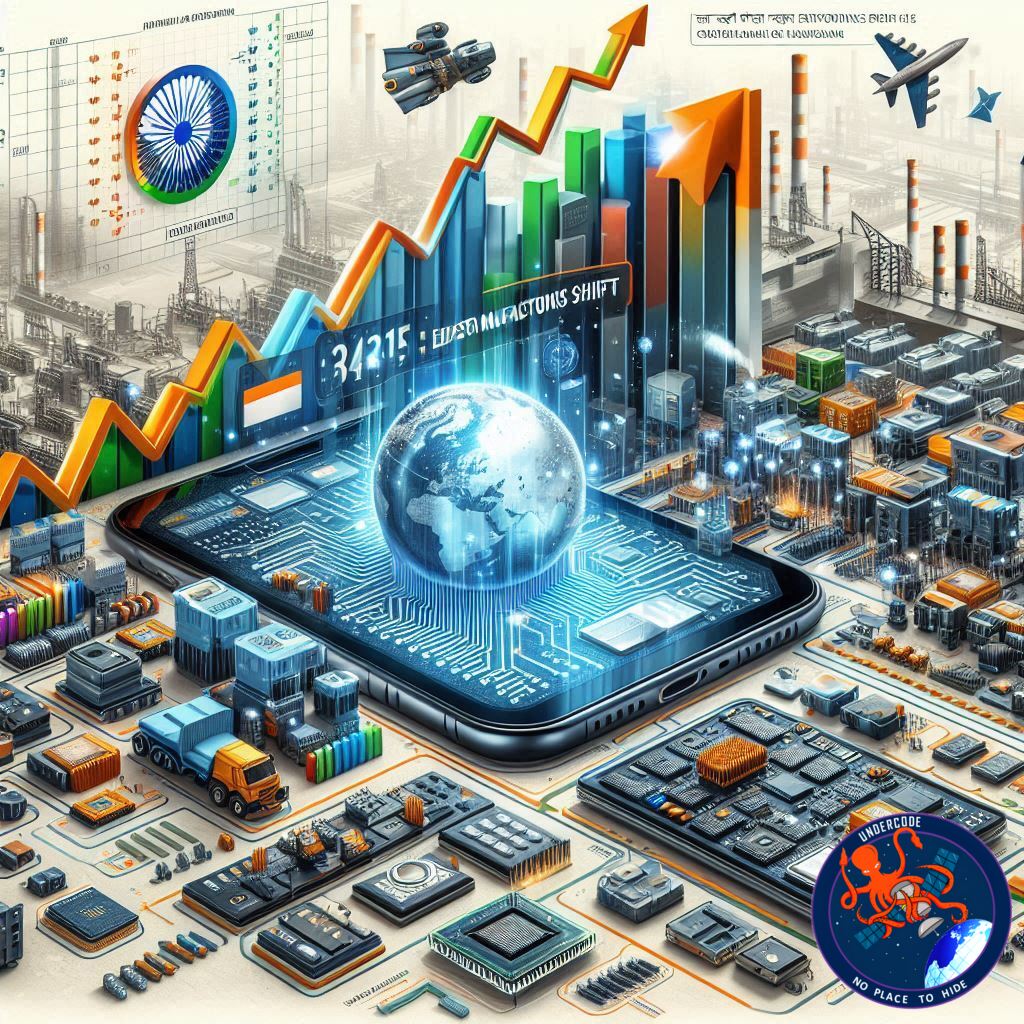
India’s electronics manufacturing story reached a decisive milestone in 2025. For the first time, electronics exports crossed Rs 4.15 lakh crore, signaling not just growth in numbers but a structural shift in how and where global technology products are made. What was once a market dominated by imports has evolved into a production powerhouse, driven largely by smartphones, policy-backed incentives, and a rapidly maturing supply chain. This moment reflects years of industrial policy, private investment, and global realignment converging into measurable success.
Overview: Electronics Exports Break the Historic Barrier
India’s electronics exports exceeded $47 billion in 2025, equivalent to more than Rs 4.15 lakh crore, according to official data. This marked a 37 percent jump compared to the previous 12-month period in 2024, when exports stood at $34.93 billion. The scale of this growth places electronics among India’s fastest-expanding export categories, rivaling traditional sectors such as pharmaceuticals and engineering goods.
Smartphones Lead the Export Surge
Nearly two-thirds of total electronics exports in 2025 came from smartphone shipments, valued at around $30 billion. This dominance highlights how mobile devices have become the backbone of India’s electronics export economy. Smartphones are no longer just assembled locally; they now represent a sophisticated export product competing directly with long-established manufacturing hubs.
The Role of the PLI Scheme
The production-linked incentive (PLI) scheme played a central role in this expansion. Smartphone exports supported by PLI reached an all-time high in 2025, reinforcing the effectiveness of targeted industrial incentives. By rewarding incremental production and exports, the scheme encouraged manufacturers to scale rapidly while localizing more components.
December 2025: A Strong Finish to the Year
Electronics exports touched $4.17 billion in December 2025 alone, reflecting a 16.8 percent increase over December 2024. This strong year-end performance underscored consistent global demand for Indian-made devices rather than a one-off spike driven by seasonal factors.
Consistency Across the Year
Exports crossed the $4 billion monthly mark in seven out of twelve months in 2025. This pattern shows sustained momentum rather than uneven growth, suggesting that India’s electronics sector has reached a level of operational stability attractive to global buyers.
Smartphone Exports in Long-Term Context
The smartphone export figure for 2025 accounted for nearly 38 percent of India’s total smartphone exports over the last five years. This concentration highlights how recent years have been transformative, with 2025 standing out as the strongest export year in the sector’s history.
Five-Year Export Performance
Between 2021 and 2025, India’s smartphone shipments abroad totaled approximately $79.03 billion. Among these years, calendar year 2025 delivered the highest 12-month export tally on record, confirming that growth has accelerated rather than plateaued.
Apple’s Dominant Contribution
Apple’s iPhone consignments accounted for roughly 75 percent of India’s smartphone exports during this five-year period, valued at more than $22 billion. This dominance underscores India’s growing strategic importance in Apple’s global supply chain, particularly as the company diversifies production away from single-country dependence.
iPhone Exports Cross Rs 2 Lakh Crore
For the first time since domestic production began in 2021, iPhone exports from India crossed Rs 2 lakh crore in 2025. Industry data shows these exports surged nearly 85 percent compared to 2024, reflecting both increased capacity and higher-value models being produced locally.
Manufacturing Scale Meets Global Standards
The rapid rise in iPhone exports indicates that Indian factories are meeting stringent global quality, volume, and delivery benchmarks. This transition from low-complexity assembly to advanced manufacturing marks a crucial upgrade in India’s industrial capabilities.
Government Outlook on Future Growth
Union Minister Ashwini Vaishnaw stated that electronics exports are expected to expand further due to India’s semiconductor manufacturing push. According to official projections, momentum is set to continue in 2026 as four semiconductor plants move into commercial production.
Semiconductors as the Next Growth Engine
Semiconductor fabrication is widely viewed as the missing link in India’s electronics ecosystem. Domestic chip production could reduce import dependence, stabilize supply chains, and enable more value to be retained within the country.
Domestic Production Reaches New Heights
Official estimates show that India’s electronic production reached around Rs 11.3 lakh crore during the 2024–25 period. This figure reflects not only export growth but also rising domestic consumption supported by local manufacturing.
India Becomes the World’s Second-Largest Mobile Producer
India has now become the second-largest mobile phone producer globally. More than 99 percent of phones sold domestically are made in India, a dramatic reversal from the import-heavy market of a decade ago.
Moving Up the Manufacturing Value Chain
The shift is no longer just about assembling imported components. Manufacturers are increasingly localizing sub-assemblies, testing, packaging, and select high-value components, moving India higher up the electronics value chain.
The End Date of the Smartphone PLI Scheme
The smartphone PLI scheme is scheduled to conclude in March 2026. However, reports suggest the government is exploring ways to extend or redesign support mechanisms to sustain export momentum.
Policy Continuity as a Key Concern
Industry stakeholders view policy continuity as essential. Any abrupt withdrawal of incentives could disrupt investment cycles, while a calibrated extension could help firms transition to scale-driven competitiveness without heavy subsidies.
What Undercode Say: Strategic Signals Behind the Export Boom
The 2025 electronics export milestone is not merely a statistical achievement; it signals a deeper strategic realignment in global manufacturing. Multinational companies are increasingly hedging geopolitical and supply-chain risks by diversifying production locations, and India has emerged as one of the most credible alternatives.
Policy Design Over Policy Volume
What stands out is not just the size of incentives but their design. The PLI scheme rewarded performance rather than intent, forcing manufacturers to deliver measurable output. This approach reduced inefficiencies often associated with subsidy-heavy industrial policies.
Smartphones as a Gateway Industry
Smartphones served as the entry point for India’s electronics expansion. Their high volumes, standardized processes, and global demand made them ideal for rapid scaling. Success here creates spillover effects into wearables, tablets, and eventually computing devices.
Apple’s Presence as a Confidence Signal
Apple’s heavy reliance on Indian manufacturing acts as a global endorsement. When a company with uncompromising quality standards scales production in a country, it sends a strong signal to other global players considering similar moves.
Risks of Overconcentration
However, the dominance of a single company and product category also presents risks. Overconcentration in iPhone exports exposes India to demand fluctuations, pricing pressures, and strategic decisions made outside its control.
Semiconductor Push Changes the Equation
The upcoming semiconductor plants could significantly alter India’s position. Chips are the most value-dense component of electronics, and local production would dramatically increase domestic value addition.
Skills and Workforce Implications
Electronics manufacturing at scale demands a skilled workforce, from precision assembly to process engineering. The export boom has already created employment, but sustaining it will require continuous investment in training and technical education.
Infrastructure as a Silent Enabler
Ports, logistics parks, and air cargo capacity have quietly played a critical role. Faster customs clearance and improved freight handling have made Indian exports more competitive in time-sensitive electronics markets.
Global Demand Cycles Matter
The sustainability of this growth will depend on global demand cycles. A slowdown in consumer electronics demand could test the resilience of India’s export-led strategy, especially if diversification remains limited.
The Post-PLI Transition
As the PLI scheme approaches its conclusion, the real test will be whether manufacturers can maintain scale and competitiveness without direct incentives. Long-term success depends on productivity gains, supplier ecosystems, and innovation.
Strategic Autonomy Through Manufacturing
Beyond economics, electronics manufacturing carries strategic weight. Control over production capacity enhances national resilience, reduces external dependencies, and strengthens India’s negotiating position in global trade.
A Structural Shift, Not a Temporary Spike
Overall, the data suggests that India’s electronics export rise is structural rather than cyclical. The combination of policy, global realignment, and private investment points toward a durable transformation.
Fact Checker Results
Export Milestone Verification
The reported figure of over Rs 4.15 lakh crore in electronics exports aligns with official data releases. ✅
Smartphone Export Dominance
Data confirming smartphones contributing nearly two-thirds of electronics exports is consistent with industry reports. ✅
Apple’s Export Share
Claims regarding Apple accounting for roughly 75 percent of smartphone exports match multiple industry estimates. ✅
Prediction: What Comes Next for India’s Electronics Exports
Continued Growth with Moderation 📈
Exports are likely to keep growing in 2026, though at a more moderate pace as base volumes rise.
Semiconductor Impact Timeline 🧠
Meaningful export impact from domestic semiconductor plants may emerge gradually rather than immediately.
Policy Evolution Ahead ⚙️
The government is expected to replace blanket incentives with targeted support focused on value addition and innovation.
🕵️📝✔️Let’s dive deep and fact‑check.
References:
Reported By: zeenews.india.com
Extra Source Hub (Possible Sources for article):
https://www.pinterest.com
Wikipedia
OpenAi & Undercode AI
Image Source:
Unsplash
Undercode AI DI v2
Bing
🔐JOIN OUR CYBER WORLD [ CVE News • HackMonitor • UndercodeNews ]
📢 Follow UndercodeNews & Stay Tuned:
𝕏 formerly Twitter 🐦 | @ Threads | 🔗 Linkedin | 🦋BlueSky | 🐘Mastodon


