
Listen to this Post
A Winter Cyberstorm Hits Critical Infrastructure
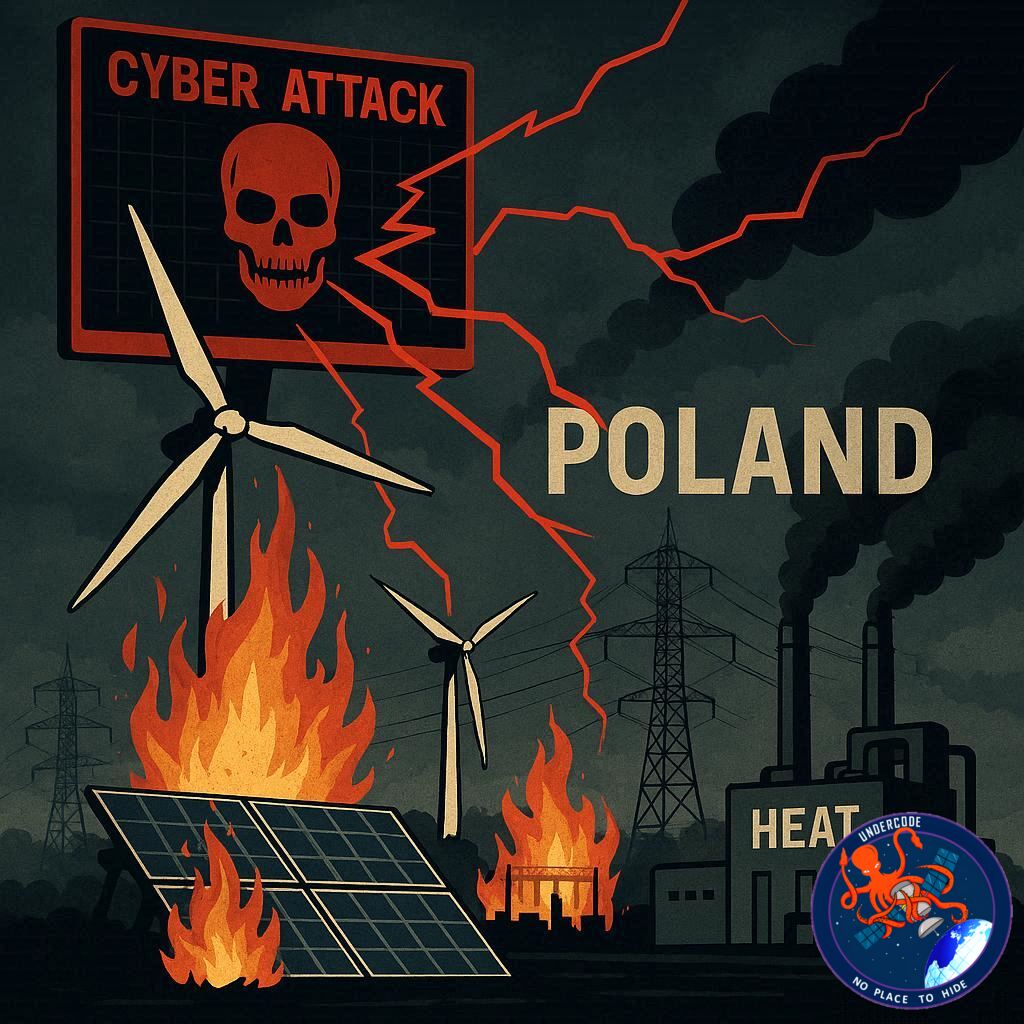
Poland entered the final days of the year under an unusual and deeply concerning form of attack. As freezing temperatures and snowstorms swept across the country, a coordinated wave of cyber intrusions struck key elements of its energy infrastructure. More than 30 wind and photovoltaic farms, a major combined heat and power (CHP) plant supplying nearly half a million people, and a private manufacturing company were all hit within the same day.
The attacks were not about espionage or silent data theft. They were designed to damage, disrupt, and intimidate. Security analysts describe the operation as closer to digital arson than classic hacking, timed deliberately to coincide with harsh winter conditions when energy stability matters most.
Despite the severity of the assault, electricity generation and heat delivery continued without interruption. End users were spared immediate outages, but the message was unmistakable: modern energy systems, especially renewable ones, are now front-line targets in cyber-physical conflict.
A Coordinated Wave of Destructive Cyber Activity
The incidents unfolded during the morning and afternoon hours, revealing a level of coordination rarely seen in attacks on civilian energy infrastructure. Hackers simultaneously targeted renewable energy installations, a large CHP facility, and an unrelated manufacturing firm.
What made these attacks stand out was their destructive intent. Communications were severed, remote control systems were disabled, and industrial devices were deliberately damaged. Yet the attackers stopped just short of triggering catastrophic failures, suggesting careful planning and a deep understanding of how far they could go without causing immediate blackouts.
Security researchers later released a detailed technical report documenting the sequence of events, warning that this operation represents an escalation from traditional cyber espionage into direct sabotage of operational technology.
Renewable Energy Farms in the Crosshairs
The primary targets were substations that act as critical grid connection points. These facilities channel electricity from wind turbines and solar panels into Poland’s broader distribution network, making them high-impact targets despite their relatively small physical footprint.
Inside these substations are industrial components essential to grid stability. Remote terminal units (RTUs) manage telecontrol and monitoring. Human-machine interfaces (HMIs) visualize system status for operators. Protection relays guard against electrical faults, while routers, modems, switches, and serial port servers handle communications between devices and control centers.
Attackers first gained access to internal networks within these substations. Once inside, they conducted extensive reconnaissance, carefully mapping every connected device. This was not a smash-and-grab intrusion. It was a methodical operation aimed at understanding how the system worked before breaking it.
From Reconnaissance to Digital Sabotage
After mapping the environment, the attackers executed a destructive plan. Controller firmware was corrupted, system files were wiped, and custom-built wiper malware was deployed across targeted devices.
The sabotage was semi-automated and triggered on the morning of December 29. RTUs were among the hardest hit, effectively cutting off communication between the substations and the distribution system operator. Remote monitoring and control became impossible, forcing operators to rely on local procedures and manual oversight.
Crucially, the attackers avoided disrupting the core energy generation process itself. Wind turbines kept spinning, solar panels continued feeding power into the grid, and consumers never noticed an outage. This restraint points to attackers who understood exactly which components to damage to cause operational chaos without crossing into full-scale disaster.
A Rare Hybrid IT-OT Attack
This incident marks one of the rare publicly documented cases where attackers blended traditional IT intrusion techniques with direct manipulation of physical industrial devices. The operation crossed the boundary between cyberspace and the physical world, targeting both networks and the machinery they control.
Such hybrid attacks require specialized expertise. Operational technology environments differ significantly from standard IT networks, often relying on legacy hardware, proprietary protocols, and minimal security controls. The precision displayed here suggests attackers with long-standing experience in energy-sector systems.
For analysts, this precision is more alarming than brute-force disruption. It signals a shift toward attacks that are harder to detect, harder to attribute, and potentially far more damaging if fully unleashed.
The CHP Plant: A Stealthier, Deeper Intrusion
While renewable energy sites were hit with overt sabotage, the attack on the CHP plant followed a quieter path. According to Poland’s national cybersecurity authorities, attackers had infiltrated the plant’s network months earlier.
During this extended presence, they exfiltrated sensitive operational data and compromised privileged accounts. With elevated access, they moved laterally across internal systems, positioning themselves for a destructive final act.
Their objective was clear: deploy wiper malware capable of irreversibly erasing data across critical devices, disrupting heat production during the coldest time of the year. The plan failed only because endpoint detection and response (EDR) tools detected and blocked the malware before it could spread.
A Parallel Strike on Manufacturing
On the same day, a private manufacturing company was also attacked using the same wiper malware. Investigators believe this incident was opportunistic rather than strategically tied to energy disruption, but the timing was no coincidence.
The reuse of identical malware suggests a coordinated campaign or at least shared tooling across targets. Even if the manufacturing firm was not central to the attackers’ primary goals, its compromise added noise and complexity to incident response efforts nationwide.
Inside the Wiper Malware
Technical analysis revealed a destructive payload designed for maximum damage rather than stealth. Once executed using compromised privileged accounts, the malware rapidly deleted files, corrupted firmware, and isolated systems from their networks.
Its design focused on reliability and scale, ensuring that once triggered, recovery would be slow and costly. At the CHP plant, only proactive defensive measures prevented widespread damage.
The malware’s behavior reinforces the conclusion that this was not an experiment or test run. It was built for real-world sabotage.
Tracing the Threat Actors
Infrastructure artifacts such as compromised virtual private servers, routing patterns, and anonymization chains point toward a well-known threat cluster. Different security vendors track this group under various names, including Static Tundra, Berserk Bear, Ghost Blizzard, and Dragonfly.
This group has a long history of targeting energy sectors across Europe and North America. Until now, their operations have largely focused on espionage and reconnaissance. The Polish incident represents the first publicly documented case of them shifting decisively toward destructive action.
The lack of a public claim of responsibility does little to reduce concern. The timing, amid heightened geopolitical tensions, has raised alarms across Europe’s security community.
Poland’s Immediate Response
Polish authorities moved quickly to isolate affected systems and launch forensic investigations. By cutting off compromised networks and securing remaining infrastructure, they prevented further spread and stabilized operations.
The response highlighted the importance of preparedness. Facilities with modern monitoring and detection tools fared significantly better than those relying on older, less protected systems.
Renewable Energy and a Growing Attack Surface
Experts warn that Europe’s rapid transition toward renewable energy has unintentionally expanded its cyber attack surface. Wind and solar farms often rely on distributed, remotely managed infrastructure, much of it built with legacy OT devices that were never designed with cybersecurity in mind.
As automation increases, so does exposure. Each RTU, modem, or HMI becomes a potential entry point for attackers willing to invest time and expertise.
Defensive Lessons from the Incident
Security researchers urge operators to treat this event as a wake-up call. Network segmentation between IT and OT systems can limit attacker movement. Deploying EDR solutions within OT environments, while challenging, has proven effective.
Regular firmware integrity checks and tighter control over privileged accounts are no longer optional. They are essential defenses in an era where cyber attacks can translate directly into physical consequences.
What Undercode Say:
The Polish energy attacks mark a clear inflection point in cyber conflict targeting civilian infrastructure. What stands out is not what was destroyed, but what was deliberately left untouched. The attackers demonstrated restraint, precision, and an intimate understanding of energy operations, suggesting strategic signaling rather than blind destruction.
This operation shows how renewable energy systems, often celebrated for resilience and decentralization, can become attractive targets when poorly secured. Substations and control devices act as force multipliers: damage a few key nodes, and you disrupt oversight across vast regions without flipping a single breaker.
Equally important is the attackers’ patience. Months-long infiltration of the CHP plant indicates a willingness to wait for the right moment, blending espionage with sabotage. This hybrid approach blurs the line between intelligence gathering and active attack, complicating both detection and attribution.
From a broader perspective, the incident reflects a shift in threat actor behavior. Groups once content with mapping networks and stealing data are now willing to cross into destructive territory. That escalation raises the stakes for defenders, policymakers, and energy operators alike.
Undercode analysts believe this will not remain an isolated case. As geopolitical tensions persist and energy systems become more digitized, cyber-physical attacks will likely become a standard tool for pressure and intimidation. The lesson is clear: resilience must be engineered not just into power generation, but into the digital nervous system that controls it.
Fact Checker Results
✅ No reported power or heat outages reached end users during the attacks.
✅ Wiper malware was confirmed and technically analyzed by security researchers.
❌ No official public attribution or responsibility claim has been made.
Prediction
The Polish incident will accelerate investment in OT cybersecurity across Europe’s renewable sector ⚡.
Expect tighter regulations and mandatory monitoring for energy automation systems 🛡️.
Threat actors are likely to test similar sabotage techniques in other countries within the next year 🌍.
🕵️📝✔️Let’s dive deep and fact‑check.
References:
Reported By: cyberpress.org
Extra Source Hub (Possible Sources for article):
https://www.facebook.com
Wikipedia
OpenAi & Undercode AI
Image Source:
Unsplash
Undercode AI DI v2
Bing
🔐JOIN OUR CYBER WORLD [ CVE News • HackMonitor • UndercodeNews ]
📢 Follow UndercodeNews & Stay Tuned:
𝕏 formerly Twitter 🐦 | @ Threads | 🔗 Linkedin | 🦋BlueSky | 🐘Mastodon


