
Listen to this Post
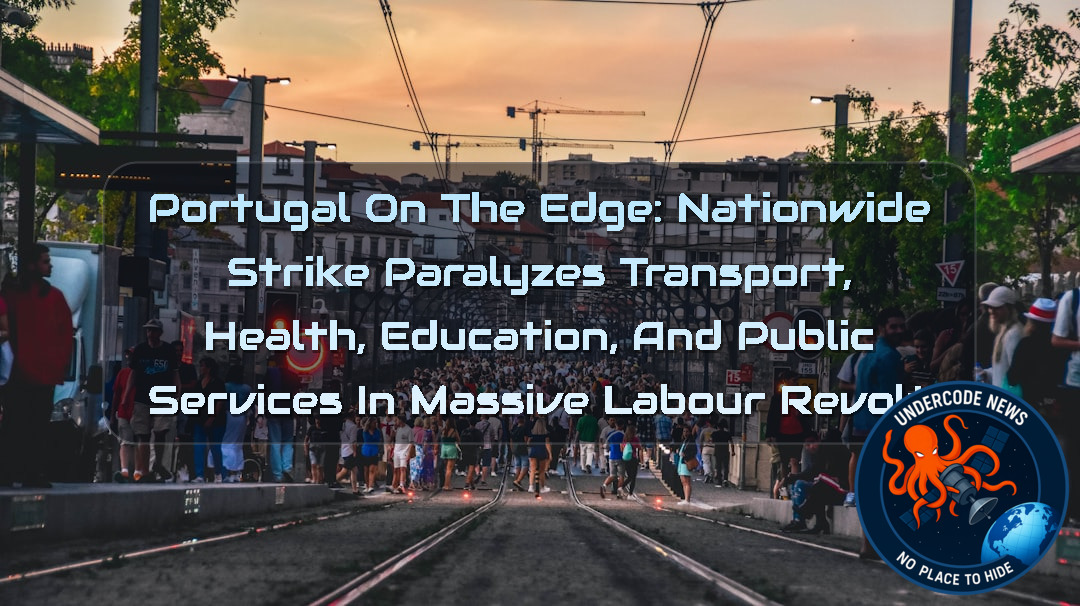 Main Summary: A Country Moving Toward a Standstill as Labour Tensions Ignite Across Portugal
Portugal is entering one of its most disruptive labour moments in recent years as a nationwide general strike, scheduled for Wednesday, 3 June, begins to take shape with visible disruption already unfolding on Tuesday evening. The action, called by the General Confederation of Portuguese Workers CGTP, is expected to affect nearly every layer of national infrastructure, from rail and metro networks to hospitals, schools, airports, retail systems, and even media institutions. What makes this strike particularly significant is not just its scale, but its political and social context: it is rooted in a deep confrontation over the government’s proposed labour reform package, known as “Trabalho XXI,” which introduces more than 100 amendments to Portugal’s Labour Code.
At the heart of the dispute is a widening ideological divide. The PSD/CDS-PP government, led by Luís Montenegro, argues that the reform is a structural modernization designed to increase productivity, improve wage competitiveness, and adapt labour rules to the digital economy. The proposal was framed within Portugal’s social concertation framework, but ultimately collapsed without consensus among social partners. This breakdown triggered union escalation, with CGTP characterizing the reforms as a direct “assault on workers’ rights” and a constitutional threat to Portugal’s labour protections. The government, however, insists the reforms are necessary for economic flexibility and long-term competitiveness, and has already submitted the bill to parliament for future debate.
This confrontation is not isolated. It follows a previous major strike in December, the first coordinated action between CGTP and UGT in over a decade, which signaled a renewed era of labour activism in Portugal. The current strike expands that momentum significantly, with broader participation expected across sectors and stronger union alignment against the reform agenda. Even before the official strike date, transport disruptions have begun, signaling the operational paralysis that is likely to unfold nationwide.
Transport will be one of the first and most visibly affected sectors. Rail services operated by CP Comboios de Portugal (CP) are expected to experience severe disruptions, including partial or total cancellations across regional, intercity, and suburban routes. Urban mobility systems are also heavily impacted, particularly in Lisbon and Porto, where metro networks such as Lisbon Metro Lisbon Metro and Metro do Porto are preparing for reduced or suspended services. Ferry connections across the Tagus River operated by Transtejo Soflusa are also expected to be affected, further constraining commuter mobility in the capital region.
Air travel adds another layer of disruption. Aviation unions have confirmed participation, and Portugal’s national airline TAP has already reduced operations under minimum service requirements, cancelling the majority of flights and maintaining only a small fraction of scheduled departures. The aviation sector’s involvement transforms this from a domestic disruption into an international travel complication, affecting inbound and outbound passengers across Europe and beyond.
Health services are also entering a critical pressure zone. Nurses’ unions and doctors’ federations have confirmed participation, meaning hospital operations will shift into emergency-only mode in many regions. Essential treatments such as dialysis, chemotherapy, radiotherapy, and emergency surgeries are expected to continue under minimum service rules, but elective procedures and routine consultations will likely be postponed or cancelled. This creates a ripple effect that could extend well beyond the strike day itself.
Education is equally affected, with nationwide participation from teachers, researchers, and academic unions. Schools, universities, and research institutions are expected to halt operations entirely in many cases, resulting in cancelled classes, suspended examinations, and disrupted academic schedules. Importantly, no minimum service requirements are being enforced in several education sectors, amplifying the scale of shutdown across the country’s learning institutions.
Public administration and local government services are also joining the strike. Municipal operations, administrative services, waste management, and civil support functions are expected to slow significantly or stop altogether in some regions. Previous strikes have already demonstrated how quickly urban services can degrade under such conditions, particularly in sanitation and citizen-facing public offices.
Industrial participation adds further weight to the movement. Manufacturing hubs, including major automotive production sites like Autoeuropa, are expected to experience stoppages. Workers across metallurgy, chemicals, energy, and pharmaceuticals have aligned with the strike call, signaling that Portugal’s industrial backbone will not remain insulated from the dispute.
Retail, hospitality, and service sectors are also joining the protest movement, expanding disruption into everyday consumer life. From hotels and restaurants to canteens, insurance firms, and commercial services, the strike is designed to apply pressure across both essential and non-essential sectors simultaneously. Even media organizations have joined, framing the strike not only as a labour dispute but also as a broader struggle over democratic rights and workplace dignity.
What emerges is not simply a labour strike, but a national stress test. Portugal is entering a moment where political reform, union resistance, and economic modernization collide in real time. The outcome will likely shape the country’s labour landscape for years, determining whether the “Trabalho XXI” reform becomes a turning point in modernization or a catalyst for prolonged industrial confrontation.
Transport Collapse and Urban Paralysis Across Major Cities
Transport systems are expected to face the earliest and most visible disruptions. Rail operators such as Comboios de Portugal (CP) are preparing for widespread cancellations, while metro systems in Lisbon and Porto anticipate partial shutdowns. Commuters in urban centers are likely to face severe delays, overcrowding, and limited alternatives. Ferry routes and suburban connections further intensify the mobility crisis, effectively fragmenting daily commuting networks across the country.
Health System Under Pressure: Emergency Care Becomes the Only Guarantee
Hospitals across Portugal are entering a contingency mode as doctors and nurses participate in the strike. Emergency services remain operational, but the healthcare system is expected to function at minimal capacity. Critical treatments such as dialysis and cancer therapy continue under strict minimum service requirements, yet the backlog of postponed procedures is expected to extend into the following weeks, increasing pressure on already strained public hospitals.
Education Shutdown: Schools and Universities Enter Full Standstill
The education sector faces one of the most complete shutdowns of the strike. Teachers, researchers, and academic staff are withdrawing labor across all levels of education. Schools, universities, and research institutions are expected to cancel teaching activities, examinations, and administrative operations. The absence of minimum service obligations in many institutions amplifies the scale of disruption, making this one of the most widespread closures in the sector in recent years.
Public Services and Local Administration Disrupted Nationwide
Municipal and administrative services are expected to slow significantly, affecting waste collection, citizen services, and public office operations. Local government unions are participating actively, citing worsening working conditions and declining wage stability. Past strikes have shown that even partial participation in this sector can lead to visible urban disruption within hours.
Industry, Retail, and Media: Economic Activity Faces Widespread Slowdown
Industrial production, particularly in automotive and manufacturing hubs, is expected to pause in key facilities such as Autoeuropa. Retail, hospitality, and service sectors are also participating, extending the strike’s impact into consumer-facing services. Even media organizations are joining the protest, framing the action as a defense of labour rights and press freedom within a changing political economy.
What Undercode Say:
The Portuguese strike reflects structural tension between modernization and labour protection
Labour reform attempts are often triggers for large-scale union mobilization
Portugal’s CGTP remains one of the strongest coordinated labour forces in Europe
Transport disruption acts as the first visible signal of systemic shutdown
Minimum service rules are becoming central in modern strike negotiations
Public sector dependency increases national vulnerability during coordinated strikes
Education shutdowns amplify long-term economic impact beyond strike day
Healthcare strikes introduce ethical complexity due to emergency care obligations
Aviation participation transforms domestic protest into international disruption
Political fragmentation weakens consensus-building in labour reform
Union legitimacy is reinforced during perceived rights reductions
Government framing of productivity conflicts with worker security narratives
Strikes of this scale indicate low trust in institutional negotiation frameworks
Media participation signals widening ideological alignment beyond labour issues
Industrial involvement suggests deep penetration of unrest into production chains
Retail participation extends disruption into daily consumption networks
Urban mobility breakdowns create cascading economic inefficiencies
Minimum service policies are becoming strategic negotiation tools
Repeated strikes indicate unresolved structural labour reform conflicts
Portugal’s labour model is at a transitional stress point
Economic competitiveness arguments face resistance from workforce coalitions
Historical precedent shows December strike was a precursor escalation
Cross-sector alignment increases strike effectiveness exponentially
Digital economy reforms are clashing with traditional labour protections
Public sentiment may split between reform necessity and rights protection
Long-duration impacts expected in healthcare backlog recovery
Education disruptions may affect academic calendar stability
Industrial output losses could affect export cycles
Air travel disruption affects tourism confidence
Political capital of government may weaken under sustained unrest
Union coordination demonstrates high organizational capacity
Labour disputes increasingly intersect with constitutional interpretation
Public service interruption exposes administrative fragility
Strikes act as negotiation leverage rather than final outcome
Economic cost of shutdown may exceed immediate political gains
Future reforms may require stronger consensus mechanisms
Portugal becomes case study of EU labour transition conflict
Institutional dialogue frameworks appear under strain
Worker mobilization reflects broader European labour trend
Outcome depends on political willingness to renegotiate reform scope
❌ The strike is confirmed but exact nationwide paralysis level varies by sector and region
✅ CGTP is the main organizing trade union confederation behind the strike
❌ Full cancellation of all services is not guaranteed due to minimum service laws
✅ Labour reform “Trabalho XXI” is the central cause of the dispute
❌ Transport shutdown severity differs between Lisbon, Porto, and regional networks
✅ Previous December strike was indeed a major coordinated labour action
Prediction
(+1) Labour negotiations may reopen after strike pressure forces partial amendments to “Trabalho XXI”
(+1) Union coordination could strengthen future bargaining power across European labour movements
(-1) Continued strikes may increase economic instability and investor uncertainty in Portugal
(-1) Public service backlogs, especially in healthcare and education, may take weeks to recover
Deep Analysis (Linux / System Diagnostic View of National Disruption)
simulate national service dependency mapping
systemctl list-dependencies portugal-public-services.service
monitor transport disruption signals
journalctl -u cp-rail.service -f
check metro operational status nodes
ping metro-lisbon.local && echo "service degraded"
analyze strike impact on logistics throughput
sar -u 1 10 | grep idle
simulate emergency fallback mode for hospitals
docker ps | grep hospital_emergency_mode
network-style view of sector coupling failure
netstat -tulnp | grep "public_infrastructure"
simulate labor system stress test
stress-ng –cpu 8 –timeout 60s –metrics-brief
check government reform pipeline status
git log --oneline | grep "Trabalho XXI"
evaluate system-wide downtime impact
uptime && echo "national productivity degraded state detected"
▶️ Related Video (74% Match):
🕵️📝Let’s dive deep and fact‑check.
🎓 Live Courses & Certifications:
Join Undercode Academy for Verified Certifications
🚀 Request a Custom Project:
Secure, high-velocity infrastructure and disruptive technological engineering. Contact our engineering team for high-tier development and proprietary systems:
[email protected]
💎 Smart Architecture | 🛡️ Secure by Design | ⭐ Trusted by Thousands
References:
Reported By: www.euronews.com
Extra Source Hub (Possible Sources for article):
https://www.github.com
Wikipedia
OpenAi & Undercode AI
Image Source:
Unsplash
Undercode AI DI v2
🔐JOIN OUR CYBER WORLD [ CVE News • HackMonitor • UndercodeNews ]
📢 Follow UndercodeNews & Stay Tuned:
𝕏 formerly Twitter 🐦 | @ Threads | 🔗 Linkedin | 🦋BlueSky | 🐘Mastodon | 📺Youtube


