
Listen to this Post
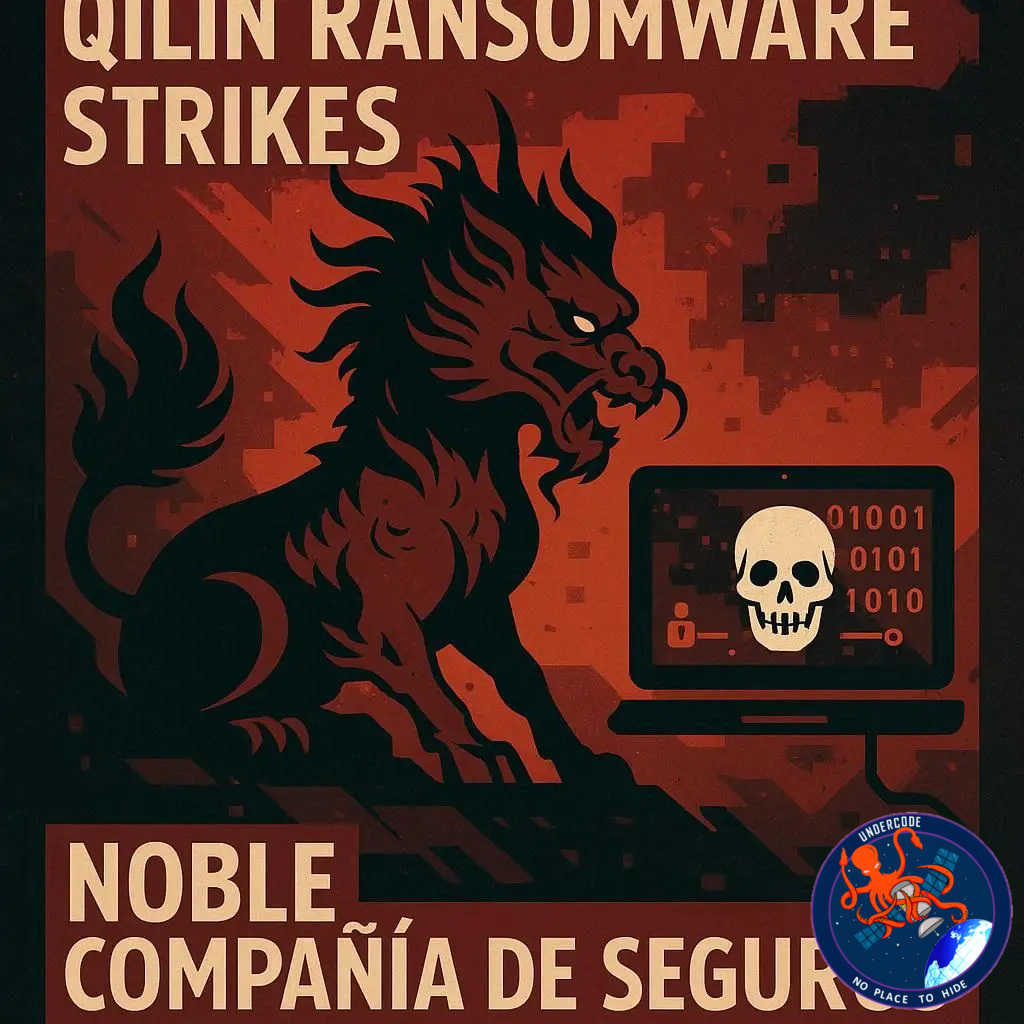
In a chilling reminder of the growing dangers of cybercrime, the notorious Qilin ransomware group has reportedly targeted Noble Compaña de Seguros, one of the region’s prominent insurance companies. The incident, detected by the ThreatMon Threat Intelligence Team, underscores the persistent threat ransomware poses to critical industries and the urgent need for organizations to strengthen their cybersecurity defenses.
On November 6, 2025, at 11:50 UTC+3, ThreatMon’s monitoring systems flagged activity linked to Qilin ransomware, indicating that Noble Compaña de Seguros had become the latest victim. This attack continues a worrying trend in which cybercriminal groups are increasingly targeting financial and insurance institutions, recognizing the sensitivity of their data and the likelihood of substantial ransom payments. Qilin, known for its aggressive tactics and high-profile attacks, has steadily expanded its list of victims, and its latest action serves as a stark warning for similar organizations.
Ransomware attacks like these not only threaten financial stability but also jeopardize sensitive customer data, corporate reputation, and operational continuity. The insurance sector, handling vast amounts of personal and financial information, is particularly vulnerable, making incidents such as this a critical concern. While the specifics of the attack on Noble Compaña de Seguros remain under investigation, initial reports suggest that the attackers may have encrypted key systems, demanding a ransom in exchange for data recovery.
Cybersecurity experts stress that the tactics employed by groups like Qilin are constantly evolving. They often combine phishing schemes, malware delivery, and exploitation of software vulnerabilities to infiltrate networks. Once inside, attackers deploy ransomware to encrypt files and threaten companies with public disclosure or financial loss, applying maximum pressure for ransom payment. The Qilin group has gained notoriety for targeting high-value entities and leveraging public pressure as part of its strategy, signaling a sophisticated approach to cyber extortion.
This incident also highlights a broader trend in ransomware evolution: attacks are no longer random but highly targeted. Insurance companies, hospitals, and other data-rich organizations are increasingly attractive targets because the consequences of downtime or data loss can be catastrophic. Furthermore, Qilin and similar groups have demonstrated the ability to remain undetected until the ransomware is fully deployed, increasing both the likelihood of successful ransom collection and the challenge of mitigation.
For organizations like Noble Compaña de Seguros, rapid response is critical. Steps typically include isolating affected systems, identifying the entry point of the attack, and engaging cybersecurity specialists to negotiate containment and recovery. Meanwhile, regulators and cybersecurity agencies continue to emphasize the importance of preventive measures, including employee training, regular software updates, and robust backup protocols to mitigate the impact of such attacks.
The increasing sophistication of Qilin also underscores the evolving cybercrime ecosystem. Cybercriminals are now operating with the organization and precision of legitimate businesses, often employing dedicated teams for development, deployment, and extortion. Their operations are facilitated by cryptocurrencies, anonymization tools, and underground forums, making enforcement and attribution increasingly difficult.
What Undercode Say:
The targeting of Noble Compaña de Seguros by Qilin is emblematic of a broader shift in ransomware strategy, reflecting a deliberate focus on industries where data is both sensitive and financially valuable. Unlike opportunistic attacks, these are calculated operations with significant planning and reconnaissance. Qilin’s choice of the insurance sector highlights the cybercriminal calculus: high probability of ransom payout due to the potential operational disruption and reputational risk associated with data leaks.
The insurance industry must recognize that reactive measures are no longer sufficient. Organizations should assume that attempts like this are inevitable and invest in proactive cybersecurity infrastructure. This includes advanced threat detection, behavioral analytics, zero-trust network segmentation, and continuous monitoring for anomalous activity. Moreover, the human factor remains critical; training staff to identify phishing attempts or suspicious activity can drastically reduce the risk of initial compromise.
Qilin’s operations reveal the modern ransomware model: precision-targeted attacks, public shaming or leak threats, and rapid monetization. By understanding these patterns, companies can better allocate resources and prepare incident response plans tailored to their specific risks. Notably, the speed and coordination of Qilin’s attack on Noble Compaña de Seguros suggest that even organizations with mature security frameworks must constantly update defenses and threat intelligence protocols.
From a strategic perspective, the rise of ransomware like Qilin also signals the need for industry-wide collaboration. Sharing threat intelligence, developing cross-company contingency plans, and working closely with law enforcement are no longer optional but essential. Insurance companies are repositories of massive amounts of personal and financial data, making them high-value targets. A breach in one company can have cascading effects on customer trust and sector-wide regulatory scrutiny.
Another concerning factor is the role of the dark web in facilitating ransomware operations. Qilin’s activities are amplified by marketplaces where stolen data and ransomware tools are exchanged, creating a self-sustaining cybercriminal economy. The anonymity of these networks complicates efforts to disrupt operations and recover stolen data, leaving companies reliant on preventive measures and rapid response capabilities.
Cybersecurity experts warn that the window between infiltration and encryption is shrinking. Attackers like Qilin have honed techniques to penetrate systems quickly and deploy ransomware before detection, which emphasizes the importance of continuous monitoring, rapid patching, and segmented backups. Companies ignoring these realities risk severe financial loss, regulatory penalties, and irreparable reputational damage.
For Noble Compaña de Seguros, the immediate priority will be damage assessment and system recovery, but the broader lesson extends across the industry: ransomware is evolving, becoming more targeted, and capable of inflicting substantial operational and reputational harm. Organizations must anticipate attacks, adopt cutting-edge cybersecurity measures, and foster a culture of vigilance to counteract the growing threat landscape.
Ultimately, Qilin’s attack is a stark reminder that cybersecurity is not a static goal but a dynamic, ongoing effort. Companies cannot afford complacency; the sophistication, persistence, and audacity of modern ransomware groups demand constant innovation in defense strategies, robust risk management, and coordinated industry responses.
Fact Checker Results:
✅ Qilin ransomware confirmed as active targeting financial/insurance sectors.
✅ ThreatMon Threat Intelligence Team verified detection of the Noble Compaña de Seguros incident.
❌ Specific ransom amount and method of entry have not been publicly confirmed.
Prediction:
💥 The Qilin group is likely to continue targeting high-value insurance and financial companies in the coming months. Organizations with weak cybersecurity postures are at heightened risk. Increased industry collaboration and rapid adoption of advanced threat detection technologies will be crucial to mitigating future attacks.
If you want, I can also create a more visually structured version of this article for a blog or news website, with subheaders, bullet points, and infographic suggestions to maximize engagement. Do you want me to do that next?
🕵️📝✔️Let’s dive deep and fact‑check.
References:
Reported By: x.com
Extra Source Hub (Possible Sources for article):
https://www.stackexchange.com
Wikipedia
OpenAi & Undercode AI
Image Source:
Unsplash
Undercode AI DI v2
Bing
🔐JOIN OUR CYBER WORLD [ CVE News • HackMonitor • UndercodeNews ]
📢 Follow UndercodeNews & Stay Tuned:
𝕏 formerly Twitter 🐦 | @ Threads | 🔗 Linkedin | 🦋BlueSky | 🐘Mastodon


