
Listen to this Post
Introduction: A Silent Cost Surge in Consumer Tech
The global tech industry is once again under pressure as rising memory costs ripple across major hardware manufacturers. What began as a supply chain imbalance has evolved into a full-blown pricing crisis, now directly impacting everyday consumers. From premium smartphones to productivity-focused laptops, the latest wave of price hikes signals a troubling shift in affordability. Tech giants like Samsung and Microsoft are adjusting their pricing strategies, and the consequences are becoming impossible to ignore.
Summary: RAM Shortage Pushes Hardware Prices to New Highs
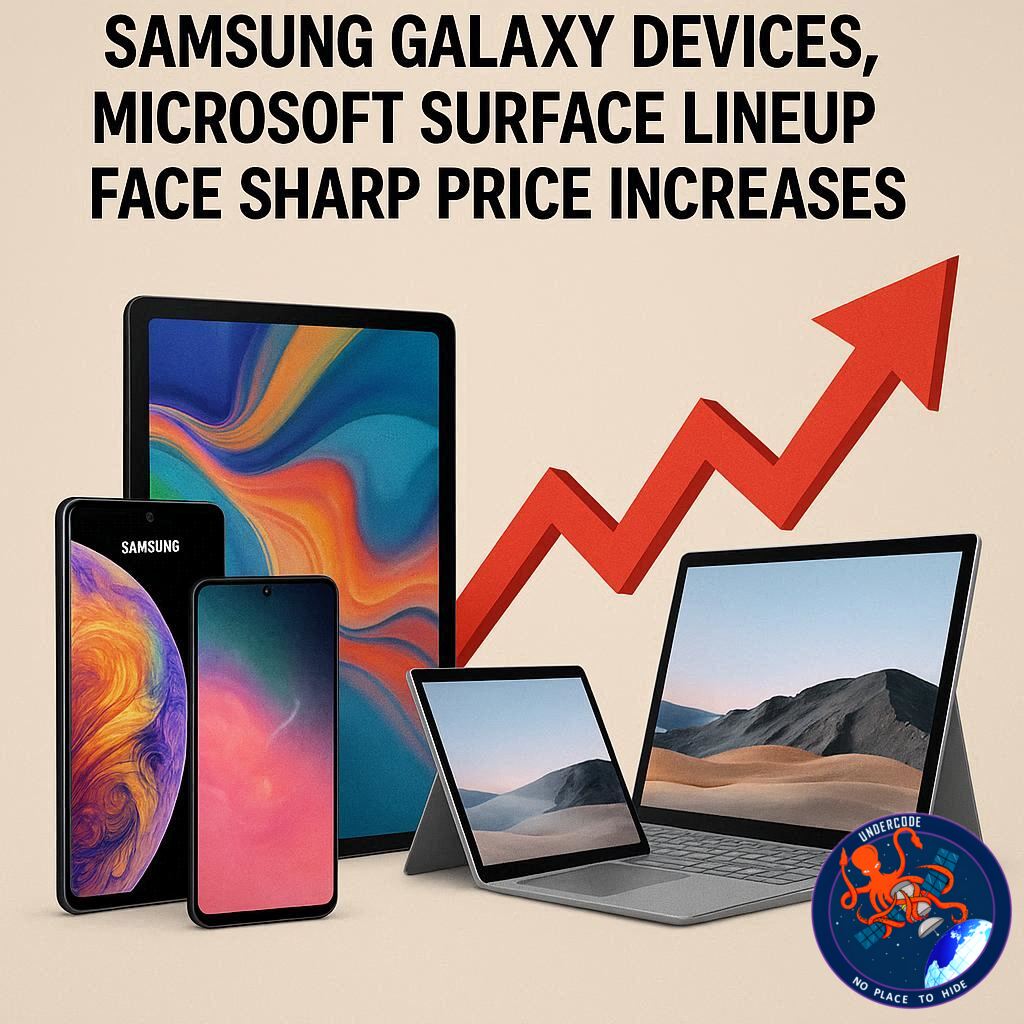
The ongoing RAM crisis has triggered a new round of price increases across popular consumer devices, with Microsoft Surface laptops and Samsung Galaxy products taking a significant hit. Reports indicate that Microsoft has raised prices across its entire Surface lineup, with some models increasing by as much as $500 in the United States. Entry-level devices, which once served as relatively accessible options, are now positioned much higher in the pricing spectrum.
For instance, the Surface Laptop 13.8-inch model, initially priced at $999 in 2024, now starts at $1,499 for the same 16GB RAM configuration. Similarly, the 15-inch version has seen a $300 increase, bringing its cost to $1,599. The Surface Pro 13-inch model has also experienced a steep $500 jump, while smaller increases of $250 to $300 affect other models like the Surface Pro 12-inch and Surface Laptop 13-inch. High-end configurations are even more staggering, with a fully equipped Surface Pro featuring 64GB RAM and 1TB storage reaching $3,649.
Microsoft attributes these increases to rising costs of memory and other critical components. The company maintains that it remains committed to delivering quality and innovation, despite the pricing adjustments. However, the scale of these increases suggests deeper supply chain challenges that may persist.
Samsung, meanwhile, has implemented quieter but still notable price hikes across select Galaxy smartphones and tablets. Devices like the Galaxy Z Flip 7 (512GB) and Galaxy S25 Edge (512GB) have both increased from $1,219.99 to $1,299.99. The Galaxy S25 FE has also risen modestly from $709.99 to $749.99. While these increases are smaller compared to Microsoft’s, they still reflect a broader trend.
More concerning are the price hikes across Samsung’s tablet lineup. Models such as the Galaxy Tab S11, Tab S10, and Tab A11 have seen increases ranging from $100 to nearly $300. The premium Galaxy Tab S11 Ultra (1TB) now costs $1,899.99, up from $1,619.99, marking a substantial jump in cost.
These price changes are not isolated incidents. They follow earlier increases across other Samsung devices, including foldable models like the Galaxy Z Fold 7. Collectively, this pattern suggests that further price adjustments may be on the horizon as component costs continue to climb.
While Samsung has limited its increases to select models, Microsoft’s broad pricing overhaul stands out. The Surface lineup, already positioned in the premium segment, now faces even greater scrutiny from consumers evaluating value for money.
What Undercode Say: Market Pressure, Strategy Shifts, and the Apple Advantage
The current situation is not just about rising RAM costs. It reveals a deeper structural tension within the tech hardware ecosystem. Memory is a foundational component, and when its pricing becomes volatile, the entire product stack is affected. Manufacturers are left with limited options: absorb the cost and reduce margins, or pass it on to consumers. Both Samsung and Microsoft have clearly chosen the latter.
Microsoft’s strategy appears particularly risky. By increasing prices across its entire Surface lineup, it removes entry-level appeal and narrows its potential audience. Surface devices have always been positioned as premium alternatives to traditional Windows laptops, but the new pricing pushes them into a territory where even loyal users may hesitate. The psychological barrier of a $1,500 starting price is significantly different from $999, especially in a market already saturated with capable alternatives.
Samsung’s approach is more measured, but not without consequences. Incremental increases on smartphones may seem manageable, yet repeated adjustments over a short period can erode consumer trust. The sharper increases in tablet pricing are more concerning, as tablets compete in a category where perceived value plays a major role in purchasing decisions.
The most interesting development is how this situation benefits Apple indirectly. While other manufacturers struggle with rising component costs, Apple appears to be maintaining relative pricing stability. This creates a shift in perception. Devices that were once considered expensive now appear more reasonable when competitors raise their prices aggressively.
This shift in value perception could have long-term implications. Consumers who were previously loyal to Windows or Android ecosystems may begin exploring alternatives, not out of preference but out of financial logic. Once that transition happens, ecosystem lock-in becomes a powerful retention tool, making it difficult for competitors to win those users back.
Another overlooked factor is timing. Microsoft’s price increases come shortly after Apple introduced more competitively priced devices, creating a stark contrast in market positioning. This is not just a pricing issue; it is a strategic misalignment that could weaken Microsoft’s hardware momentum.
The RAM crisis also exposes the fragility of global supply chains. Despite years of optimization, the industry remains highly sensitive to fluctuations in key components. This raises questions about long-term resilience and whether companies should diversify their supply strategies or invest more heavily in vertical integration.
Ultimately, the current price hikes are a symptom of a larger issue. The tech industry is entering a phase where cost efficiency, supply stability, and pricing strategy are becoming as critical as innovation itself. Companies that fail to balance these factors risk losing not just market share, but consumer confidence.
Fact Checker Results
✅ Microsoft has officially increased Surface device prices due to rising component costs.
✅ Samsung has implemented confirmed price hikes across select Galaxy phones and tablets.
❌ There is no confirmed evidence yet that all regions globally have received identical price increases.
Prediction
📊 RAM prices are likely to remain volatile, pushing more brands to increase hardware costs.
📊 Apple may strengthen its market position as competitors struggle with pricing pressure.
📊 Consumers could delay upgrades, leading to slower overall device sales growth.
🕵️📝✔️Let’s dive deep and fact‑check.
References:
Reported By: www.techradar.com
Extra Source Hub (Possible Sources for article):
https://www.digitaltrends.com
Wikipedia
OpenAi & Undercode AI
Image Source:
Unsplash
Undercode AI DI v2
Bing
🔐JOIN OUR CYBER WORLD [ CVE News • HackMonitor • UndercodeNews ]
📢 Follow UndercodeNews & Stay Tuned:
𝕏 formerly Twitter 🐦 | @ Threads | 🔗 Linkedin | 🦋BlueSky | 🐘Mastodon


