
Listen to this Post
🎯 Introduction: A Tech Crisis Hiding in Plain Sight
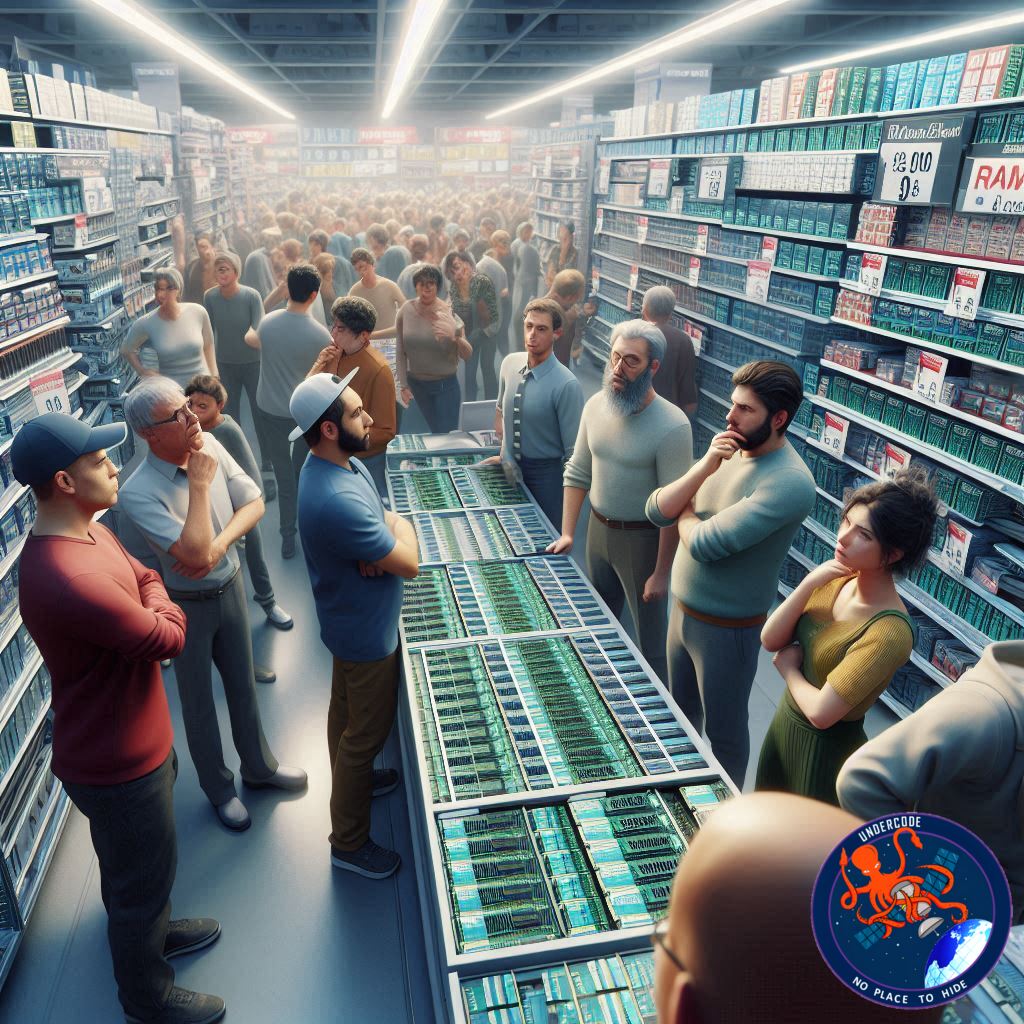
The global memory market is spiraling into a crisis that few consumers fully anticipated, yet almost everyone is now feeling. What once seemed like a routine component inside laptops and desktops has suddenly become one of the most volatile and expensive pieces of modern computing. RAM, the silent backbone of performance, is now at the center of a supply storm driven by AI demand, manufacturing limits, and shifting consumer behavior. The situation has grown so extreme that enthusiasts are experimenting with building memory components themselves, a symbolic reflection of how strained the industry has become.
🧩 Escalating Shortages Reveal a Deepening Supply Crisis
The past weeks have delivered a relentless stream of bad news for the RAM market. Devices that rely heavily on memory availability are beginning to show cracks, with stock shortages becoming more visible. Even entry-level configurations, which traditionally remain widely available, are now disappearing from shelves. This signals that the shortage is no longer limited to high-end configurations but has penetrated the entire supply chain.
🧩 Rising Costs Push Devices Into Premium Territory
Manufacturers are being forced to raise prices across the board, and consumers are feeling the impact immediately. New laptops entering the market are carrying significantly higher price tags, not because of groundbreaking innovation, but due to inflated component costs. RAM and storage, once predictable expenses, are now driving overall pricing structures upward, making even mid-range devices feel like luxury purchases.
🧩 DIY Memory Experiments Reflect Industry Frustration
In a striking example of how unusual the situation has become, a tech enthusiast managed to create basic memory cells in a homemade cleanroom environment. While not commercially viable, the experiment highlights both the complexity of semiconductor manufacturing and the frustration surrounding current supply constraints. It also underscores how inaccessible large-scale production remains, reinforcing why shortages persist.
🧩 Future Devices Expected to Become Even More Expensive
Rumors surrounding upcoming hardware suggest that price increases are far from over. Industry expectations indicate that next-generation devices will become even less affordable, largely due to memory costs. This aligns with recent price hikes already observed in existing product lines, suggesting a broader trend rather than a temporary spike.
🧩 Compromised Innovations Signal Long-Term Problems
Attempts to address affordability have led to compromises in performance. New types of memory designed to reduce costs are entering the market, but they often sacrifice speed and efficiency. While these solutions may help budget users, they also signal that manufacturers are preparing for a prolonged crisis rather than a quick recovery.
🧩 SSD Price Increases Add to Consumer Burden
The situation is further complicated by rising SSD prices, which are closely tied to memory supply chains. Together, these components form the core of modern computing performance, meaning that cost increases in both areas amplify the overall financial burden on consumers.
🧩 Temporary Price Drops Mask a Deeper Issue
There has been a slight drop in RAM prices recently, offering a small sense of relief. However, this decline is not driven by improved supply but by weakening demand. Prices had risen so dramatically that consumers began holding back purchases, forcing a market correction. This type of decline is fragile and does not indicate real recovery.
🧩 Consumer Resistance Emerges as a Market Force
Faced with unsustainable pricing, buyers are starting to resist. This collective hesitation is one of the few forces capable of pushing prices downward. Reduced demand disrupts the supply-demand balance, pressuring manufacturers and distributors to adjust pricing strategies.
🧩 Structural Issues Prevent Quick Recovery
The underlying causes of the crisis remain firmly in place. Expanding manufacturing capacity is a slow and capital-intensive process that will not yield meaningful results for several years. Meanwhile, demand continues to grow, driven largely by technological advancements and new computing needs.
🧩 AI Demand Intensifies Memory Consumption
Artificial intelligence is rapidly becoming the dominant force behind memory demand. While innovations aim to improve efficiency, they often lead to increased usage instead. As AI systems evolve, they require more memory to process larger datasets and more complex models, creating a cycle of continuous demand growth.
🧩 Limited Optimism Clouds the Market Outlook
Any signs of optimism in the current landscape are weak and uncertain. Price drops driven by consumer hesitation are not sustainable solutions, and fundamental supply issues remain unresolved. Without significant changes in production capacity or demand patterns, the crisis is expected to persist.
🧠 What Undercode Say:
The RAM crisis is not just a temporary disruption; it is a structural shift in how computing resources are valued and distributed. At its core, this situation reveals a collision between two powerful forces: explosive demand from AI technologies and the rigid limitations of semiconductor manufacturing. Unlike software, hardware cannot scale overnight. Fabrication plants require years of planning, billions in investment, and precise engineering to expand capacity. This creates a lag that the market is currently struggling to absorb.
One of the most telling aspects of this crisis is how quickly RAM has transitioned from a background component to a headline issue. For years, consumers rarely thought about memory pricing. It was predictable, relatively affordable, and scaled naturally with technological progress. That stability has now been replaced by volatility, exposing how fragile global supply chains truly are when pushed beyond their limits.
The role of artificial intelligence cannot be overstated. AI is not just another consumer of memory; it is an insatiable one. Each advancement in AI capability requires exponentially more data processing, and with it, more RAM. Efficiency improvements, which might seem like a solution, often lead to increased adoption rather than reduced demand. This phenomenon, sometimes referred to as the rebound effect, ensures that gains in efficiency are quickly absorbed by higher usage.
Another critical factor is market psychology. The recent drop in RAM prices driven by reduced demand highlights how consumers are becoming more strategic. Instead of reacting passively to price increases, buyers are delaying purchases, effectively pushing back against the market. This behavior introduces a new dynamic where consumer sentiment can directly influence pricing trends. However, this is not a long-term solution. It is a pressure valve, not a fix.
The introduction of lower-performance memory alternatives also signals a shift in industry priorities. Manufacturers are no longer solely focused on pushing performance boundaries; they are now balancing cost accessibility with technical capability. This could lead to a more fragmented market where consumers must choose between affordability and performance more carefully than ever before.
There is also a geopolitical and economic dimension to consider. Semiconductor production is concentrated in specific regions, making the entire ecosystem vulnerable to disruptions. Any instability, whether political or logistical, can ripple through the supply chain and exacerbate shortages. This adds another layer of uncertainty to an already unstable market.
Looking ahead, the timeline for recovery appears distant. With meaningful increases in production capacity not expected until the latter part of the decade, the market is likely to remain tight. This prolonged pressure could reshape consumer habits, pushing more people toward cloud computing or extended device lifecycles as alternatives to frequent hardware upgrades.
Ultimately, the RAM crisis reflects a broader transformation in technology. As computing becomes more data-intensive, the resources required to sustain it become more valuable and contested. This is not just about memory prices; it is about the future cost of performance itself.
🔍 Fact Checker Results
✅ RAM prices have increased dramatically, with reports indicating spikes of 300% or more.
✅ Recent price drops are driven by reduced consumer demand, not improved supply.
❌ DIY RAM production is not a viable alternative to industrial manufacturing.
📊 Prediction
📉 RAM prices may fluctuate slightly in the short term due to consumer resistance, but long-term upward pressure will remain.
🤖 AI-driven demand will continue accelerating memory consumption across industries.
🏭 Significant market stabilization is unlikely before new manufacturing capacity becomes operational later in the decade.
🕵️📝✔️Let’s dive deep and fact‑check.
References:
Reported By: www.techradar.com
Extra Source Hub (Possible Sources for article):
https://www.github.com
Wikipedia
OpenAi & Undercode AI
Image Source:
Unsplash
Undercode AI DI v2
Bing
🔐JOIN OUR CYBER WORLD [ CVE News • HackMonitor • UndercodeNews ]
📢 Follow UndercodeNews & Stay Tuned:
𝕏 formerly Twitter 🐦 | @ Threads | 🔗 Linkedin | 🦋BlueSky | 🐘Mastodon


