
Listen to this Post
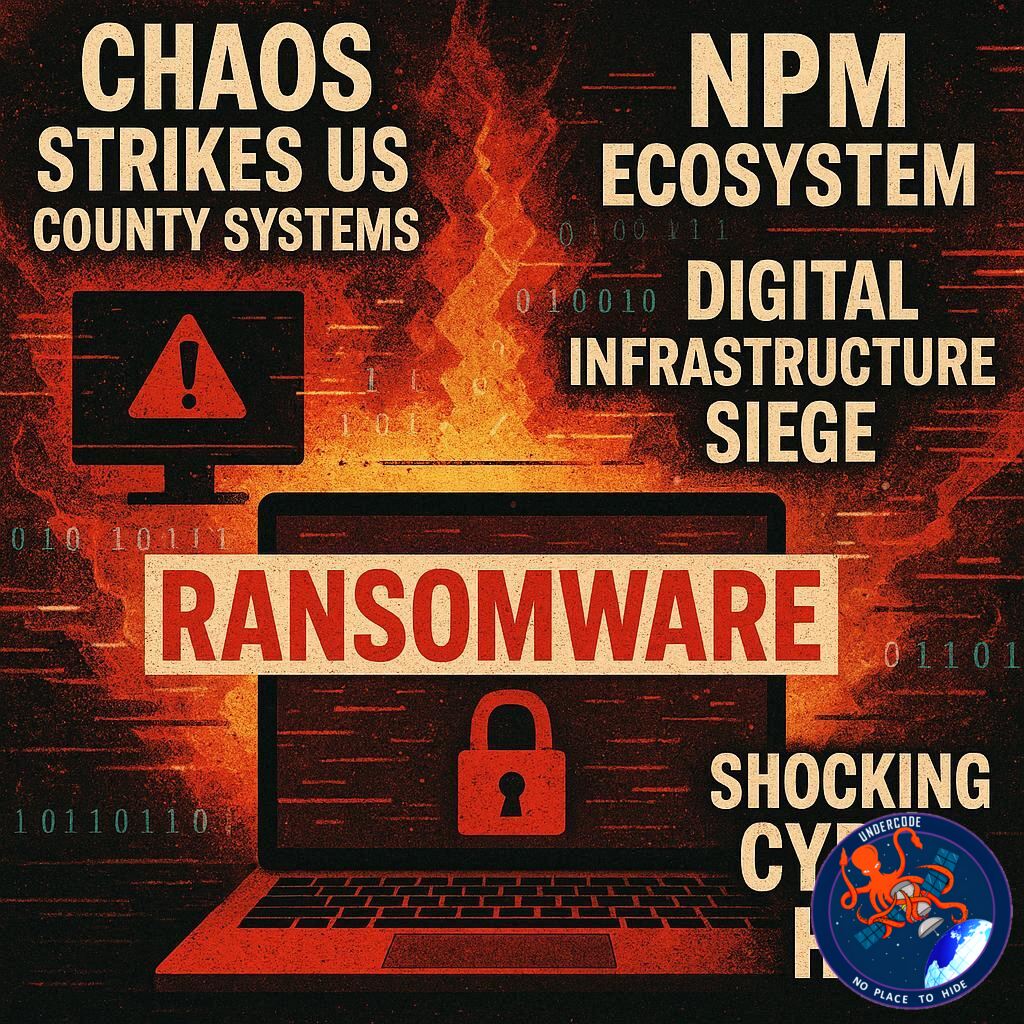
Introduction: A Growing Wave of Cyber Disruption Targets Public Services and Software Supply Chains
Cybersecurity threats are escalating at a rapid pace, and the latest incidents reveal a disturbing pattern of attacks hitting both government infrastructure and widely used software ecosystems. A ransomware operation has reportedly targeted Morgan County, Georgia’s official government systems, raising fears of disruption to essential public services such as fire rescue, law enforcement, transportation, and recreational administration. At the same time, a separate supply chain compromise involving Axios npm packages has introduced malicious code capable of deploying remote access malware on affected systems. Together, these events highlight how both local governments and global software dependencies are becoming prime targets for sophisticated threat actors.
the Incident: Government Systems and Software Supply Chains Under Coordinated Pressure
Morgan County Government Hit by Ransomware Disruption
A ransomware campaign attributed to a threat actor known as “incransom” has reportedly targeted the official website and digital infrastructure of Morgan County, Georgia. The attack raises concerns about operational disruption across multiple essential public service departments, including fire rescue units, sheriff’s office communications, public transit coordination, and recreational service management. While full technical details remain limited, the impact of such attacks typically includes encrypted databases, locked administrative systems, and interrupted communication channels critical for emergency response and civic operations. Local governments like Morgan County are often attractive targets due to limited cybersecurity budgets and outdated infrastructure.
Axios npm Packages Compromised in Supply Chain Attack
In a separate but highly significant cybersecurity incident, two Axios npm package releases were compromised for approximately three hours. During this window, attackers inserted a malicious dependency that triggered the installation of the WAVESHAPER remote access trojan (RAT) via a post-installation script. This type of attack is especially dangerous because it leverages trusted software distribution systems, meaning developers unknowingly integrate malicious code into their applications. Both Windows and macOS systems were reported as potential victims, expanding the attack surface far beyond initial expectations. The incident has been linked to activity clusters associated with UNC1069, a known cyber threat group involved in supply chain exploitation tactics.
Broader Pattern of Escalating Cyber Threats
These two incidents, although technically distinct, reflect a shared trend in modern cyber warfare: attackers are increasingly targeting both infrastructure-level systems and software supply chains simultaneously. Government agencies face direct operational disruption, while developers and enterprises are exposed through compromised libraries and dependencies. The dual nature of these attacks significantly amplifies their impact, creating cascading risks across public and private sectors.
What Undercode Say:
Government Cybersecurity Gaps Exposed in Real Time
The Morgan County ransomware incident underscores a persistent issue in local government cybersecurity resilience. Many municipal systems operate on outdated infrastructure that lacks modern endpoint protection or zero-trust architecture. This creates an easy entry point for ransomware groups, who often scan for weakly defended public systems. The targeting of essential services such as emergency response amplifies the pressure on officials to consider paying ransoms quickly, even though such actions rarely guarantee full system recovery.
Supply Chain Attacks Becoming the Preferred Weapon of Advanced Threat Actors
The Axios npm compromise demonstrates a strategic shift in cyberattack methodology. Instead of attacking end users directly, adversaries are embedding malicious code within widely trusted developer tools. This ensures exponential propagation, as a single compromised package can infect thousands of downstream applications. The inclusion of a RAT payload like WAVESHAPER suggests intent not just to disrupt but to establish persistent remote access for espionage or future exploitation.
The Role of Post-Install Scripts in Silent System Infections
Post-install hooks in package managers like npm have become a favored attack vector due to their ability to execute code automatically upon installation. This allows attackers to bypass traditional detection systems that focus on static code analysis. Once executed, malware can establish persistence, escalate privileges, and exfiltrate sensitive data without immediate detection.
UNC1069 and the Evolution of Organized Cyber Threat Groups
The attribution of the Axios incident to UNC1069 highlights the increasing sophistication of cyber threat clusters. These groups operate with structured methodologies similar to cybercrime syndicates or state-sponsored units. Their focus on supply chain infiltration indicates long-term strategic planning rather than opportunistic attacks.
Infrastructure Interconnectivity as a Double-Edged Sword
Modern digital ecosystems are deeply interconnected, meaning a breach in one layer can quickly cascade across multiple sectors. Government systems, cloud services, and software dependencies are now tightly linked, making containment significantly more difficult once an attack begins.
Ransomware Economics Driving Target Selection
Threat actors often prioritize targets based on perceived urgency and vulnerability. Public institutions like county governments are particularly attractive because service disruption can create public pressure for rapid resolution, increasing the likelihood of ransom payment.
Developer Trust as an Attack Surface
Open-source ecosystems rely heavily on trust between maintainers and users. This trust is being systematically exploited, as attackers inject malicious code into legitimate repositories. Once compromised, these packages can remain undetected for hours or even days.
Malware-as-a-Service Expanding Threat Accessibility
The use of RATs such as WAVESHAPER suggests a broader malware-as-a-service ecosystem where advanced tools are packaged and distributed to lower-tier cybercriminals. This democratization of cyber offense increases overall global risk exposure.
The Silent Cost of Three-Hour Breaches
Even short-lived compromises, such as the three-hour Axios incident, can have long-term consequences. Malware embedded during brief windows can persist in software builds for months, silently spreading across production environments.
Need for Real-Time Package Verification Systems
The incident highlights the necessity for stronger integrity verification mechanisms in package ecosystems. Real-time scanning and cryptographic validation could reduce the risk of similar supply chain injections.
Fact Checker Results
Verification of Ransomware Target
The reported attack aligns with known ransomware targeting patterns against local government infrastructure, which are frequent due to weak cybersecurity defenses.
Axios npm Incident Credibility
Supply chain compromises involving npm packages are a documented attack vector, consistent with past real-world incidents affecting global development ecosystems.
Malware Payload Assessment
WAVESHAPER RAT classification corresponds to remote access tools typically used for persistent system control and surveillance activities.
Prediction
Escalation of Hybrid Cyberattacks Against Public and Private Systems
Future cyber incidents are likely to combine infrastructure ransomware attacks with simultaneous supply chain compromises. This dual strategy maximizes disruption and revenue potential for attackers.
Increased Regulation of Open-Source Package Ecosystems
Governments and cybersecurity authorities may introduce stricter verification and auditing requirements for package repositories such as npm to prevent similar incidents.
Rising Pressure on Local Governments to Modernize Security
Municipal systems will face growing urgency to adopt modern cybersecurity frameworks, including zero-trust architectures and continuous monitoring systems, to defend against increasingly aggressive ransomware operations.
🕵️📝✔️Let’s dive deep and fact‑check.
References:
Reported By: x.com
Extra Source Hub (Possible Sources for article):
https://www.instagram.com
Wikipedia
OpenAi & Undercode AI
Image Source:
Unsplash
Undercode AI DI v2
Bing
🔐JOIN OUR CYBER WORLD [ CVE News • HackMonitor • UndercodeNews ]
📢 Follow UndercodeNews & Stay Tuned:
𝕏 formerly Twitter 🐦 | @ Threads | 🔗 Linkedin | 🦋BlueSky | 🐘Mastodon


