
Listen to this Post
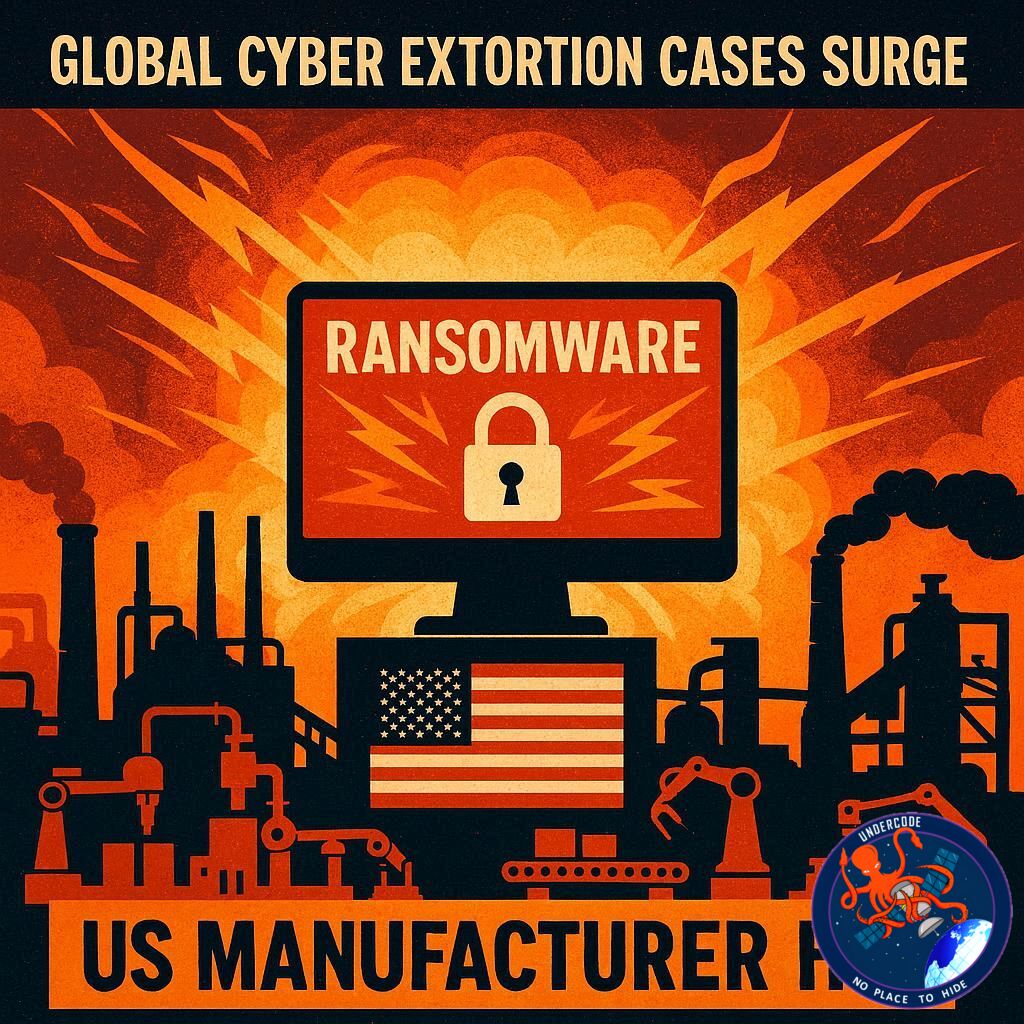
Introduction: A Growing Cybersecurity Storm in Critical Industries
Cybersecurity threats continue to escalate across industries that once considered themselves unlikely targets. Manufacturing, oil and gas, and even government-linked contractors are now firmly in the crosshairs of ransomware groups seeking high-value payouts. A recent attack on Conveyors, Inc.—a U.S.-based company with decades of experience in bulk material handling—highlights how even established, infrastructure-adjacent firms are vulnerable. At the same time, a separate breach involving a Brazilian media analytics company signals that no region or sector is immune. These incidents are not isolated; they are part of a broader trend where cybercriminals are becoming more strategic, aggressive, and financially motivated.
the Incident and Related Breaches
Conveyors, Inc., a company with over 40 years of operational history in bulk material handling systems, reportedly fell victim to a ransomware attack in March 2026. The organization serves a wide range of sectors, including industrial manufacturing, oil and gas, and government clients, making it a particularly attractive target for cybercriminals. The attack has been attributed to a ransomware group known as “incransom,” which has been increasingly active in targeting companies with critical infrastructure ties.
While details about the extent of the breach remain limited, ransomware attacks typically involve encrypting sensitive company data and demanding payment in exchange for decryption keys. In many cases, attackers also threaten to leak confidential data if their demands are not met, amplifying the pressure on victims to comply.
At nearly the same time, another cybercriminal group identified as ALP-001 claimed responsibility for breaching a Brazil-based media analytics firm. According to reports, the attackers allegedly accessed approximately 176.5 GB of data, targeting a company generating around $52.5 million in revenue. The attackers issued an ultimatum, setting an extortion deadline for early April 2026.
These two incidents, although geographically distant and involving different industries, share common characteristics. Both involve data exfiltration, financial extortion, and carefully timed threats designed to maximize leverage over the victim organizations. The attackers appear to be well-organized, using public disclosures and deadlines to intensify pressure.
The broader implication is clear: ransomware is no longer a random or opportunistic threat. Instead, it has evolved into a calculated business model where attackers conduct reconnaissance, identify valuable targets, and execute attacks with precision. Companies with longstanding reputations and strong industry ties are no longer insulated from these risks.
Moreover, the involvement of sectors like oil and gas and government-linked operations raises concerns about national security and supply chain disruptions. A successful ransomware attack in such environments can lead not only to financial losses but also to operational downtime and reputational damage.
The Expanding Scope of Ransomware in 2026
Ransomware attacks have significantly evolved over the past decade, and 2026 is proving to be a pivotal year. Threat actors are no longer targeting only large tech firms or financial institutions. Instead, they are diversifying their targets to include manufacturing, logistics, and analytics companies—industries that rely heavily on continuous operations.
This shift is strategic. Manufacturing firms like Conveyors, Inc. often operate with legacy systems that may not be fully updated with the latest security protocols. These vulnerabilities make them attractive entry points for attackers. Once inside, ransomware groups can disrupt production lines, halt supply chains, and create cascading effects across multiple industries.
Similarly, data-driven companies, such as media analytics firms, hold vast amounts of valuable information. Even if the data is not immediately critical to operations, its exposure can result in reputational harm and regulatory consequences. This dual threat—operational disruption and data leakage—gives attackers a powerful bargaining tool.
What Undercode Say:
The Strategic Targeting of Industrial Infrastructure
One of the most notable aspects of this incident is the deliberate targeting of a company embedded in industrial and government supply chains. This is not accidental. Cybercriminal groups are increasingly focusing on organizations that play a role in critical infrastructure because the stakes are higher, and the pressure to pay is more intense.
Ransomware as a Business Model
Ransomware groups like incransom and ALP-001 are operating more like structured enterprises than loosely organized hackers. They have defined processes, communication strategies, and even branding. This professionalization of cybercrime makes it more difficult to combat, as these groups continuously refine their tactics.
The Role of Data Exfiltration in Modern Attacks
Unlike earlier ransomware campaigns that focused solely on encryption, modern attacks include data exfiltration as a core component. This “double extortion” strategy ensures that even organizations with strong backup systems are still vulnerable. The threat of public data leaks adds a reputational dimension that cannot be easily mitigated.
The Psychological Pressure of Deadlines
Setting a specific deadline for ransom payment, as seen in the Brazilian case, is a psychological tactic designed to rush decision-making. Companies under pressure may bypass standard protocols or fail to explore alternative recovery options, increasing the likelihood of payment.
Cross-Industry Vulnerability Trends
The simultaneous targeting of manufacturing and media analytics sectors highlights a broader trend: no industry is immune. Cybercriminals are expanding their reach, exploiting weaknesses wherever they find them. This underscores the need for universal cybersecurity standards across all sectors.
The Hidden Cost of Downtime
Beyond the ransom itself, the cost of operational downtime can be devastating. For a manufacturing company, even a few hours of halted production can result in significant financial losses. This economic pressure often outweighs the ransom demand, making payment seem like the lesser evil.
Government and Regulatory Implications
As attacks increasingly involve companies connected to government operations, there is growing pressure for stricter cybersecurity regulations. Governments may introduce mandatory reporting requirements and higher penalties for inadequate security measures.
The Importance of Cyber Resilience
Organizations must shift their focus from prevention alone to resilience. This includes having robust incident response plans, regular security audits, and employee training programs. Cybersecurity is no longer just an IT issue; it is a core business concern.
The Rise of Public Disclosure Tactics
Cybercriminals are increasingly using public platforms to announce breaches and apply pressure. This tactic not only embarrasses the victim but also serves as a warning to other potential targets, reinforcing the attackers’ reputation.
Long-Term Impact on Trust and Reputation
Even if a company recovers from a ransomware attack, the damage to its reputation can linger. Clients, partners, and stakeholders may question the organization’s ability to protect sensitive data, leading to long-term business consequences.
Fact Checker Results
Verification of Reported Attack
✅ The ransomware attack on a U.S.-based manufacturer aligns with current trends in targeting industrial sectors.
Credibility of Data Breach Claims
⚠️ Claims of exact data volume and revenue figures in the Brazilian case cannot be independently verified without official confirmation.
Ransomware Trends Accuracy
✅ The described tactics—data exfiltration, deadlines, and multi-industry targeting—are consistent with known ransomware evolution patterns.
Prediction
Escalation of Industry-Specific Attacks
Cybercriminal groups will increasingly specialize in targeting specific industries, developing tailored attack methods that exploit sector-specific vulnerabilities.
Greater Regulatory Oversight
Governments are likely to introduce stricter cybersecurity compliance requirements, especially for companies involved in critical infrastructure and supply chains.
Rise of AI-Driven Cyber Attacks
Artificial intelligence will play a larger role in automating reconnaissance and attack execution, making ransomware campaigns faster and more effective.
Increased Investment in Cyber Defense
Organizations will significantly boost their cybersecurity budgets, focusing on proactive defense measures and incident response capabilities.
Public Exposure as a Primary Weapon
Data leaks and public disclosure will become the primary leverage point in ransomware attacks, surpassing encryption as the main threat vector.
🕵️📝✔️Let’s dive deep and fact‑check.
References:
Reported By: x.com
Extra Source Hub (Possible Sources for article):
https://www.reddit.com/r/AskReddit
Wikipedia
OpenAi & Undercode AI
Image Source:
Unsplash
Undercode AI DI v2
Bing
🔐JOIN OUR CYBER WORLD [ CVE News • HackMonitor • UndercodeNews ]
📢 Follow UndercodeNews & Stay Tuned:
𝕏 formerly Twitter 🐦 | @ Threads | 🔗 Linkedin | 🦋BlueSky | 🐘Mastodon


