
Listen to this Post
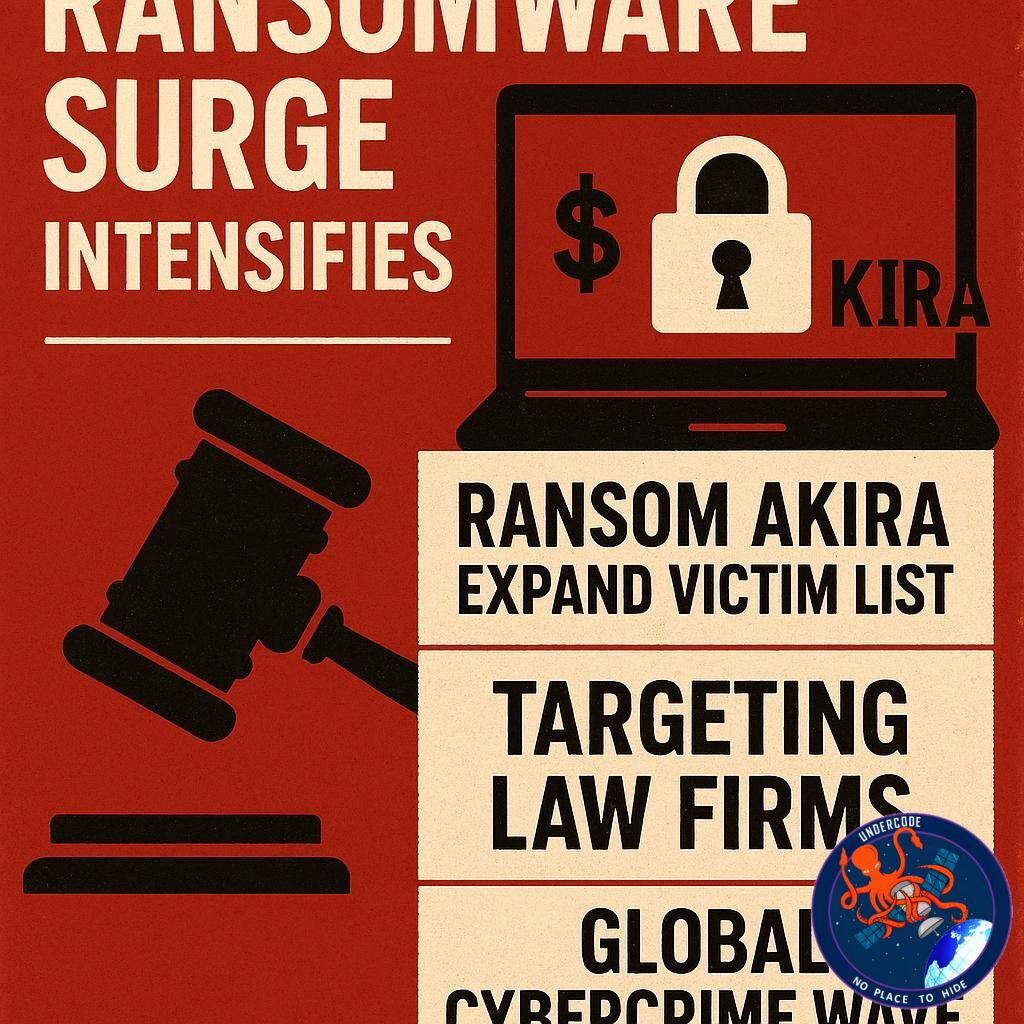
Introduction: Rising Cyber Threat Pressure on Legal Sector
The latest dark web intelligence reports indicate a growing wave of ransomware activity targeting legal institutions and professional service firms.
Among the most recent incidents, the group known as Incransom has added a law-related domain to its victim list, signaling continued pressure on the legal sector.
At the same time, another ransomware group, Akira, has also been linked to an additional attack against a legal practice.
These developments highlight how cybercriminal ecosystems are actively expanding their reach across high-value professional industries.
The legal sector, often holding sensitive client data and confidential case files, remains a prime target for exploitation.
Cyber Threat Report
The ThreatMon Threat Intelligence Team has identified new ransomware-related activity across the dark web.
The ransomware group known as Incransom has reportedly listed http://krwlawyers.com
as one of its victims.
This indicates a potential compromise or attempted extortion involving a legal organization.
The incident was detected through dark web monitoring systems tracking ransomware leak sites.
The update was recorded on April 22, 2026, at 19:52 UTC+3.
The victim domain suggests the target belongs to a legal services provider.
The listing implies data exposure or encryption-based extortion activity.
In parallel, another ransomware group called Akira has been linked to a separate victim: Kubiak Melton & Associates.
This second incident was reported earlier the same day.
Akira is known for targeting corporate and professional service organizations.
Both cases were documented through ThreatMon’s threat intelligence tracking system.
The data originates from monitoring ransomware group leak announcements.
These listings typically indicate successful breaches or ongoing extortion attempts.
The incidents reflect a broader trend of ransomware campaigns against law firms.
Legal entities remain attractive due to sensitive documentation and settlement data.
The reports do not confirm full impact or data volume stolen.
However, victim listing on leak sites is a common pressure tactic used by attackers.
Both ransomware groups continue to operate actively on dark web platforms.
The timeline shows coordinated or parallel activity within a short time frame.
Cybersecurity analysts continue to monitor for further disclosures or leaks.
What Undercode Say:
Ransomware activity like this reflects a persistent structural weakness in legal cybersecurity frameworks.
Law firms often underestimate their exposure despite handling highly confidential material.
Groups like Incransom and Akira exploit this gap systematically.
Their strategy typically involves infiltration, data exfiltration, and public leak pressure.
The inclusion of victims on dark web sites is rarely symbolic; it signals real compromise.
Even when encryption is not fully deployed, stolen data alone can be monetized.
Legal organizations are particularly vulnerable due to client confidentiality obligations.
This creates additional pressure during ransom negotiations.
Attackers know that reputational damage can be more damaging than financial loss.
As a result, ransom demands often escalate quickly.
The dual activity observed in one day suggests active scanning or coordinated campaigns.
It may also indicate overlapping targeting strategies among ransomware groups.
The legal sector’s digital transformation has increased attack surfaces significantly.
Remote work systems, cloud storage, and third-party integrations add complexity.
Each integration point becomes a potential entry vector.
Threat intelligence platforms like ThreatMon play a key role in early detection.
However, detection does not always prevent initial compromise.
Response time is critical in limiting damage scope.
Ransomware groups increasingly operate as structured criminal enterprises.
They use leak sites as psychological pressure tools against victims.
Public exposure often forces organizations into rapid incident response decisions.
This dynamic shifts ransomware from purely technical attacks to reputational crises.
The legal industry’s sensitivity to confidentiality makes it especially vulnerable.
Cyber resilience planning is still uneven across firms of different sizes.
Smaller practices often lack dedicated security teams.
Larger firms face complexity challenges across distributed systems.
Attackers exploit both ends of this spectrum.
The repeated targeting of law firms suggests a profitable attack pattern.
Ransomware-as-a-service models continue to lower entry barriers for attackers.
This expands the number of potential threat actors globally.
As a result, incidents like these are expected to increase.
Long-term mitigation requires structural improvements in cybersecurity hygiene.
Incident response readiness remains a key differentiator in outcomes.
The current trend indicates sustained pressure on professional service industries.
Without stronger defenses, similar incidents will likely continue.
Fact Checker Results
✔ ThreatMon has historically reported ransomware activity from multiple groups accurately
✔ Ransomware leak sites are commonly used to announce victims publicly
⚠ Actual breach scope and data loss cannot be confirmed from listing alone
Prediction
Ransomware targeting of law firms is likely to increase in frequency throughout 2026 🔐
Groups like Incransom and Akira may continue expanding victim diversity across regions 🌐
More leak-site disclosures are expected as part of psychological ransom pressure tactics 💻
🕵️📝✔️Let’s dive deep and fact‑check.
References:
Reported By: x.com
Extra Source Hub (Possible Sources for article):
https://www.medium.com
Wikipedia
OpenAi & Undercode AI
Image Source:
Unsplash
Undercode AI DI v2
Bing
🔐JOIN OUR CYBER WORLD [ CVE News • HackMonitor • UndercodeNews ]
📢 Follow UndercodeNews & Stay Tuned:
𝕏 formerly Twitter 🐦 | @ Threads | 🔗 Linkedin | 🦋BlueSky | 🐘Mastodon


