
Listen to this Post
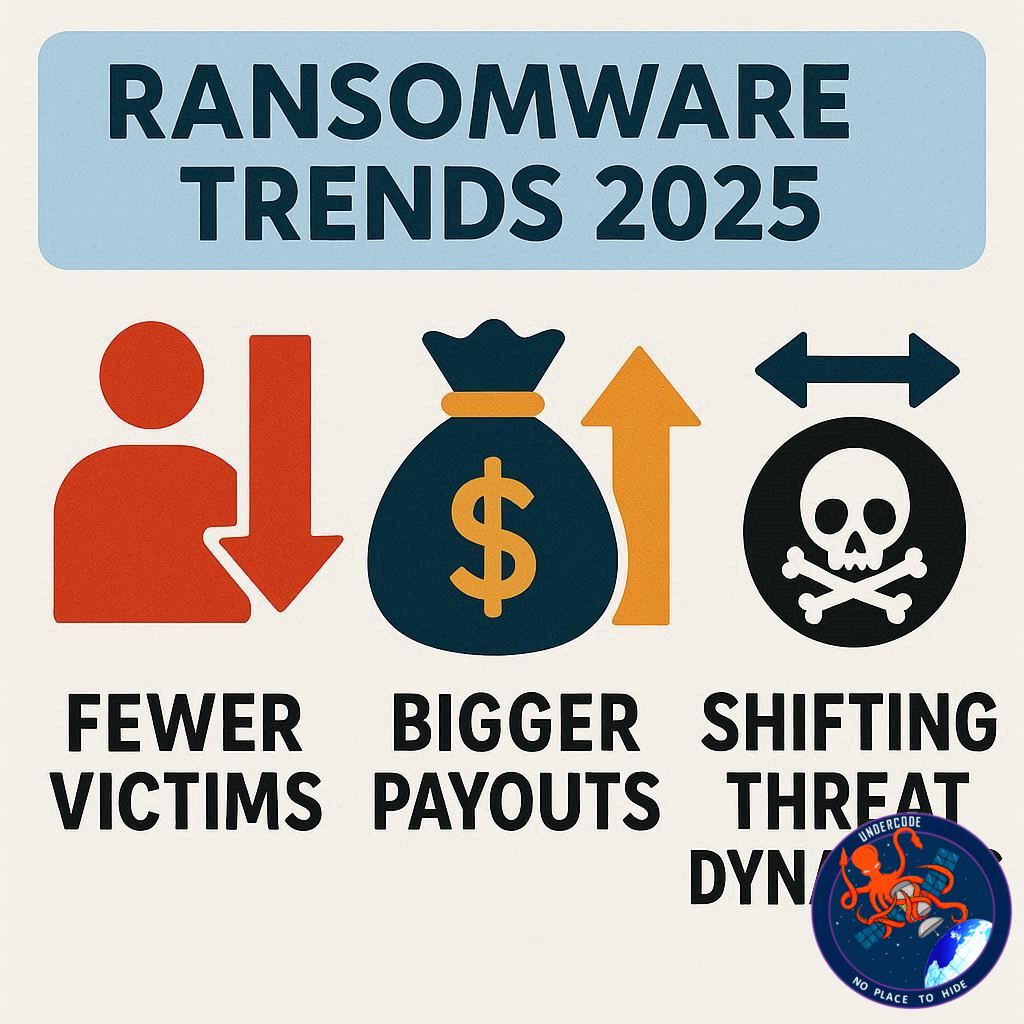
Ransomware attacks are evolving, and 2025 proved to be a pivotal year in this high-stakes cybercrime landscape. While the total number of victims surged to record levels, the overall revenue earned by ransomware actors actually declined. According to new analysis by blockchain intelligence firm Chainalysis, attackers are now targeting fewer organizations but demanding much larger payouts from each. This shift underscores a growing sophistication in cyber extortion tactics and reflects broader trends in global cybersecurity defenses.
Rising Victim Numbers, Falling Payments
Chainalysis reported that total cryptocurrency payments to ransomware actors fell 8% year-on-year to $820 million in 2025. Although this figure may rise toward $900 million as new data is incorporated, it still marks the second consecutive year of decline and is lower than the ransomware revenue peaks seen in 2020 and 2021. Paradoxically, the number of victims increased by 50% YoY, making 2025 the busiest year on record for ransomware attacks.
The sharp drop in payment rates is striking. Only 29% of victims paid ransom last year, down from 63% in 2024, the lowest level ever recorded. Chainalysis notes that this decline signals a major strategic win for the cybersecurity community: attackers are working harder for less payoff, potentially altering the economic incentives that fuel ransomware operations.
Four Key Trends Shaping Ransomware
The report highlights four critical developments behind these numbers:
Fewer Victim Payments – Enhanced incident response, better backup protocols, and regulatory pressure have reduced the number of organizations that succumb to ransom demands.
Global Action Against Cybercrime – Coordinated law enforcement and international sanctions have disrupted ransomware infrastructure and money laundering channels.
Weaknesses in Ransomware Strains – Some variants, such as VolkLocker, contain cryptographic flaws that allow victims to decrypt data without paying.
Fragmentation of RaaS Networks – The ransomware-as-a-service ecosystem has splintered into smaller, independent groups. Chainalysis estimates there could be up to 85 active groups operating today, making coordination more challenging and revenue more dispersed.
Higher Payouts for Willing Victims
While fewer organizations are paying, those that do are facing dramatically higher ransom demands. The median payment skyrocketed 368%, from $12,738 in 2024 to $59,556 in 2025. Attackers are intensifying their pressure by contacting employees and customers, analyzing stolen data, and tailoring threats to maximize impact. Chainalysis warns that ransomware actors remain opportunistic, exploiting exposed services, misconfigurations, and newly disclosed vulnerabilities without favoring specific sectors or times of year.
The United States remained the most heavily targeted country, followed by Canada, Germany, the UK, and other parts of Europe. The manufacturing and finance/professional services sectors bore the brunt of attacks, while supply chains, logistics, and critical infrastructure were particularly vulnerable in Canada and Germany.
Infrastructure as the Core Battleground
Payments to initial access brokers remained high at $14 million, illustrating the ongoing importance of buying and selling network access. The report also emphasizes that infrastructure—bulletproof hosting, residential proxy networks, malware loaders—is a strategic asset for both financially motivated cybercriminals and state-linked threat actors. Disrupting these nodes can ripple across ransomware syndicates, scams, and geopolitical operations, highlighting that infrastructure is the “center of gravity” in modern cyber conflict.
What Undercode Say:
The 2025 ransomware landscape reveals a clear strategic evolution. The decline in payment rates indicates that global defenses, regulatory action, and better incident response are starting to disrupt the ransomware business model. However, the simultaneous rise in median payouts shows attackers are pivoting toward high-value targets, using data-driven tactics and social engineering to maximize returns.
Fragmentation of ransomware-as-a-service operations complicates attribution and enforcement but also diffuses risk for operators. Independent groups may lack the resources of traditional syndicates, yet they are nimble, adaptable, and often more aggressive in targeting exposed organizations. This makes cybersecurity preparedness increasingly critical for mid-sized enterprises that may previously have assumed they were too small to be targeted.
Infrastructure-centric strategies, including disrupting hosting providers, proxy networks, and malware distribution platforms, remain the most effective intervention point. State-linked threat actors exploiting the same infrastructure further blur the lines between financially motivated and geopolitical attacks, increasing the stakes for law enforcement and corporate security teams alike.
Emerging ransomware strains with cryptographic flaws create opportunities for defenders, suggesting that proactive threat intelligence and reverse engineering can offset some attack impacts. Yet attackers’ increasing focus on customer and employee exploitation indicates that social engineering remains a potent vector, demanding robust awareness programs and cross-organizational vigilance.
Overall, ransomware’s evolution underscores a shift from volume-based extortion to precision, high-value targeting. Organizations must balance technical controls, proactive intelligence, and rapid incident response to navigate a threat environment where fewer attacks can still carry enormous financial and operational consequences.
Fact Checker Results
✅ Payment Rate Decline Verified – Data confirms victim payment rates fell to 29% in 2025.
✅ Revenue Drop Confirmed – Overall ransomware revenue decreased 8% YoY, per Chainalysis.
❌ Median Payment Spike Needs Context – The 368% rise is accurate but applies only to paying victims, not the entire victim pool.
Prediction
📈 High-Value Targeting Will Intensify – As organizations improve defenses, ransomware actors will focus increasingly on high-revenue sectors, supply chains, and organizations with critical data.
💥 Infrastructure Disruption as a Strategy – Law enforcement and sanctions against cybercrime infrastructure will remain a key tactic, potentially forcing ransomware actors to innovate or consolidate.
⚠️ Hybrid Threats Increase – Overlaps between financially motivated and state-linked actors will grow, making attribution and mitigation more complex for corporations and governments alike.
If you want, I can also create a visual infographic summarizing 2025 ransomware trends for quick reference. It would show victims, payment rates, median payouts, and infrastructure risk in a single glance. Do you want me to do that?
🕵️📝✔️Let’s dive deep and fact‑check.
References:
Reported By: www.infosecurity-magazine.com
Extra Source Hub (Possible Sources for article):
https://www.quora.com/topic/Technology
Wikipedia
OpenAi & Undercode AI
Image Source:
Unsplash
Undercode AI DI v2
Bing
🔐JOIN OUR CYBER WORLD [ CVE News • HackMonitor • UndercodeNews ]
📢 Follow UndercodeNews & Stay Tuned:
𝕏 formerly Twitter 🐦 | @ Threads | 🔗 Linkedin | 🦋BlueSky | 🐘Mastodon


