
Listen to this Post
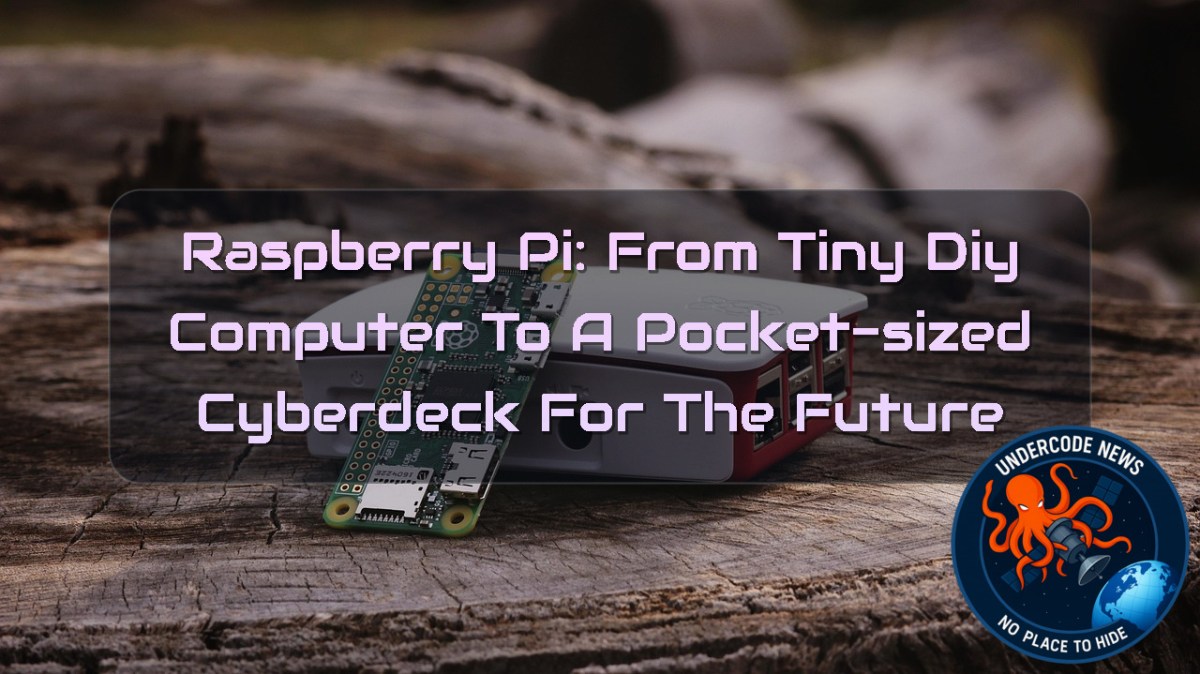 A Small Computer With a Surprisingly Big Story
Few pieces of technology have captured the imagination of makers, students, engineers, security researchers, and hobbyists quite like the Raspberry Pi. What began as an affordable way to encourage computer education has grown into an enormous ecosystem of tiny computers, operating systems, accessories, robots, servers, experimental devices, and unusual DIY projects.
The collection of Raspberry Pi stories above shows exactly why the platform remains so fascinating. A Raspberry Pi can become a desktop computer, a portable cyberdeck, an ethical-hacking workstation, a smart speaker, a satellite payload, or even a compact Linux machine that fits almost anywhere.
That flexibility is the real story.
Raspberry Pi is not simply about buying a cheap computer and turning it on. Its greatest strength is giving people the opportunity to decide what a computer should become.
The Cyberdeck That Fits Inside a Briefcase
One of the most interesting projects highlighted in the original article is a Raspberry Pi cyberdeck built inside a briefcase.
At first glance, the idea sounds like something from a science-fiction movie. Open a briefcase and find a complete working computer inside, ready to be carried wherever it is needed.
But the concept is surprisingly practical.
A Raspberry Pi can provide the processing power while a portable display, keyboard, battery system, networking hardware, storage, and other accessories transform it into a self-contained mobile workstation.
Why Cyberdecks Are More Than a Gimmick
The cyberdeck concept has become particularly attractive among hardware hackers and cybersecurity enthusiasts because it combines portability with customization.
Instead of carrying a conventional laptop with hardware and software configurations chosen by a manufacturer, the owner can design the entire system around a specific purpose.
One cyberdeck might focus on networking.
Another might be designed for penetration testing.
A third could become a field-monitoring station.
Another could simply be an incredibly fun portable Linux computer.
The Raspberry Pi makes these experiments accessible because the underlying platform is relatively compact and well supported.
Raspberry Pi 500 Brings Back the Keyboard Computer
Another story in the collection focuses on the Raspberry Pi 500, a modern interpretation of the classic keyboard computer.
This design brings back memories of machines such as the Tandy 1000 and other home computers from the 1980s, where the computer itself was built directly into the keyboard.
The concept feels nostalgic, but there is something remarkably modern about it.
Instead of requiring a separate desktop tower, the main computer hardware is integrated into a familiar keyboard-shaped device.
Retro Design Meets Modern Linux
The Raspberry Pi 500 demonstrates an important characteristic of the Raspberry Pi ecosystem: old ideas can become useful again when combined with modern hardware.
The keyboard computer disappeared from mainstream computing as desktops and laptops evolved, but the basic idea never stopped making sense.
For education, home computing, programming, lightweight servers, and experimentation, having a compact computer inside the keyboard can actually be incredibly convenient.
It reduces clutter while keeping the machine accessible.
Raspberry Pi Goes to Space
Perhaps the most spectacular story in the collection is the Raspberry Pi that was strapped to a satellite and used to capture an image of Earth.
That project illustrates how far the platform has traveled from its educational roots.
A computer originally designed to make programming more accessible can eventually find itself operating as part of an experiment orbiting above the planet.
The important lesson is not simply that a Raspberry Pi can survive in an advanced technical environment.
It is that inexpensive computing hardware can make experimentation possible for organizations and researchers that might otherwise need significantly more specialized equipment.
When Affordable Hardware Reaches Orbit
Space projects normally involve strict requirements around reliability, power consumption, thermal conditions, radiation, communications, and software behavior.
That makes the appearance of Raspberry Pi technology in space especially interesting.
It demonstrates the growing role of relatively accessible computing platforms in experimental aerospace projects.
The Raspberry Pi does not replace specialized space-grade computers in every situation. Instead, it can provide an economical platform for certain experiments and supporting functions where appropriate engineering controls are in place.
Kali Linux Turns the Pi Into a Security Laboratory
Another important development mentioned in the original collection is Kali Linux support for Raspberry Pi hardware.
Kali Linux is widely associated with penetration testing, digital forensics, security research, and defensive assessment.
Putting it on a Raspberry Pi creates an interesting combination.
You get a tiny computer and a security-focused Linux environment that can be carried almost anywhere.
Portable Cybersecurity Has Changed
A traditional security workstation can be powerful, but it is not always convenient.
A Raspberry Pi can instead serve as a compact laboratory for learning Linux, networking, scripting, system administration, and authorized security testing.
The small size is particularly useful for educational environments.
A student can learn how networking works without needing a large desktop system.
A security professional can build a controlled testing appliance.
A hobbyist can experiment with services and network configurations from a dedicated device.
Privacy Comes Back Into the Conversation
The original collection also includes an unusual Raspberry Pi smart-speaker project designed around privacy.
This is an important direction for the platform.
Commercial smart speakers are convenient, but their convenience often comes with questions about cloud services, data collection, microphones, accounts, and how much information leaves the user’s home.
A DIY Raspberry Pi-based alternative gives the builder considerably more control over the system.
Building Technology Instead of Just Buying It
The educational value of projects like this can be greater than the final product itself.
A child who builds a smart speaker can learn how microphones work.
They can discover how software interprets commands.
They can understand what happens when a device connects to a network.
They can see the difference between local processing and cloud-based services.
That makes Raspberry Pi particularly valuable in an era when technology is becoming increasingly invisible.
Ubuntu Brings a Full Linux Desktop to the Pi
The ability to install Ubuntu on Raspberry Pi hardware adds another layer of flexibility.
Ubuntu has become one of the most recognizable Linux distributions, and its availability on Raspberry Pi hardware makes the platform more approachable for people who want a familiar Linux environment.
For programming, development, lightweight desktop work, server experimentation, and learning Linux, this can turn a small board into a surprisingly capable workstation.
The Raspberry Pi 3 Model A+ and the Small-Computer Philosophy
The Raspberry Pi 3 Model A+ also represents another part of the platform’s appeal: smaller hardware.
The idea of reducing a
That philosophy opens the door to projects where conventional computers would simply be too large.
A tiny computer can be embedded into a robot.
It can power an information display.
It can operate a camera system.
It can become part of an automated home project.
It can even disappear inside another piece of hardware.
Voice Assistance for Makers
The collection also mentions an Alexa skill designed to help Raspberry Pi enthusiasts while they work on projects.
This might sound like a small feature, but it represents an interesting intersection between voice interfaces and hardware development.
When someone is physically building a project, their hands may be occupied with cables, components, tools, or circuit boards.
A voice assistant can potentially provide information without requiring the builder to stop and reach for another device.
Raspberry
Across all these stories, one pattern becomes obvious.
The Raspberry Pi does not have one single identity.
It can be a computer.
It can be a server.
It can be a learning platform.
It can be a security laboratory.
It can be a media center.
It can be an embedded controller.
It can become a satellite computer.
It can become a cyberdeck.
It can even become a completely experimental machine that nobody imagined when the original board was designed.
The Real Revolution Is Accessibility
The most important contribution of Raspberry Pi may not be any individual model.
It is accessibility.
Computing hardware used to be intimidating for people who wanted to experiment.
Today, someone can purchase a small development computer, install Linux, connect a display, and begin learning.
That dramatically lowers the barrier to entry.
Why Raspberry Pi Still Matters
The technology industry often measures progress by processor performance, AI capabilities, graphics power, and benchmark scores.
Raspberry Pi represents a different measurement.
How many people can use this hardware to create something new?
That is a much harder metric to quantify.
A Raspberry Pi may never compete with a high-end gaming PC in raw performance, but that misses the point.
Its value comes from what people can build around it.
Deep Analysis: Turning a Raspberry Pi Into a Security and Research Workstation
A Portable Linux Environment
For cybersecurity education, a Raspberry Pi can become a useful isolated laboratory.
A basic Linux installation can be configured with networking tools, scripting environments, monitoring utilities, and development software.
The important principle is to use these capabilities only against systems you own or have explicit permission to test.
Updating the Operating System
Before installing security tools, update the system:
sudo apt update
sudo apt full-upgrade -y
Keeping packages updated is one of the simplest ways to reduce avoidable vulnerabilities.
Checking Hardware Information
You can inspect basic system information with:
uname -a
For Raspberry Pi-specific information, depending on the operating system:
cat /proc/device-tree/model
This helps identify the hardware environment before configuring software.
Monitoring Network Interfaces
Network interfaces can be inspected using:
ip addr
This is useful when troubleshooting Wi-Fi, Ethernet, VPNs, or other network configurations.
Checking Active Connections
A modern Linux system can show listening services with:
ss -tulpn
This can help administrators understand which services are exposed on their own machine.
Reviewing Running Processes
A quick process overview can be obtained with:
ps aux
For a continuously updating view, systems commonly provide:
top
These commands are useful for diagnosing unexpected resource usage.
Testing DNS Resolution
A Raspberry Pi used as a networking laboratory can also be used to investigate DNS behavior:
getent hosts example.com
This provides a simple way to verify whether name resolution is functioning.
Creating a Basic Python Environment
Python is one of the most useful languages for Raspberry Pi projects.
A simple test can be run with:
python3 --version
You can then create a project environment:
python3 -m venv myproject
source myproject/bin/activate
This keeps project dependencies isolated.
Why This Matters for Cybersecurity
The combination of Linux, Python, networking, GPIO hardware, cameras, and compact physical dimensions makes Raspberry Pi unusually interesting for security education.
It can teach concepts that are difficult to understand through theory alone.
Instead of simply reading about networking, students can configure a network.
Instead of reading about Linux services, they can deploy one.
Instead of studying automation abstractly, they can connect software to physical hardware.
The Physical Side of Security
There is another dimension that Raspberry Pi highlights particularly well: cybersecurity is not exclusively digital.
A computer embedded into a physical device introduces questions about physical access, exposed ports, removable storage, power interruption, tampering, and hardware modification.
That makes Raspberry Pi projects useful for understanding the relationship between physical security and digital security.
What Undercode Say:
- Raspberry Pi Was Never Really About Cheap Computers
The low price helped Raspberry Pi become popular, but affordability is only part of the story.
- The Bigger Innovation Is Permission to Experiment
Raspberry Pi gives users permission to break things, rebuild them, test ideas, and learn through mistakes.
3. Cyberdecks Represent the Maker Philosophy
The briefcase computer is fascinating because it transforms ordinary components into a personalized computing platform.
- Portability Changes the Way We Think About Computers
A computer does not necessarily need to live on a desk.
- Linux Makes the Platform Even More Flexible
Linux gives Raspberry Pi users enormous freedom over software configuration.
- Education Remains One of Its Strongest Applications
Students can learn programming and computing concepts using physical hardware instead of abstract simulations.
7. Cybersecurity Education Benefits From Physical Hardware
A Raspberry Pi can turn networking and Linux concepts into hands-on experiments.
8. Privacy Projects Are Increasingly Relevant
DIY smart devices demonstrate that users do not necessarily need to accept every cloud-based design decision.
9. The Satellite Story Shows the
Moving from classrooms to space is a remarkable trajectory for an inexpensive computing platform.
10. Raspberry Pi Encourages Curiosity
Its greatest psychological advantage may be that it invites people to ask, “What happens if I try this?”
- The Ecosystem Is More Important Than Individual Models
New boards matter, but accessories, software, communities, tutorials, and projects make the platform powerful.
12. Small Hardware Can Enable Large Ideas
Physical size no longer has to determine the ambition of a project.
13. Cybersecurity Is Becoming More Portable
Security professionals increasingly need compact tools for diagnostics and controlled testing.
14. But Portability Also Creates Risks
A portable computer can be lost, stolen, or physically accessed.
- Security Should Be Designed Into Every Project
Passwords, encryption, updates, access controls, and secure configurations should not be afterthoughts.
- Raspberry Pi Is Also a Gateway to Professional Computing
Many people begin experimenting at home before eventually moving into software development, networking, engineering, or cybersecurity careers.
17. The Hardware Makes Abstract Concepts Tangible
Processes, packets, services, scripts, and sensors become physical experiences.
18. That Is Valuable in Education
People often understand difficult technical ideas faster when they can see the results of their actions.
- The Keyboard Computer Is More Than Nostalgia
The Raspberry Pi 500 demonstrates that older computer designs can still have practical value.
20. Simplicity Can Be Powerful
A device that does one job extremely well can sometimes be more useful than an unnecessarily complicated system.
21. Raspberry Pi Encourages Modular Thinking
Users can add storage, sensors, displays, cameras, networking hardware, and other components.
22. That Mirrors Modern Engineering
Complex systems are frequently assembled from smaller specialized components.
- The Platform Also Supports Experimentation With AI
Modern Raspberry Pi projects can combine local computing with machine-learning frameworks and remote AI services.
24. Edge Computing Is Another Natural Direction
Instead of sending every piece of data to the cloud, some workloads can be processed closer to where the data is generated.
25. This Matters for Privacy
Local processing can reduce unnecessary transmission of sensitive information.
26. It Also Matters for Reliability
A device that can perform important tasks locally does not always need a permanent internet connection.
- The Maker Community Is a Strategic Advantage
Thousands of projects create a knowledge base that makes new experiments easier.
28. Documentation Reduces the Learning Curve
Beginners can build on what others have already discovered.
29. Raspberry Pi Makes Failure Less Frightening
Experimenting with inexpensive hardware feels less risky than experimenting with an expensive production computer.
30. That Encourages Better Learning
Failure becomes part of the engineering process rather than something to avoid.
31. The Platform Bridges Generations
The Raspberry Pi 500 can appeal to people who remember keyboard computers while introducing younger users to Linux and programming.
32. Hardware Education Is Becoming More Important
As software becomes increasingly automated, understanding what happens underneath remains valuable.
33. AI Makes This Even More Relevant
AI can generate code, but understanding the hardware running that code helps users recognize its limitations.
34. Raspberry Pi Provides That Physical Context
It connects software instructions to real-world computing resources.
35. Cyberdecks Are Likely to Keep Evolving
Future versions could combine better batteries, displays, networking, storage, and AI acceleration.
- Portable Security Labs Could Become More Specialized
A small device can be configured for defensive monitoring, diagnostics, and authorized testing.
37. The
As Raspberry Pi becomes more powerful, projects can become increasingly complicated.
38. Complexity Can Undermine Accessibility
The community needs to preserve beginner-friendly documentation and tools.
39. Raspberry
Its long-term influence will come from the people who use it.
- That Is Why Raspberry Pi Remains Important
It turns computing from something people merely consume into something they can build, modify, understand, and control.
Prediction
(+1) Cyberdecks Will Become More Advanced
As portable displays, batteries, storage, networking components, and compact computing hardware improve, Raspberry Pi-based cyberdecks should become more capable and easier to build.
(+1) Raspberry Pi Will Remain Important in Education
Hands-on programming and electronics education will continue to benefit from affordable computers that students can physically experiment with.
(+1) Edge Computing Will Create New Opportunities
More projects will process information locally instead of sending everything to cloud servers, particularly where privacy, latency, or connectivity matters.
(+1) DIY Security Labs Will Grow
Security learners will increasingly use compact computers as controlled environments for studying Linux, networking, defensive monitoring, and authorized penetration testing.
(-1) Complexity Could Become a Barrier
As the ecosystem expands, beginners may find advanced Raspberry Pi projects intimidating unless documentation and software continue to prioritize accessibility.
✅ Raspberry Pi Has Been Used in Space-Related Projects
The original article’s claim about Raspberry Pi hardware being sent into space reflects the platform’s use in experimental satellite and aerospace projects. The broader point is accurate: Raspberry Pi-class computers have moved far beyond traditional classroom use.
✅ Raspberry Pi Supports Security-Focused Linux Environments
The reference to Kali Linux on Raspberry Pi is consistent with the platform’s role in cybersecurity education and authorized security testing. Its portability makes it particularly attractive for controlled laboratories and networking experiments.
✅ Raspberry Pi Can Become a Portable Computer
The cyberdeck concept is technically realistic. With a Raspberry Pi, display, keyboard, power source, storage, and suitable peripherals, users can build a self-contained portable workstation.
❌ Raspberry Pi Is Not a Universal Replacement for a Desktop or Laptop
Although Raspberry Pi hardware has become considerably more capable, it should not automatically be treated as a replacement for every conventional PC. Performance, software compatibility, storage, graphics capabilities, and peripheral requirements can still make a traditional computer the better choice.
The Bigger Picture: Why Raspberry Pi Still Captures the Imagination
A Computer You Can Understand
There is something fundamentally different about owning a machine that encourages you to open a terminal, connect a cable, install an operating system, write a script, attach a sensor, and see something happen.
Modern technology often hides its complexity.
Raspberry Pi does the opposite.
It exposes enough of the machine for people to become curious.
From Classroom to Cyberdeck
The journey described by these Raspberry Pi stories is extraordinary.
A tiny educational computer can become a desktop.
The desktop can become a server.
The server can become a security laboratory.
The security laboratory can become a portable cyberdeck.
And, under the right circumstances, similar technology can even participate in a satellite mission.
That is the real Raspberry Pi story.
The Future Belongs to Experimenters
The most important part of Raspberry Pi is not the processor, the board dimensions, or any particular operating system.
It is the culture surrounding the hardware.
People take the device and ask questions.
Can it run Linux?
Can it control a robot?
Can it monitor a network?
Can it power a camera?
Can it become a privacy-focused speaker?
Can it fit inside a briefcase?
Can it survive a space mission?
That spirit of experimentation is precisely why Raspberry Pi continues to matter.
Final Verdict
Raspberry Pi has evolved from an affordable educational computer into one of the most versatile maker platforms in modern computing.
The stories surrounding cyberdecks, keyboard PCs, satellite experiments, Kali Linux, privacy-focused smart speakers, Ubuntu, and compact Model A+ hardware all reveal different sides of the same idea.
Computers do not have to remain mysterious black boxes.
They can be opened, modified, programmed, connected, redesigned, and reinvented.
And sometimes, the most interesting computer is not the most powerful one on the market.
It is the tiny one sitting on a desk, waiting for someone to imagine what it could become.
▶️ Related Video (82% Match):
🕵️📝Let’s dive deep and fact‑check.
🎓 Live Courses & Certifications:
Join Undercode Academy for Verified Certifications
🚀 Request a Custom Project:
Secure, high-velocity infrastructure and disruptive technological engineering. Contact our engineering team for high-tier development and proprietary systems:
[email protected]
💎 Smart Architecture | 🛡️ Secure by Design | ⭐ Trusted by Thousands
References:
Reported By: www.techradar.com
Extra Source Hub (Possible Sources for article):
https://www.stackexchange.com
Wikipedia
OpenAi & Undercode AI
Image Source:
Unsplash
Undercode AI DI v2
🔐JOIN OUR CYBER WORLD [ CVE News • HackMonitor • UndercodeNews ]
📢 Follow UndercodeNews & Stay Tuned:
𝕏 formerly Twitter 🐦 | @ Threads | 🔗 Linkedin | 🦋BlueSky | 🐘Mastodon | 📺Youtube


