
Listen to this Post
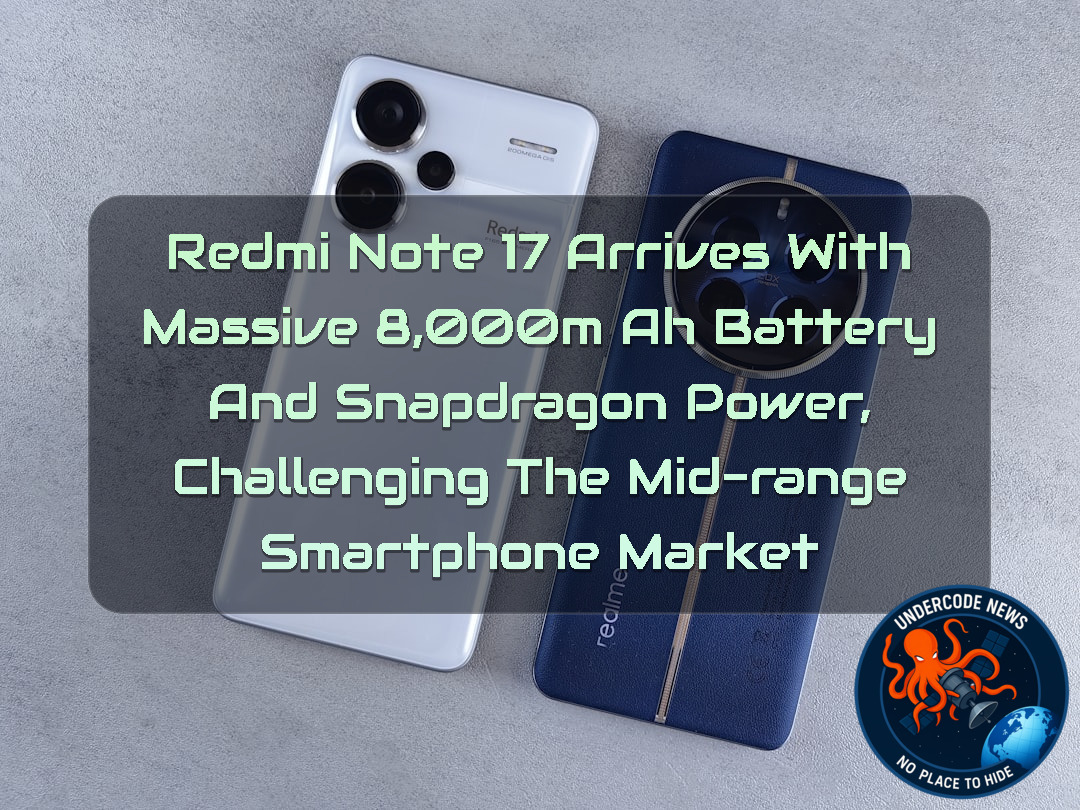
Introduction: A New Era of Battery-Focused Smartphones
The mid-range smartphone segment has become one of the most competitive battlefields in the technology industry. Consumers are no longer looking only for affordable devices; they now expect flagship-inspired displays, powerful processors, advanced software experiences, and batteries that can survive demanding daily usage. Xiaomi has responded to this trend with the launch of the Redmi Note 17 in India, a smartphone designed around endurance, performance, and value.
The Redmi Note series has historically focused on delivering premium features at accessible prices, and the latest generation continues that philosophy. With a large AMOLED display, Qualcomm’s Snapdragon 4 Gen 4 processor, Android 16 with HyperOS 3, and an unusually large 8,000mAh battery, the Redmi Note 17 aims to redefine expectations for smartphones in its price category.
Redmi Note 17 Officially Launches in India With Powerful Hardware
Xiaomi has officially introduced the Redmi Note 17 in the Indian market, targeting users who want long battery life and modern smartphone features without entering flagship pricing territory.
The company has positioned the device as a balanced mid-range smartphone that combines entertainment-focused hardware with everyday productivity capabilities. The launch reflects Xiaomi’s continued strategy of competing aggressively in India’s highly competitive smartphone market, where brands are constantly fighting for consumer attention through better specifications and pricing.
The Redmi Note 17 will officially become available on August 12 through Amazon and Xiaomi’s online store, giving customers access to the newest addition to the popular Redmi lineup.
Large AMOLED Display Designed for Entertainment
One of the strongest features of the Redmi Note 17 is its large 6.9-inch TrueColour AMOLED display.
The screen supports a 120Hz refresh rate, allowing smoother animations, improved gaming responsiveness, and a more fluid experience while scrolling through applications or social media platforms.
The display can reach up to 1,800 nits of peak brightness, making outdoor visibility significantly better compared with many competing mid-range smartphones. This brightness level helps users view content more comfortably under direct sunlight.
For users who consume large amounts of video content, play mobile games, or spend hours browsing online, the large AMOLED panel could become one of the device’s biggest selling points.
Snapdragon 4 Gen 4 Brings Next-Generation Mid-Range Performance
Under the hood, the Redmi Note 17 is powered by Qualcomm’s Snapdragon 4 Gen 4 chipset.
This processor is designed to improve performance efficiency in affordable smartphones, offering better multitasking capabilities, improved graphics handling, and stronger power management compared with previous-generation budget processors.
The chipset allows the phone to handle everyday activities such as social media, video streaming, online meetings, and casual gaming with greater reliability.
While it is not positioned as a flagship gaming processor, the Snapdragon 4 Gen 4 represents an important step forward for affordable smartphones by bringing more advanced processing capabilities into lower price categories.
Android 16 and HyperOS 3 Deliver a Modern Software Experience
The Redmi Note 17 arrives with Android 16 and Xiaomi’s HyperOS 3 interface out of the box.
HyperOS represents Xiaomi’s attempt to create a more unified software ecosystem across smartphones, tablets, smart devices, and connected products.
The latest software combination brings improvements in system optimization, interface design, security features, and device management.
For consumers, having Android 16 pre-installed means the phone launches with a newer operating system foundation rather than requiring immediate major updates after purchase.
However, long-term software support will remain an important factor in determining the overall value of the device, especially as users increasingly keep smartphones for several years.
Huge 8,000mAh Battery Becomes the Redmi Note 17’s Biggest Attraction
The most impressive feature of the Redmi Note 17 is its enormous 8,000mAh battery.
Most modern smartphones typically feature batteries between 4,500mAh and 5,500mAh, making Xiaomi’s decision to include an 8,000mAh battery a significant move.
The larger capacity is aimed at users who demand extended usage, including travelers, gamers, content consumers, and professionals who rely heavily on mobile devices.
The phone also supports 45W fast charging, helping reduce the charging time required for such a large battery.
A battery of this size could potentially allow multiple days of normal usage depending on user habits, making battery anxiety less of a concern.
Camera Setup Focuses on Practical Everyday Photography
The Redmi Note 17 includes a 50MP rear camera designed for everyday photography.
The camera system targets common smartphone photography scenarios, including social media images, family photos, travel shots, and casual video recording.
On the front, the phone includes an 8MP selfie camera for video calls and portrait photography.
Although the camera specifications are not positioned as flagship-level, Xiaomi appears to have prioritized battery life, display quality, and processing power instead of focusing exclusively on camera hardware.
This approach matches the expectations of many mid-range buyers who often value reliability and endurance over professional photography capabilities.
Pricing and Storage Options Target Competitive Mid-Range Buyers
Xiaomi has launched the Redmi Note 17 in two configurations:
Redmi Note 17 6GB RAM + 128GB Storage
The entry model is priced at ₹27,999, offering a balance between affordability and performance.
Redmi Note 17 8GB RAM + 128GB Storage
The higher variant costs ₹30,999 and provides additional memory for users who frequently multitask or keep many applications open.
The smartphone will be available in three color options:
Arctic Blue
Starlight Purple
Dark Night
These choices give customers a combination of traditional and more expressive design styles.
Market Competition: Xiaomi Faces Strong Rivals
The Indian smartphone market has become extremely competitive, with brands such as Samsung, OnePlus, Realme, and Vivo offering aggressive mid-range devices.
The Redmi Note 17’s strategy is clear: attract buyers who prioritize battery endurance and display quality.
While competitors may focus on camera improvements or premium designs, Xiaomi is betting that long-lasting battery performance will become a major deciding factor for consumers.
Deep Analysis: Redmi Note 17 Technology Breakdown
Hardware Analysis
The Snapdragon 4 Gen 4 represents Qualcomm’s effort to bring stronger performance to affordable smartphones.
The processor focuses heavily on efficiency, meaning users can expect improved battery management compared with older chipsets.
The combination of an efficient processor and an 8,000mAh battery creates a smartphone designed for endurance rather than short bursts of performance.
Battery Technology Analysis
A larger battery changes how users interact with their smartphones.
With traditional devices, users often plan their day around charging availability.
The Redmi Note 17 attempts to remove this limitation by offering enough capacity for extended usage.
Possible battery monitoring commands for Android users:
adb shell dumpsys battery
Battery health information:
adb shell dumpsys batterystats
Checking device information:
adb shell getprop ro.product.model
These commands allow advanced users to inspect battery behavior and system information through Android Debug Bridge.
Display Technology Analysis
The 120Hz AMOLED display places the Redmi Note 17 closer to premium smartphone experiences.
Higher refresh rates improve:
Gaming smoothness
Touch responsiveness
Animation quality
Scrolling experience
The 1,800-nit brightness rating also indicates Xiaomi is targeting users who frequently use phones outdoors.
Software Ecosystem Analysis
HyperOS 3 represents Xiaomi’s broader ambition beyond smartphones.
The company is building a connected ecosystem where smartphones communicate with other smart devices.
However, software updates and security patches will determine whether the Redmi Note 17 remains competitive several years after launch.
What Undercode Say:
The Redmi Note 17 represents a major shift in what consumers expect from mid-range smartphones.
Battery life has become one of the most important smartphone features.
Many users now prefer a phone that lasts two days rather than a device with unnecessary premium features.
Xiaomi understands this changing demand.
The 8,000mAh battery is not just a specification; it is a statement about how smartphones are evolving.
Modern users spend more time streaming, gaming, communicating, and working through mobile devices.
A smartphone that constantly requires charging creates frustration.
The Redmi Note 17 attempts to solve this problem directly.
The Snapdragon 4 Gen 4 also shows how affordable smartphones are becoming increasingly powerful.
The gap between budget and premium devices continues to shrink.
Features that were once exclusive to expensive phones are now appearing in cheaper models.
The AMOLED display with 120Hz refresh rate is another example of this transformation.
A few years ago, high refresh rate AMOLED panels were considered luxury features.
Today, they are becoming standard expectations.
However, Xiaomi faces challenges.
The smartphone market is no longer won only through specifications.
Consumers also care about software updates, camera quality, durability, customer service, and brand trust.
A powerful battery alone cannot guarantee success.
The Redmi Note 17 will need strong optimization to ensure the large battery does not make the phone unnecessarily heavy or uncomfortable.
The device also enters a market where competitors are becoming more aggressive.
Brands are constantly introducing smartphones with better cameras, faster charging, and artificial intelligence features.
The future of mid-range smartphones will likely depend on balance.
The winning devices will combine performance, battery life, software intelligence, and affordability.
The Redmi Note 17 appears to understand this direction.
Its biggest advantage is simplicity.
Instead of chasing every trend, Xiaomi focused on solving a real consumer problem: battery endurance.
If the company delivers reliable performance and long-term software support, the Redmi Note 17 could become one of the strongest mid-range smartphone releases in its category.
✅ Confirmed Facts
✅ Xiaomi launched the Redmi Note 17 in India with Snapdragon 4 Gen 4, Android 16, and HyperOS 3 according to the provided specifications.
✅ The smartphone includes an 8,000mAh battery, 45W fast charging, a 6.9-inch AMOLED display, and a 120Hz refresh rate.
✅ The listed pricing, storage variants, colors, and August 12 availability date match the original announcement details provided.
⚠️ Areas Requiring Real-World Testing
❌ Actual battery endurance cannot be confirmed until independent testing measures screen time, gaming performance, and charging behavior.
❌ Camera quality cannot be judged only by megapixel numbers; image processing and software optimization will determine real performance.
❌ Long-term HyperOS 3 update support and security patch frequency remain unknown until Xiaomi publishes its support timeline.
Prediction
(+1) The Redmi Note 17 could become one of the strongest mid-range smartphones in India if consumers prioritize battery life, display quality, and reliable daily performance over flagship-level camera features.
(+1) The device may encourage other smartphone manufacturers to introduce larger batteries in affordable phones, creating a new competition around endurance.
(-1) Xiaomi may face difficulty if competitors introduce similar devices with better cameras, faster charging technology, or longer software support.
(-1) If the large battery increases device weight significantly, some users may prefer thinner alternatives despite the longer battery life.
The Redmi Note 17 represents a growing smartphone trend: consumers are demanding devices that last longer, perform better, and deliver premium experiences without premium prices. Its success will depend on whether Xiaomi can transform impressive specifications into a genuinely reliable everyday smartphone experience.
🕵️📝Let’s dive deep and fact‑check.
🎓 Live Courses & Certifications:
Join Undercode Academy for Verified Certifications
🚀 Request a Custom Project:
Secure, high-velocity infrastructure and disruptive technological engineering. Contact our engineering team for high-tier development and proprietary systems:
[email protected]
💎 Smart Architecture | 🛡️ Secure by Design | ⭐ Trusted by Thousands
References:
Reported By: www.deccanchronicle.com
Extra Source Hub (Possible Sources for article):
https://www.stackexchange.com
Wikipedia
OpenAi & Undercode AI
Image Source:
Unsplash
Undercode AI DI v2
🔐JOIN OUR CYBER WORLD [ CVE News • HackMonitor • UndercodeNews ]
📢 Follow UndercodeNews & Stay Tuned:
𝕏 formerly Twitter 🐦 | @ Threads | 🔗 Linkedin | 🦋BlueSky | 🐘Mastodon | 📺Youtube


