
Listen to this Post
Introduction
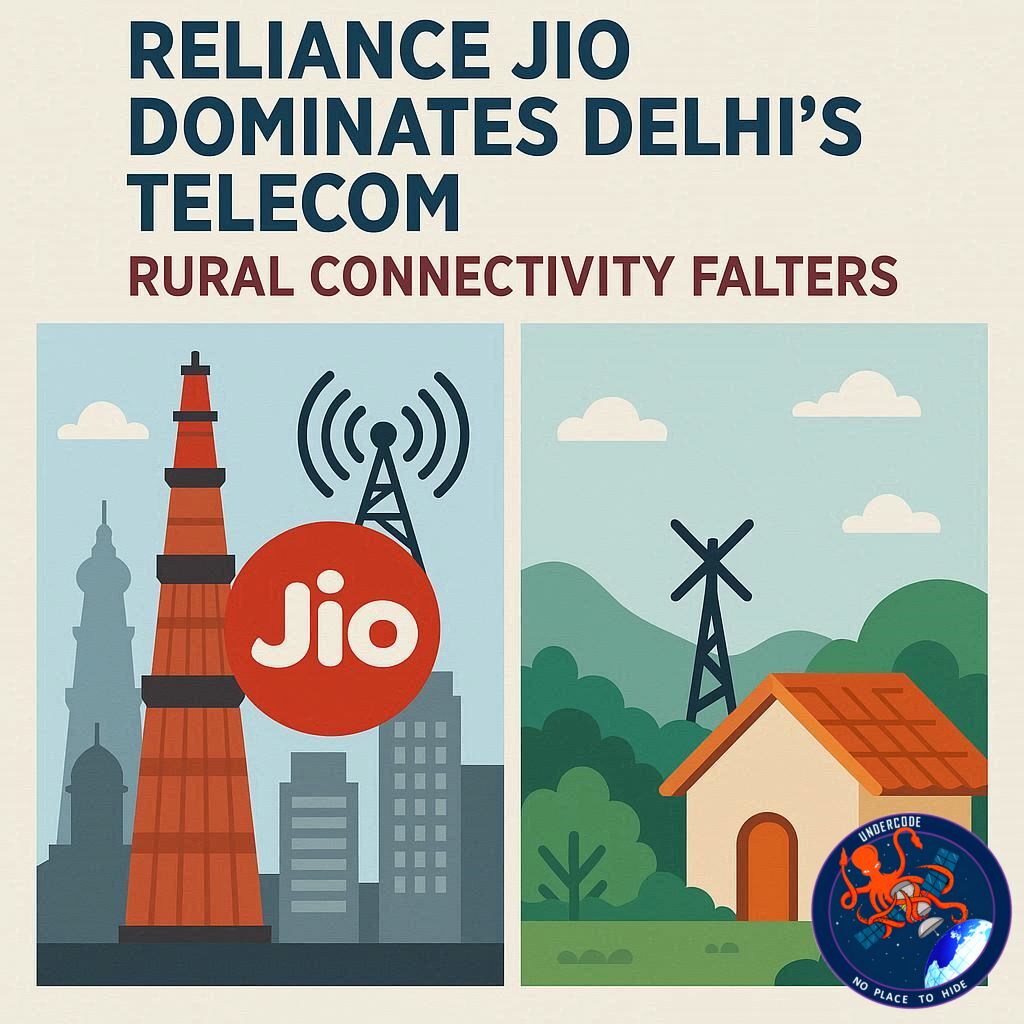
India’s telecom industry is undergoing a fascinating transformation marked by contrasting trends between urban and rural regions. On one hand, Reliance Jio continues to dominate in metropolitan hubs like Delhi, strengthening its hold on the market. On the other, rural areas are witnessing a decline in subscriptions, raising concerns about inclusivity in the digital revolution. The latest data from the Telecom Regulatory Authority of India (TRAI) highlights these sharp divergences, offering insight into where the sector is headed as the country embraces 5G and next-generation connectivity solutions.
Reliance Jio’s Command in Delhi
Reliance Jio has reinforced its dominance as Delhi’s leading telecom operator, achieving a 35.81% market share with over 20 million subscribers as of July 2025. This position underscores Jio’s unmatched presence in India’s capital city, a highly competitive market where consumer preferences shift rapidly.
Growth of India’s Wireless Subscriber Base
Nationwide, India’s wireless subscriber base—covering both mobile and 5G Fixed Wireless Access (FWA)—grew slightly by 0.09%, reaching 1,171.91 million by the end of July 2025. This incremental growth shows a sector that is nearing saturation in certain regions but still finding room for expansion in others.
Urban vs Rural Divide
Urban India continues to fuel this growth, adding 3.16 million new wireless subscribers to reach a total of 641.03 million. Conversely, rural India lost 2.12 million subscribers, reducing its base to 530.88 million. This split emphasizes the digital divide, where urban consumers are increasingly reliant on fast mobile data and 5G solutions, while rural regions struggle with affordability, coverage, and adoption.
Tele-density Disparities
Tele-density numbers paint a clear picture of the imbalance. Urban wireless tele-density rose to 125.74%, signaling that many city dwellers use multiple connections. Rural tele-density, however, slipped to 58.57%, exposing structural issues in network reach and affordability.
Mobile Subscriptions: Same Story, Different Numbers
When focusing solely on mobile subscriptions, the same pattern emerges. Urban mobile subscriptions rose by 0.45% to 636.02 million, while rural mobile subscriptions fell by 0.45%, landing at 527.49 million. This consistent urban-rural divide suggests the need for fresh policies to bridge the gap.
Mobile Number Portability on the Rise
Another telling indicator is the 15.41 million subscribers who opted for Mobile Number Portability (MNP) in July. This highlights how consumers are actively seeking better services, competitive pricing, or more reliable networks without being tied to one provider. It also shows a growing maturity in consumer behavior within India’s telecom ecosystem.
What Undercode Say:
Reliance Jio’s triumph in Delhi is not just about subscriber numbers—it’s a reflection of its aggressive strategies, competitive pricing, and wide-scale investment in 5G infrastructure. By securing over one-third of the market in a critical hub like Delhi, Jio has placed itself in a commanding position to set industry trends.
However, this dominance comes with industry-wide implications. For competitors like Bharti Airtel and Vodafone Idea, Delhi’s telecom market is a battleground they cannot afford to lose. Jio’s edge could pressure them into price wars, faster rollouts of 5G, and deeper investments in customer service. The ripple effect is that consumers in metro areas may enjoy better deals, but companies could face shrinking margins.
The urban-rural divide is another crucial theme. While urban India thrives with multiple connections per household, rural regions are seeing an actual decline in active users. This isn’t just a technological issue—it’s socioeconomic. Affordability, lack of infrastructure, and patchy coverage contribute to rural India’s disengagement from the telecom growth story. If left unchecked, this divide could widen the digital gap, affecting education, business opportunities, and even governance initiatives that rely on mobile connectivity.
The rise in Mobile Number Portability (MNP) is an equally important trend. It reflects dissatisfaction but also empowerment. Consumers are no longer locked into poor service; they have the agency to demand better. In the long term, this will likely lead to improved service quality across the board, as no operator can afford to lose millions of subscribers to competitors.
Another angle is saturation. India’s telecom market has reached a point where growth percentages are marginal, especially in urban areas where nearly everyone already owns a mobile phone. For operators, this means the future lies in service diversification—expanding 5G, fixed wireless, entertainment bundles, IoT connectivity, and digital payments. The companies that adapt fastest to these trends will lead the next wave of growth.
For policymakers, the situation is a wake-up call. While Delhi shines as a high-growth region, rural India’s declining numbers reveal a systemic challenge. Subsidies for rural connectivity, partnerships with state governments, and investment in rural towers and fiber optics are not optional—they are essential. Without addressing these issues, India’s dream of digital inclusivity risks falling short.
In conclusion, Reliance Jio’s leadership in Delhi is a testament to its aggressive strategies, but it also exposes broader structural divides in India’s telecom sector. The next phase of growth will depend not only on winning metros but also on how effectively operators and regulators bring rural India into the digital age.
🔍 Fact Checker Results
✅ Reliance Jio holds 35.81% market share in Delhi with 20 million subscribers (TRAI data, July 2025).
✅ India’s total wireless base reached 1,171.91 million, with urban growth and rural decline confirmed.
❌ No evidence yet that rural decline is due solely to affordability—coverage and demand factors also play roles.
📊 Prediction
Reliance Jio’s dominance in Delhi will likely continue, especially as 5G adoption accelerates. However, competition will intensify in metro areas, pushing rivals to innovate and slash prices. The real battleground of the next five years will be rural India: whichever operator manages to bridge affordability and accessibility there could unlock the next 100 million subscribers and reshape the telecom map of the country.
🕵️📝✔️Let’s dive deep and fact‑check.
References:
Reported By: timesofindia.indiatimes.com
Extra Source Hub:
https://www.digitaltrends.com
Wikipedia
OpenAi & Undercode AI
Image Source:
Unsplash
Undercode AI DI v2
🔐JOIN OUR CYBER WORLD [ CVE News • HackMonitor • UndercodeNews ]
📢 Follow UndercodeNews & Stay Tuned:
𝕏 formerly Twitter 🐦 | @ Threads | 🔗 Linkedin | 🦋BlueSky | 🐘Mastodon


