
Listen to this Post
Introduction
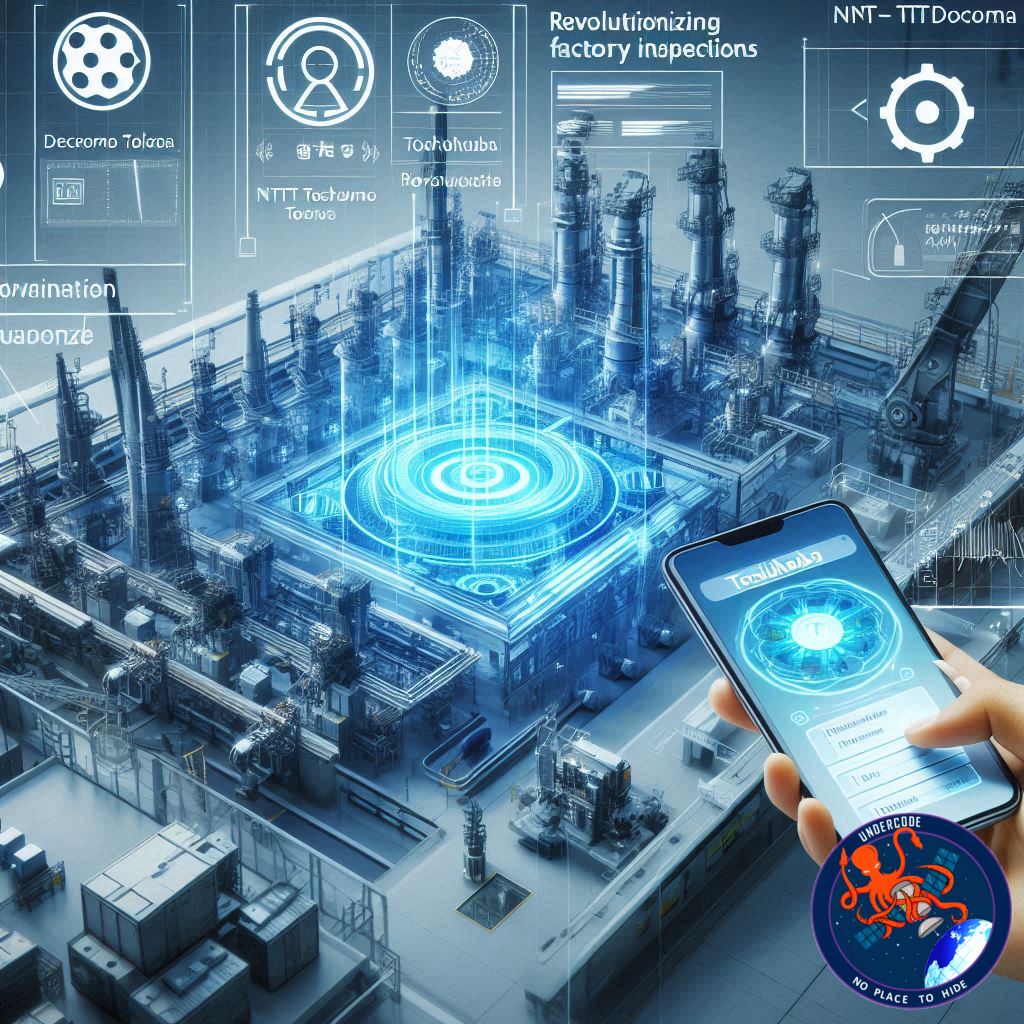
In a significant leap toward smarter industrial operations, NTT Docomo Business (formerly NTT Communications) has unveiled a cutting-edge service that automates factory equipment inspections using artificial intelligence. This initiative, launched in collaboration with Toshiba, aims to simplify and digitalize what was once a labor-intensive, error-prone process. The solution leverages AI-powered image recognition to interpret meter readings and automatically record inspection data. With Japan facing critical labor shortages and the growing demand for automation in industrial settings, this system could be a game-changer for manufacturers and plant operators.
the Original
NTT Docomo Business, in partnership with Toshiba, has launched a new service designed to automate the inspection of industrial equipment. This system integrates NTT Docomo Solutions’ (formerly NTT Comware) software with Toshiba’s technology to streamline equipment maintenance processes, primarily through AI-based image analysis. A successful proof-of-concept was conducted at a Toshiba facility where compressors were monitored using the new setup.
Traditionally, inspections required technicians to manually check and record meter readings by eye, followed by hand-written input into physical records. This new system requires only a single photograph, which is analyzed by AI to extract and document the relevant numerical data. As a result, tasks that once needed multiple workers for field inspections and data confirmation can now be completed by just one person.
Key benefits include reduced staffing needs, lower operational costs, and fewer data entry errors. Additionally, the system helps combat workforce shortages and facilitates knowledge transfer by minimizing dependency on seasoned experts. The new solution is now being promoted to clients operating factories and industrial plants.
What Undercode Say:
NTT Docomo’s move into the AI-driven industrial services sector signals a broader shift in how traditional infrastructure maintenance is being reimagined for the digital age. This is not just about reducing costs—though that’s a significant perk—but about building resilient, scalable, and sustainable operational models that can withstand labor shortages and technical skill gaps.
Japan, in particular, is grappling with an aging workforce and a declining birthrate, which has created pressure across industrial sectors. By automating routine and repetitive inspection tasks with AI, companies can ensure consistency, accuracy, and efficiency, especially in mission-critical environments like factories and power plants.
The integration of AI image recognition into equipment monitoring could also pave the way for predictive maintenance models, where systems proactively alert engineers before issues occur. That’s a far cry from the reactive models many industries still rely on today. Notably, AI can capture subtle changes or anomalies in equipment meters that human eyes might overlook—offering a new layer of operational intelligence.
Moreover, this partnership is a compelling example of cross-industry collaboration, leveraging NTT’s data infrastructure and Toshiba’s hardware knowledge to deliver a full-stack industrial solution. It aligns with global trends where telcos are expanding beyond communication services into enterprise automation and data solutions.
From a cost-benefit perspective, the reduction in human error, quicker turnaround time in inspections, and lowered headcount could save large factories millions annually. Additionally, by digitizing these processes, companies can accumulate valuable historical data to inform strategic decisions over time.
However, adoption may not be instant. Industrial players tend to be risk-averse, particularly when it comes to changing mission-critical workflows. Success will depend on how seamlessly this AI solution integrates into existing ecosystems—and whether the cost of implementation is offset quickly by measurable ROI.
Ultimately, this rollout could reshape the future of industrial maintenance in Japan and potentially influence global practices, especially in countries facing similar demographic and labor issues. If scaled correctly, this could be one of the most significant industrial automation shifts we’ve seen in a decade.
🔍 Fact Checker Results
✅ Toshiba and NTT Docomo conducted successful field trials with AI-enabled inspection at a Toshiba compressor facility.
✅ The system uses AI image recognition to read meters from a single photo, removing manual input needs.
✅ This collaboration is part of a broader NTT initiative to expand AI-driven enterprise solutions beyond telecom services.
📊 Prediction
Expect widespread adoption of AI-driven inspection systems in
References:
Reported By: xtechnikkeicom_b7e59102f555ee671c8094ca
Extra Source Hub:
https://www.facebook.com
Wikipedia
OpenAi & Undercode AI
Image Source:
Unsplash
Undercode AI DI v2


