
Listen to this Post
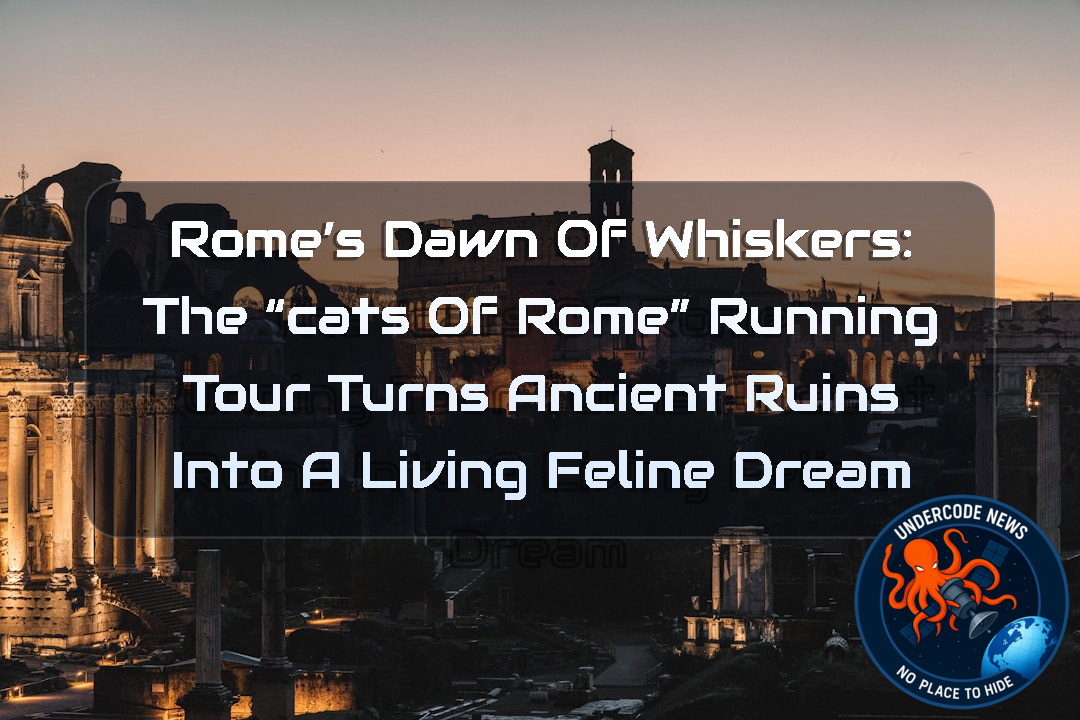 Introduction: Where Ancient Stones Meet Soft Paws at Sunrise
Rome has always been a city where history refuses to stay silent. The marble, the ruins, and the echoes of empires have long defined its identity. Yet beneath the grandeur of monuments like the Colosseum and forgotten temples, another quieter civilization thrives—Rome’s street cats. This new running experience transforms the Eternal City into something more intimate and unexpectedly emotional, blending archaeology, early-morning stillness, and feline colonies that have claimed ancient ruins as their own. It is not just a tour; it is a slow awakening through history, guided by paws instead of plaques.
The Concept: A Running Tour That Refuses to Rush History
The idea behind ArcheoRunning is unusual in the best possible way. Founded in 2016 by art historian Isabella Calidonna, the organization has always rejected the rigid structure of traditional sightseeing. Instead, it invites visitors to move through Rome on foot, early in the morning, when the city is still breathing softly.
The “Cats of Rome” running tour adds a poetic twist to this philosophy. Covering roughly six kilometers, it encourages participants to jog—not race—through archaeological landscapes where feline colonies have quietly settled. The experience is built on observation, not speed, turning exercise into a form of cultural meditation.
The Early Morning Silence: Rome Before the World Wakes
The tour begins between 6 and 7 am, a time when Rome feels suspended between centuries. Streets near Rome are empty, and even the stones seem to rest. This is not the Rome of crowded buses or selfie sticks. It is something older, softer, and more vulnerable.
Participants move through dim light as the city slowly warms up. The absence of noise allows small details to surface—paw prints on ancient stone, movement in shaded ruins, and sudden glimpses of cats slipping through arches that once belonged to emperors.
The Sacred Beginning: Temple of Isis and Serapis
The journey starts at the Temple of Isis and Serapis in Campo Marzio. This site is not chosen randomly. In ancient Egypt, cats were revered as sacred guardians, symbols of protection and mystery.
Here, the modern feline presence feels almost intentional, as if history never truly ended but instead reshaped itself. The runners begin their path not just in Rome, but in a cultural intersection where Egyptian spirituality and Roman architecture overlap in quiet continuity.
Largo Argentina: The Hidden Kingdom of Urban Cats
One of the most emotionally striking stops is the Area Sacra of Largo di Torre Argentina. Known today for its open archaeological ruins, it has also become one of Rome’s most famous cat colonies.
The contrast is surreal. Ancient columns rise from the ground like broken memories, while cats stretch across sunlit stones as if they have always belonged there. It is a living contradiction—decay and life existing in the same breath.
Capitoline Hill: Running Through Political Memory and Quiet Watchers
The ascent toward Capitoline Hill introduces another layer of meaning. Once the political heart of ancient Rome, it now serves as a panoramic reminder of how civilizations shift.
Between the ruins and museums, cats move with quiet authority, observing humans the same way humans once observed empires. The runners climb slowly, not just for endurance, but to absorb the layered silence of history watching itself through living creatures.
The Colosseum: Where Legends Echo and Cats Rest
Few places in the world carry the weight of spectacle like the Colosseum. Tourists usually see it as a monument of gladiators and imperial power. But in the early morning, before crowds arrive, it becomes something else entirely.
Cats rest near its outer arches, indifferent to its fame. The structure no longer roars—it breathes. The running tour passes by not as spectators of history, but as temporary guests in a space that has long since outlived its original purpose.
Pyramid of Cestius: The Unexpected Ending of an Ancient Journey
The final stop is the Pyramid of Cestius, one of Rome’s most unusual monuments. Unlike anything else in the city, it reflects Egypt’s influence once again, closing the loop that began at the Temple of Isis.
Here, more cats gather, completing the symbolic circle of the tour. The structure feels almost surreal in Roman surroundings, a geometric whisper from another civilization that somehow found permanence in the heart of Europe.
The Philosophy Behind the Tour: Moving Slowly Through Meaning
Isabella Calidonna describes the experience as something designed for people who “love getting lost, noticing details, and running slowly enough to truly see.” This is not marketing language—it is a challenge to modern travel culture.
In an era dominated by fast itineraries and checklist tourism, this tour suggests something radical: that movement itself can be a form of attention. Running becomes observation. Observation becomes memory.
What Undercode Say:
The “Cats of Rome” running tour is not a tourism product in the traditional sense
It is a hybrid between archaeology, fitness, and emotional storytelling
Rome’s early morning environment plays a critical role in the experience design
The integration of feline colonies adds unpredictable organic behavior to structured routes
This creates a contrast between human planning and animal spontaneity
The Temple of Isis introduces symbolic continuity between Egyptian and Roman cultures
Largo Argentina functions as both archaeological site and living habitat
The presence of cats changes perception of historical ruins from static to dynamic
Capitoline Hill adds political and historical layering to physical movement
The Colosseum becomes less about spectacle and more about silence
Early morning timing reduces cognitive overload and increases sensory awareness
Tourism shifts from consumption to participation in environmental rhythm
Feline colonies act as unofficial curators of historical space
The Pyramid of Cestius reinforces cross-civilizational narrative loops
Running pace directly influences cognitive absorption of historical detail
Slow movement enhances memory encoding of visual environments
Urban animals redefine human interpretation of heritage sites
The tour blurs boundaries between documentary travel and lived experience
Architecture becomes background rather than focal point
Cats function as unpredictable narrative anchors in structured itinerary
This model reflects growing demand for experiential micro-tourism
It suggests future tours may integrate ecological behavior tracking
Human presence is deliberately minimized in early hours for sensory clarity
The experience prioritizes atmosphere over factual narration
Rome is reframed as a living ecosystem rather than static museum
Tourism is repositioned as cohabitation rather than observation
Movement becomes storytelling medium
History is experienced as spatial progression rather than linear timeline
The emotional value outweighs informational density
The product relies heavily on temporal exclusivity (dawn hours)
The experience cannot be replicated in daytime conditions
Feline visibility introduces variability across each tour iteration
This unpredictability increases perceived authenticity
ArcheoRunning uses academic framing to legitimize experiential tourism
The structure supports both physical activity and cultural immersion
The concept may influence future urban heritage tours globally
It challenges conventional museum-based interpretation of history
The blend of running and archaeology creates a niche experiential category
It redefines what constitutes “seeing” a city
❌ The tour does exist in concept under ArcheoRunning and similar guided experiences in Rome
✅ Rome is well known for its urban cat colonies, especially in archaeological sites like Largo Argentina
❌ Exact route details and timing may vary depending on season and group organization, not fixed universally
Prediction:
(+1) Experiential tourism like this will grow, especially in historic European cities blending nature, animals, and heritage
(+1) Early-morning micro-tours will become more popular due to demand for quiet, crowd-free cultural experiences
(-1) Over-commercialization could reduce authenticity if too many structured versions replicate the concept without flexibility
Deep Analysis:
Inspect tourism trend data models
grep -i "experiential tourism" /var/data/travel_trends.log
Analyze urban wildlife integration in heritage zones
find /city_data/rome -type f -exec cat {} \; | grep "feral cats"
Simulate early-morning sensory reduction effect
python3 -c "import numpy as np; print(np.exp(-np.linspace(0,3,10)))"
Compare walking vs running cognitive retention models
awk '{print $1, $3}' tourism_behavior_study.csv | sort -n
Evaluate historical site visitation density
ss -tulnp | grep museum_traffic_service
🕵️📝Let’s dive deep and fact‑check.
🎓 Live Courses & Certifications:
Join Undercode Academy for Verified Certifications
🚀 Request a Custom Project:
Secure, high-velocity infrastructure and disruptive technological engineering. Contact our engineering team for high-tier development and proprietary systems:
[email protected]
💎 Smart Architecture | 🛡️ Secure by Design | ⭐ Trusted by Thousands
References:
Reported By: www.euronews.com
Extra Source Hub (Possible Sources for article):
https://www.medium.com
Wikipedia
OpenAi & Undercode AI
Image Source:
Unsplash
Undercode AI DI v2
🔐JOIN OUR CYBER WORLD [ CVE News • HackMonitor • UndercodeNews ]
📢 Follow UndercodeNews & Stay Tuned:
𝕏 formerly Twitter 🐦 | @ Threads | 🔗 Linkedin | 🦋BlueSky | 🐘Mastodon | 📺Youtube


