
Listen to this Post
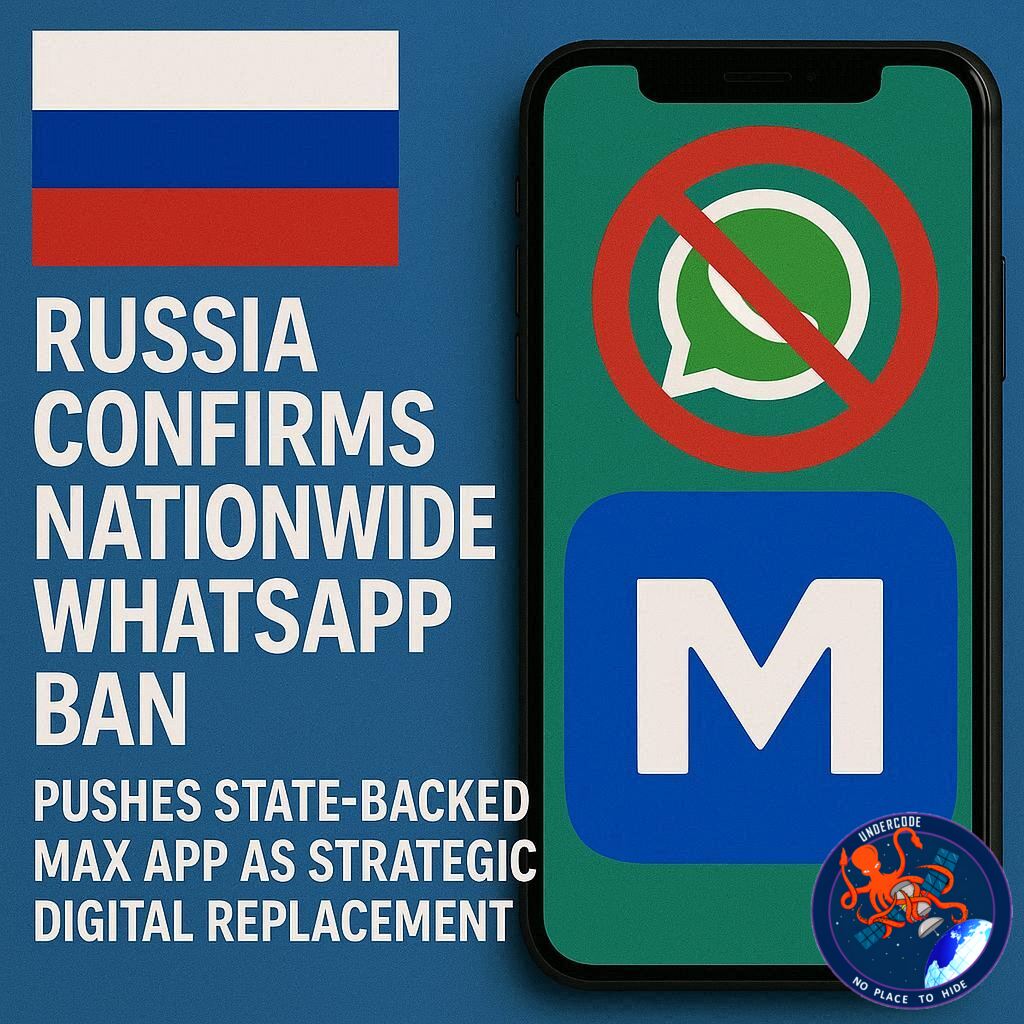
A New Chapter in Russia’s Digital Sovereignty Strategy
Russia has officially confirmed the nationwide blocking of Meta’s WhatsApp, marking one of the most consequential moves in the country’s long-running campaign to tighten control over foreign technology platforms. The Kremlin announced that the messaging service was blocked due to its refusal to comply with Russian legislation. With more than 100 million users previously relying on the app, the decision represents a sweeping transformation of the country’s digital communications landscape. Authorities are now directing citizens toward a domestic alternative called Max, a state-backed messaging and super app developed by Russian tech giant VK. The move signals not just regulatory enforcement, but a broader push for technological independence and centralized oversight of digital communication.
Kremlin Confirms Enforcement Over Legal Non-Compliance
Kremlin spokesperson Dmitry Peskov confirmed that the decision to block WhatsApp had been made and implemented. According to officials, the platform demonstrated “reluctance to comply with the norms and letter of Russian law,” which ultimately led to its removal. Russian authorities have increasingly required foreign technology firms to store user data domestically, provide access for regulatory oversight, and remove content deemed unlawful under national standards. WhatsApp’s alleged failure to meet these demands triggered the enforcement action.
The removal was not symbolic. Russia’s internet regulator, Roskomnadzor, reportedly erased WhatsApp from its official online services registry. This move effectively strips the app of legal digital existence within Russia’s internet ecosystem, making access extremely difficult without technological workarounds such as VPN services.
100 Million Users Urged to Migrate to Max
In place of WhatsApp, the government is strongly promoting Max, a domestic messaging platform released by VK in early 2025. Officials have described Max as a “national messenger” and an accessible alternative designed to meet both private and public communication needs. Authorities previously mandated that manufacturers pre-install Max on all newly sold phones and tablets starting in September of last year, ensuring widespread distribution.
Max is positioned as more than a simple chat application. It has been described as a super app modeled after China’s WeChat or Alipay. The platform reportedly integrates government services, payment systems, entertainment features, and even food ordering capabilities. By combining multiple digital utilities into a single ecosystem, Russia aims to create a centralized platform capable of replacing several foreign applications simultaneously.
WhatsApp Responds, Raises Surveillance Concerns
In response to the ban, WhatsApp issued a public statement criticizing the Russian government’s actions. The company characterized the move as an attempt to push citizens toward what it described as a state-owned surveillance application. WhatsApp argued that blocking secure and private communication tools for more than 100 million people would decrease digital safety rather than enhance it.
The dispute highlights a fundamental clash between encrypted global platforms and sovereign regulatory frameworks. WhatsApp has long promoted end-to-end encryption as a cornerstone of user privacy, a feature that often conflicts with national security oversight policies in various countries.
Meta Platforms Already Marginalized in Russia
The ban on WhatsApp follows earlier restrictions placed on other Meta-owned services. Facebook and Instagram were previously removed from the Russian internet registry after being designated as “extremist” organizations. Since then, access to those platforms has required VPN services. The WhatsApp ban now completes the effective removal of Meta’s core social and communication products from the Russian digital market.
The escalation signals a decisive break between Russia and one of the world’s largest technology conglomerates. It also reflects Moscow’s broader ambition to build a self-reliant digital infrastructure independent of Western platforms.
Telegram Faces Phased Restrictions
Simultaneously, Russia’s internet watchdog announced that Telegram may face “phased restrictions” for alleged non-compliance with local laws. Telegram, widely used for news distribution and public communication, remains particularly influential within Russia. Although it has not yet faced a complete shutdown similar to WhatsApp, the announcement indicates increased scrutiny and possible tightening regulation.
Telegram’s complex relationship with Russian authorities has historically involved both confrontation and accommodation. The platform was previously blocked and later reinstated after regulatory disputes, making its future uncertain under the current enforcement climate.
The Digital Directory Removal Strategy
The removal of applications from Roskomnadzor’s official registry represents a powerful administrative mechanism. Without registry inclusion, digital platforms effectively vanish from Russia’s legal internet environment. App stores, service providers, and internet service operators must comply with registry directives, creating a systemic blockade rather than a simple network filter.
This strategy allows Russian authorities to enforce digital policy through infrastructure control instead of relying solely on technical blocking methods. It also reinforces the government’s capability to reshape its internet ecosystem through administrative tools.
National Super Apps and Centralized Ecosystems
The emergence of Max as a super app is not an isolated initiative. Several countries have explored or implemented centralized digital platforms combining communication, financial services, and public administration. China’s WeChat remains the most prominent example, integrating messaging, payments, transportation, health services, and government interactions.
By encouraging adoption of Max, Russia appears to be adopting a similar centralized model. Such ecosystems offer convenience and integration, but they also consolidate vast amounts of user data within a domestic framework subject to national regulation.
Economic and Technological Implications
The removal of WhatsApp disrupts digital business communications, international trade coordination, and diaspora connections. Many small businesses relied on WhatsApp for customer engagement and logistics coordination. Transitioning to Max or alternative platforms will require operational adjustments.
On a macro level, the decision reinforces Russia’s strategy of technological self-reliance amid geopolitical tensions. Western sanctions and digital decoupling have accelerated domestic software development efforts, positioning platforms like Max as symbols of national resilience.
What Undercode Say:
Russia’s decision to ban WhatsApp should not be interpreted solely as a regulatory enforcement case. It represents a calculated acceleration of digital sovereignty policy. The framing of “non-compliance with local law” is technically consistent with Moscow’s legislative framework, yet the broader context reveals a strategic pivot toward centralized digital ecosystems.
From a structural perspective, removing WhatsApp eliminates one of the few remaining Western communication strongholds in Russia’s consumer market. Facebook and Instagram were already marginalized. WhatsApp remained deeply embedded in personal and commercial communication channels. Its removal creates a behavioral shift opportunity that benefits domestic platforms.
The introduction of Max as a super app is particularly strategic. Unlike a standalone messenger, a super app creates user dependency across multiple service categories. When communication, payments, government services, and commerce are unified within one platform, user exit costs increase significantly. This fosters digital stickiness and long-term adoption.
However, the surveillance narrative raised by WhatsApp introduces a reputational challenge. End-to-end encryption has become a global benchmark for secure communication. If users perceive domestic alternatives as less private, adoption may be compliance-driven rather than trust-driven. Compliance-based adoption can achieve scale but may not generate organic loyalty.
There is also the question of digital fragmentation. As nations increasingly pursue sovereign internet models, global interoperability declines. Businesses operating across borders must navigate separate ecosystems, increasing operational complexity. Russia’s move reflects a broader global pattern of digital regionalization.
The phased restrictions on Telegram suggest that Russia is tightening oversight across all messaging platforms, not just Western-owned ones. This indicates that compliance alignment, not ownership origin alone, determines platform viability. Domestic firms must align fully with regulatory expectations to maintain operational continuity.
Economically, the forced transition may temporarily disrupt small enterprises dependent on WhatsApp networks. Over time, if Max successfully integrates commercial tools and payment solutions, it could become a central pillar of Russia’s digital economy.
The success of this strategy depends on infrastructure robustness, cybersecurity resilience, and user trust. A super app must perform flawlessly under high load conditions. Any technical failures could undermine public confidence during the transition phase.
Geopolitically, the ban underscores the ongoing decoupling between Russian and Western digital spheres. It reflects not merely censorship concerns but a strategic restructuring of information sovereignty and economic insulation.
In essence, this is less about messaging apps and more about digital architecture control. The government is not simply blocking a service; it is reshaping the foundation of online interaction within its jurisdiction.
Fact Checker Results
✅ Russia officially confirmed blocking WhatsApp for non-compliance with local legislation.
✅ The government is promoting VK’s Max app as a national alternative.
❌ Claims that Telegram is fully banned are inaccurate; restrictions are described as phased and not yet total.
Prediction
📊 Russia’s push toward a centralized super app ecosystem will likely accelerate user migration to Max, especially as pre-installation policies expand.
📊 Increased digital fragmentation between Russia and Western platforms may deepen technological decoupling in the coming years.
📊 Regulatory pressure on remaining messaging platforms, including Telegram, is expected to intensify as compliance standards tighten.
▶️ Related Video (82% Match):
🕵️📝✔️Let’s dive deep and fact‑check.
References:
Reported By: timesofindia.indiatimes.com
Extra Source Hub (Possible Sources for article):
https://www.github.com
Wikipedia
OpenAi & Undercode AI
Image Source:
Unsplash
Undercode AI DI v2
Bing
🔐JOIN OUR CYBER WORLD [ CVE News • HackMonitor • UndercodeNews ]
📢 Follow UndercodeNews & Stay Tuned:
𝕏 formerly Twitter 🐦 | @ Threads | 🔗 Linkedin | 🦋BlueSky | 🐘Mastodon


