
Listen to this Post
Introduction: A New Wave of Mobile Cyber Threats
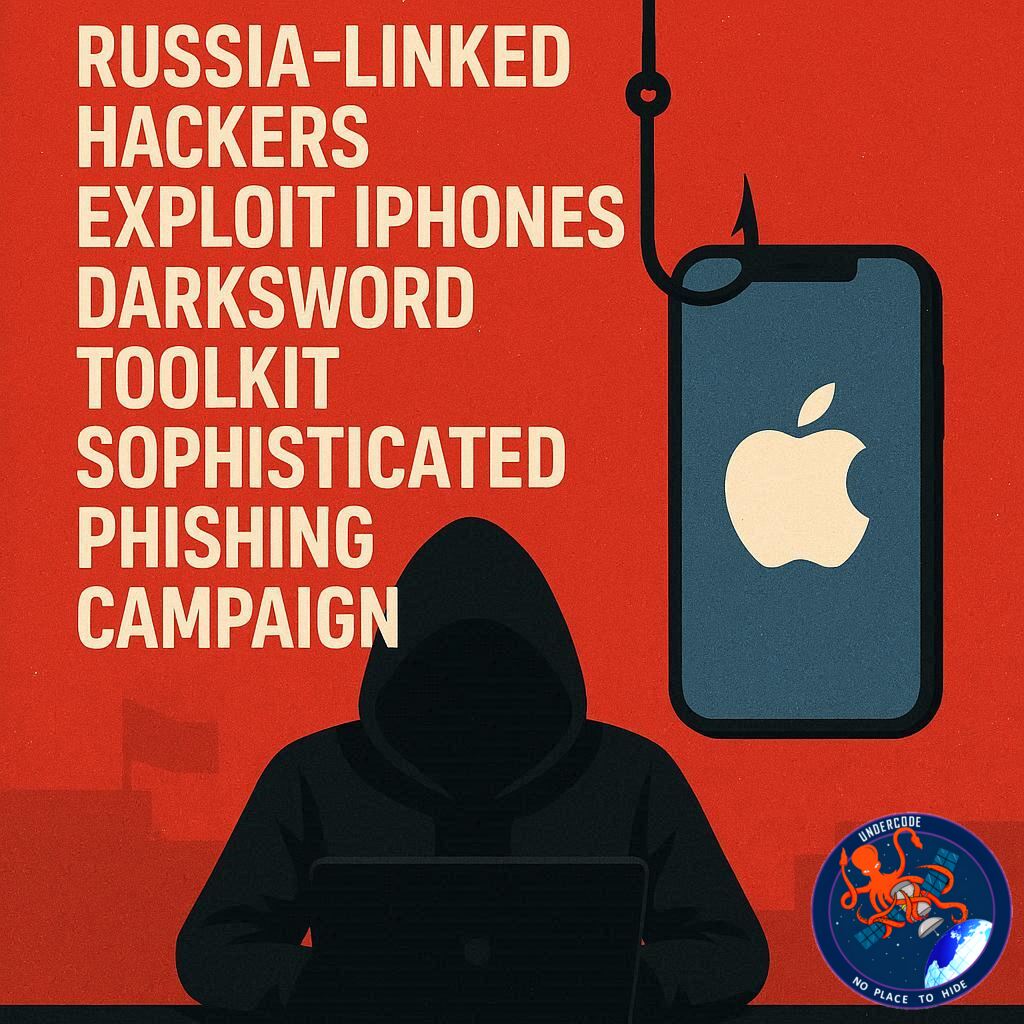
Cybersecurity threats are evolving at an alarming pace, and the latest revelations highlight just how vulnerable even the most secure ecosystems can be. A Russia-linked threat group has reportedly leveraged a leaked exploit toolkit known as DarkSword to launch a highly targeted spear-phishing campaign against Apple devices. This operation specifically focused on iPhones and iPads, exploiting trust, deception, and advanced malware to infiltrate systems. The attack underscores a growing trend: mobile devices are no longer secondary targets—they are now front-line assets in cyber warfare.
the Original Report
Recent cybersecurity intelligence indicates that a threat actor identified as TA446, believed to be linked to Russian operations, has conducted a spear-phishing campaign using the leaked DarkSword iOS exploit kit. This toolkit, previously circulating in underground communities, enables attackers to exploit vulnerabilities within Apple’s mobile ecosystem. The attackers disguised their emails to appear as if they were sent from the Atlantic Council, a well-known international affairs organization, thereby increasing the credibility of their phishing attempts.
Once targets engaged with the malicious emails, the attackers deployed two primary payloads: GHOSTBLADE, a data-mining malware designed to extract sensitive information, and MAYBEROBOT, a backdoor that allows persistent remote access to infected devices. These tools work in tandem to both harvest valuable data and maintain long-term control over compromised systems.
The campaign specifically targeted iPhones and iPads, indicating a deliberate focus on high-value individuals or organizations that rely heavily on Apple devices. This is particularly significant because Apple’s ecosystem is often perceived as more secure than its competitors, making successful attacks both impactful and symbolic.
In parallel cybersecurity news, a separate incident involved St Anne’s Catholic School in Southampton, which was forced to close for four days due to a ransomware attack. Although no sensitive data was reported compromised, the attackers threatened to delete files, causing operational disruption. The school is expected to reopen after containment measures were successfully implemented.
Together, these incidents reflect a broader pattern of escalating cyber threats, ranging from highly targeted espionage campaigns to disruptive ransomware attacks on public institutions. The increasing sophistication of these attacks highlights the urgent need for stronger defenses, better awareness, and proactive security measures across all sectors.
What Undercode Say:
The Strategic Shift Toward Mobile Targets
Attackers are no longer focusing solely on desktops and enterprise servers. Mobile devices, particularly iPhones and iPads, are becoming prime targets due to the sensitive data they store and their widespread use in both personal and professional environments. This campaign illustrates a calculated shift toward exploiting mobile ecosystems that users often assume are inherently secure.
The Power of Social Engineering
The use of spoofed emails impersonating the Atlantic Council demonstrates how effective social engineering remains. Even the most advanced malware requires an entry point, and human trust continues to be the weakest link. By leveraging recognizable institutions, attackers significantly increase the likelihood of user interaction.
Weaponization of Leaked Exploits
The DarkSword exploit kit being used in this campaign highlights a dangerous trend: leaked or stolen cyber weapons quickly become tools for multiple threat actors. Once such toolkits enter the underground market, they lower the barrier to entry for sophisticated attacks, enabling more groups to execute high-level operations without developing their own exploits.
Dual-Payload Strategy: Efficiency and Persistence
Deploying both GHOSTBLADE and MAYBEROBOT reveals a layered attack strategy. One tool focuses on extracting valuable data, while the other ensures continued access. This dual approach maximizes the attack’s effectiveness, allowing threat actors to maintain control even if part of the intrusion is detected.
Target Selection and Intent
The focus on Apple devices suggests that the attackers are aiming at high-value targets such as policymakers, researchers, or corporate executives. Apple devices are often used in sensitive environments, making them attractive targets for espionage campaigns.
Psychological Impact of Ransomware Incidents
The ransomware attack on a school, even without data loss, demonstrates how disruption alone can be a powerful weapon. The threat of data deletion can force institutions to shut down operations, creating panic and financial strain. This reflects a broader trend where attackers aim for maximum disruption rather than just data theft.
The Illusion of Security in Closed Ecosystems
Apple’s reputation for security can sometimes lead to complacency among users. While the ecosystem is indeed robust, no system is immune to exploitation—especially when human factors like phishing are involved. This incident serves as a reminder that security is a shared responsibility between technology providers and users.
Increasing Accessibility of Advanced Cyber Tools
The availability of exploit kits like DarkSword signals a democratization of cybercrime capabilities. Tools that were once limited to nation-state actors are now accessible to a broader range of attackers, increasing the frequency and scale of sophisticated attacks.
The Role of Awareness and Training
One of the most effective defenses against spear-phishing remains user education. Recognizing suspicious emails, verifying sources, and avoiding unsolicited links can significantly reduce the success rate of such campaigns.
The Future of Mobile Cybersecurity
As mobile devices continue to dominate digital interactions, cybersecurity strategies must evolve accordingly. Organizations need to invest in mobile threat detection, endpoint security, and continuous monitoring to stay ahead of emerging threats.
Fact Checker Results
Verification of Threat Actor Activity
Available evidence supports the existence of advanced persistent threat groups like TA446 engaging in targeted phishing campaigns, though attribution to specific nations often remains complex.
Validity of Exploit Kit Usage
Leaked exploit kits being reused by multiple actors is a well-documented phenomenon in cybersecurity, making the reported use of DarkSword plausible.
Accuracy of Ransomware Impact Claims
Ransomware attacks frequently disrupt operations without necessarily resulting in data breaches, aligning with the reported incident involving the UK school.
Prediction
Escalation of Mobile-Focused Attacks
Cybercriminals and state-linked actors will increasingly prioritize mobile platforms, exploiting both software vulnerabilities and user behavior.
Growth of Sophisticated Phishing Campaigns
Future attacks will likely become even more convincing, using AI-generated content and deeper impersonation techniques to deceive targets.
Expansion of Cybercrime Toolkits
The circulation of leaked exploit kits will continue to fuel the rise of advanced attacks, enabling less experienced actors to carry out highly sophisticated operations.
🕵️📝✔️Let’s dive deep and fact‑check.
References:
Reported By: x.com
Extra Source Hub (Possible Sources for article):
https://www.stackexchange.com
Wikipedia
OpenAi & Undercode AI
Image Source:
Unsplash
Undercode AI DI v2
Bing
🔐JOIN OUR CYBER WORLD [ CVE News • HackMonitor • UndercodeNews ]
📢 Follow UndercodeNews & Stay Tuned:
𝕏 formerly Twitter 🐦 | @ Threads | 🔗 Linkedin | 🦋BlueSky | 🐘Mastodon


