
Listen to this Post
🎯 Introduction
Russia’s growing reliance on digital banking collided with a harsh reality when a massive outage swept across the country, paralyzing financial systems and everyday transactions. What initially appeared to be a technical glitch quickly evolved into a nationwide disruption, raising deeper questions about infrastructure resilience, government control over the internet, and unintended consequences of policy decisions. For millions of citizens, the inability to pay, withdraw, or transfer money was more than an inconvenience, it was a stark reminder of how fragile centralized digital ecosystems can become under pressure.
🧩 Nationwide Banking Collapse Leaves Millions Locked Out of Financial Services
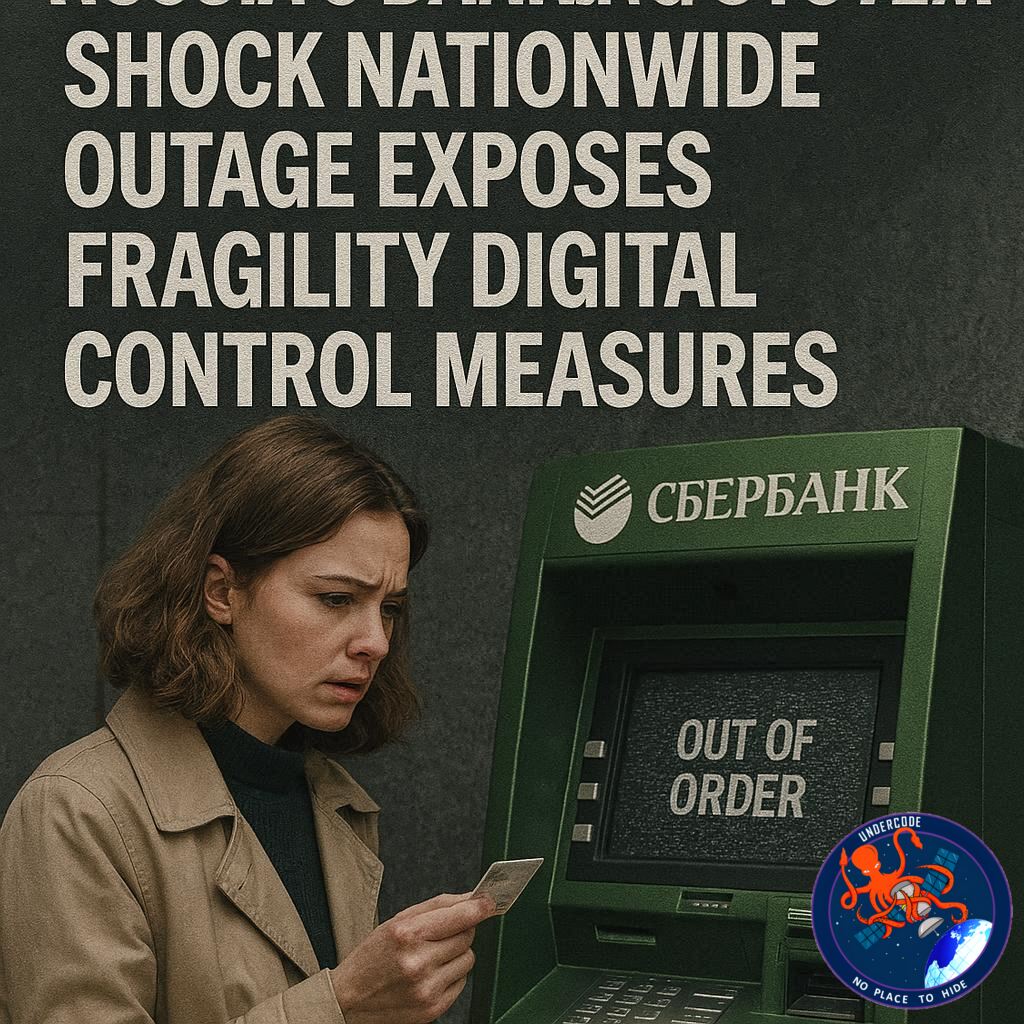
A large-scale outage disrupted banking applications and payment systems across Russia, affecting major financial institutions such as Sberbank, VTB, Alfa-Bank, T-Bank, and Gazprombank. Customers across multiple regions, including Moscow, suddenly found themselves unable to access mobile banking services, complete transactions, withdraw cash, or even pay using cards. The disruption extended across the country, impacting tens of millions of users simultaneously and triggering widespread frustration.
🧩 Massive Surge in Complaints Reveals the Scale of the Crisis
The scale of the outage became evident through a surge in customer complaints reported by Russian monitoring platforms. Within just one hour, thousands of complaints were registered, with Sberbank alone receiving more than 3,300 reports. Over a 12-hour period, the distribution of complaints showed the outage was not isolated but nationwide, with a significant concentration in Moscow, followed by St. Petersburg, Sverdlovsk, Novosibirsk, and Chelyabinsk regions. This data confirmed that the disruption was systemic rather than localized.
🧩 Digital Payments Collapse Forces Return to Cash Economy
As banking apps failed and card systems stopped working, businesses across Russia were forced to revert to cash-only transactions. This sudden shift caused long queues at ATMs, many of which also experienced failures, further compounding the chaos. Retail stores, restaurants, and service providers struggled to maintain operations, highlighting how deeply integrated digital payments have become in everyday life and how disruptive their absence can be.
🧩 Public Infrastructure Impacted as Transport Systems Fail
The outage extended beyond banking and into public infrastructure. Payment systems in Moscow’s metro and suburban train networks were affected, preventing passengers from using cards at turnstiles. To avoid overcrowding and logistical breakdowns, transit staff allowed passengers to pass through for free. This unexpected consequence demonstrated how interconnected financial systems are with essential urban services.
🧩 Official Explanation Points to Technical Failure
Russia’s National Payment Card System attributed the outage to a technical issue originating at a single bank, stating that customer funds remained secure and unaffected. However, reports from local media suggested that the root cause may have been linked to a malfunction within Sberbank’s systems, which then cascaded into other financial institutions due to interconnected infrastructure.
🧩 Timing Raises Questions About Government Internet Policies
The outage occurred during a period of intensified internet regulation in Russia. Authorities had recently increased efforts to restrict access to certain apps and reduce the use of VPN services, which many citizens rely on to bypass censorship. This timing led to speculation that the disruption was not purely technical but potentially linked to broader policy changes affecting network stability.
🧩 VPN Restrictions Potentially Triggered System Instability
Statements from government officials indicated plans to limit VPN usage through stricter enforcement measures, including potential fees and user blocks. These actions followed directives aimed at tightening control over internet access. Some cybersecurity experts suggested that interference with VPN traffic may have inadvertently disrupted network operations, contributing to the banking outage in what they described as possible “friendly fire.”
🧩 Increasing Internet Control Reshapes Digital Landscape
Since the escalation of geopolitical tensions, Russia has steadily expanded its control over digital infrastructure. Measures include blocking platforms, restricting online content, and implementing whitelist systems that limit access to approved websites during outages. These actions, while framed as security measures, have increased the complexity and fragility of the national internet ecosystem.
🧩 Disappearance of Reports Sparks Concerns Over Information Control
By the following days, reports about the outage began disappearing from several online platforms. Independent media outlets claimed that Russia’s internet watchdog ordered the removal of content linking the incident to VPN restrictions. This response added another layer of controversy, suggesting efforts to control the narrative surrounding the disruption.
What Undercode Say:
The April 3 outage is not just a technical incident, it is a structural warning signal. Modern banking systems rely heavily on interconnected digital infrastructure, where a single point of failure can cascade across multiple institutions. In Russia’s case, the concentration of financial power among a handful of major banks amplifies systemic risk. When one entity experiences disruption, the ripple effect is immediate and widespread.
What stands out is the timing. The outage did not occur in isolation but alongside aggressive policy shifts targeting internet freedom and VPN usage. This intersection between political control and technical infrastructure introduces a dangerous variable. When governments interfere with core internet mechanisms, even with strategic intent, the complexity of modern systems means unintended consequences are almost inevitable.
The speculation around VPN restrictions contributing to the outage is particularly significant. VPNs are not just tools for bypassing censorship, they are deeply embedded in global network routing, enterprise systems, and security frameworks. Disrupting them at scale can lead to unpredictable behavior across networks, including latency spikes, routing conflicts, and service failures.
Another critical insight lies in the dependency loop between digital banking and public infrastructure. The fact that metro systems and transport networks were affected shows how financial technology is no longer isolated. It is embedded into the daily functioning of cities. This interdependence increases efficiency but reduces resilience. When one system fails, multiple layers collapse simultaneously.
The government’s response, particularly the removal of reports linking the outage to policy actions, highlights a recurring issue in tightly controlled information environments. Transparency is essential during crises, especially those involving financial systems. Without it, public trust erodes quickly, and speculation fills the gap left by missing facts.
From a cybersecurity perspective, the term “friendly fire” is telling. It suggests that defensive or restrictive measures can backfire when implemented without full understanding of system dependencies. In highly complex infrastructures, even minor adjustments can trigger chain reactions that are difficult to predict or contain.
There is also an economic dimension to consider. A forced return to cash transactions, even temporarily, disrupts business operations, reduces transaction efficiency, and exposes vulnerabilities in cash supply chains. For a country aiming to modernize its financial ecosystem, such disruptions represent a step backward.
Globally, this incident serves as a case study. It demonstrates the risks of centralizing control over both financial systems and internet infrastructure. Countries observing this event may reconsider how far they should go in regulating digital access without compromising stability.
Ultimately, the outage reveals a paradox. The more control a system tries to exert over digital flows, the more fragile it can become. Stability in modern networks often depends not on restriction, but on flexibility, redundancy, and openness.
🔍 Fact Checker Results
✅ Major Russian banks were widely reported to be affected by a large-scale outage.
✅ The disruption impacted payments, ATMs, and public transport systems.
❌ Direct confirmation that VPN restrictions caused the outage remains unproven.
📊 Prediction
⚠️ Russia is likely to further tighten digital controls while simultaneously investing in more resilient domestic infrastructure.
📉 Repeated outages could reduce public trust in digital banking systems if transparency remains limited.
🔐 Future policies may balance censorship goals with the need to prevent systemic technological failures.
🕵️📝✔️Let’s dive deep and fact‑check.
References:
Reported By: securityaffairs.com
Extra Source Hub (Possible Sources for article):
https://www.facebook.com
Wikipedia
OpenAi & Undercode AI
Image Source:
Unsplash
Undercode AI DI v2
Bing
🔐JOIN OUR CYBER WORLD [ CVE News • HackMonitor • UndercodeNews ]
📢 Follow UndercodeNews & Stay Tuned:
𝕏 formerly Twitter 🐦 | @ Threads | 🔗 Linkedin | 🦋BlueSky | 🐘Mastodon


