
Listen to this Post
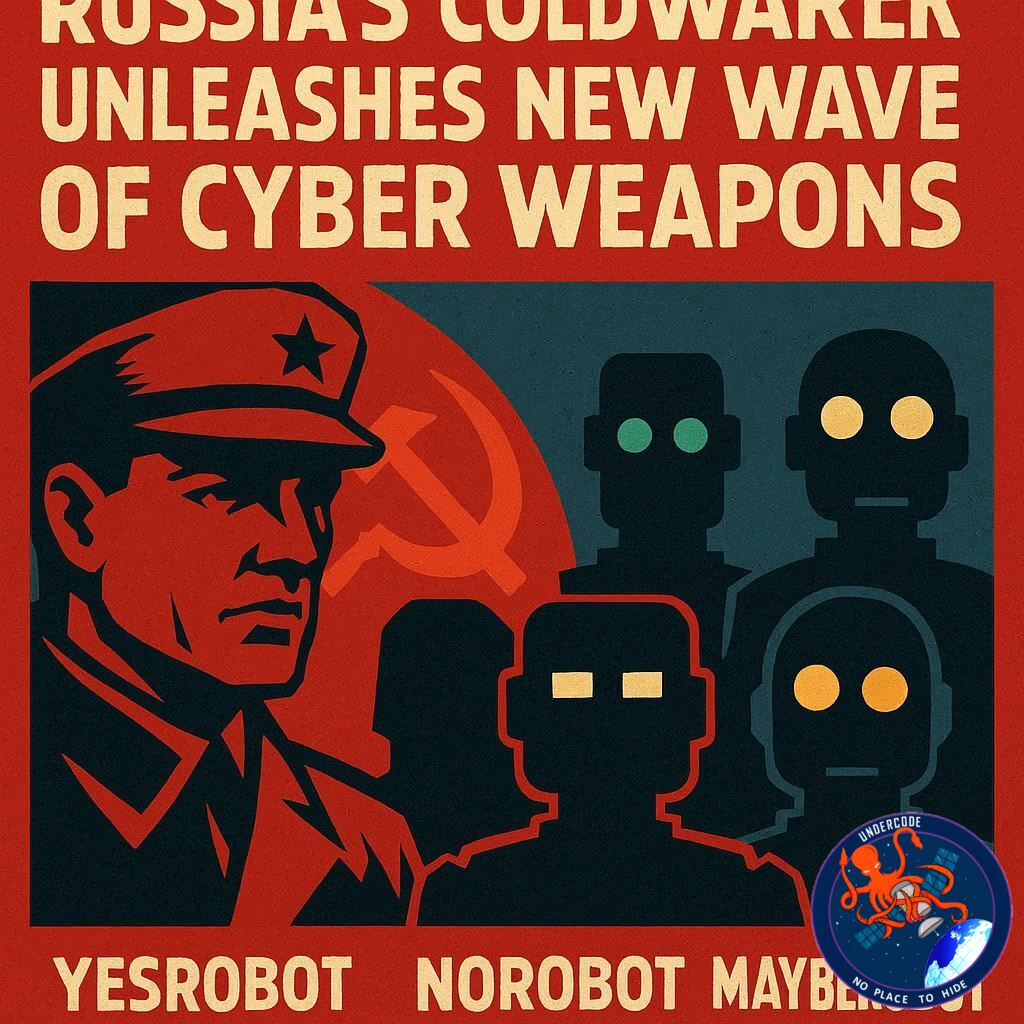
The Hidden Cyber War Intensifies
In the quiet hours of global networks, a silent battlefield is taking shape. Russian state-sponsored hacking group COLDRIVER, also known as Star Blizzard, has resurfaced with a new and more sophisticated arsenal of malware — a clear escalation in the ongoing digital cold war. The group, long associated with cyber espionage against Western institutions, has reportedly replaced its previous malware suite “LOSTKEYS” with three new tools: NOROBOT, YESROBOT, and MAYBEROBOT.
The news, first reported by cybersecurity sources and highlighted by Cybersecurity News Everyday, indicates that COLDRIVER’s operations are becoming more modular, stealthy, and aggressive. Their new strategy seems to pivot around a refined social engineering method called COLDCOPY, a lure technique that deceives targets into executing malicious files disguised as legitimate documents or communications.
These developments underline a growing trend: the fusion of espionage tactics with psychological manipulation. NOROBOT, a DLL downloader, acts as the initial entry point, fetching payloads discreetly once the system is compromised. YESROBOT, the Python-based backdoor, provides persistence and allows remote command execution, while MAYBEROBOT, a PowerShell backdoor, grants the attackers high-level control across Windows environments. Together, these tools form a three-headed hydra of infiltration, persistence, and dominance.
The timing of this revelation is no coincidence. As global attention turns toward geopolitical instability and digital defense, Russia’s cyber divisions continue to sharpen their offensive edge. COLDRIVER’s renewed campaign suggests not only technological evolution but also strategic adaptation — a signal to Western intelligence agencies that Russia’s cyber capabilities remain dynamic and dangerous.
For organizations across Europe and North America, this isn’t merely a headline. It’s a warning shot. Each tool represents a unique challenge: the stealth of DLL injectors, the flexibility of Python, and the deep integration capabilities of PowerShell exploitation. When combined, they can bypass many conventional defenses.
Cyber experts suggest that the evolution from LOSTKEYS to these “ROBOT” variants could reflect a modular malware strategy — one that allows COLDRIVER to adapt quickly, customize attacks per target, and stay ahead of detection systems. What once was a slow, linear campaign has now transformed into an agile, data-driven assault mechanism.
Security firms are currently racing to analyze the full capabilities of NOROBOT, YESROBOT, and MAYBEROBOT, with early findings pointing to encrypted command-and-control communications and layered obfuscation methods designed to frustrate forensics. This sophistication hints at a higher budget, refined coding resources, and potential coordination with state intelligence assets.
While attribution in cybersecurity is always complex, the fingerprints of COLDRIVER’s previous campaigns — phishing emails targeting political figures, fake login portals mimicking academic institutions, and code fragments linked to earlier Russian malware — make the connection unmistakable. The pattern remains: infiltration through trust, manipulation through illusion, and extraction through persistence.
The message from the digital front lines is clear: the era of simple phishing attacks is over. The new battlefield belongs to those who can merge code, psychology, and intelligence into a single weapon. And in this domain, COLDRIVER appears to be leading the charge once again.
What Undercode Say:
The resurgence of COLDRIVER reveals a deeper narrative about the evolution of cyber espionage in the statecraft era. This is no longer just about stealing credentials or spying on adversaries — it’s about testing global resilience and exploiting the gray zone between war and peace.
Russia’s digital doctrine has long centered around hybrid warfare: the blend of propaganda, cyber manipulation, and psychological influence. The COLDCOPY lure reinforces that philosophy by turning human trust into a vulnerability. Instead of brute-forcing firewalls, COLDRIVER compromises human judgment — the softest target in cybersecurity.
The naming convention — NOROBOT, YESROBOT, MAYBEROBOT — might seem trivial, but it reflects layered operational design. It could indicate tiered roles within an attack chain:
NOROBOT initiates infection (network reconnaissance and payload delivery).
YESROBOT confirms persistence (command execution and lateral movement).
MAYBEROBOT ensures adaptability (modular PowerShell operations for data exfiltration or pivoting).
Such modularity gives attackers immense flexibility. They can deploy specific “robots” depending on the environment, making detection harder and incident response slower. This architecture mirrors trends in modern malware families like APT29’s Kazuar or Sandworm’s Industroyer, where adaptability trumps volume.
What’s most alarming is how COLDCOPY blurs the line between digital and social engineering. Traditional antivirus systems can’t defend against a convincing email that appears to come from a trusted academic contact. By combining technical precision with psychological manipulation, COLDRIVER leverages trust as a weapon.
From a defense perspective, this escalation demands human-centric cybersecurity — stronger awareness training, behavioral anomaly detection, and real-time phishing response systems. Firewalls and anti-malware tools are no longer enough. Defense must evolve at the speed of deception.
Moreover, the geopolitical implications cannot be ignored. Each new malware strain represents a digital projection of power. Just as nations showcase military technology, cyber groups like COLDRIVER display technical dominance to assert control, sow doubt, or destabilize adversaries.
The digital cold war is no longer theoretical. It’s operational, ongoing, and invisible to most of the world. Every file attachment, every network ping could be part of a silent reconnaissance mission. What we’re witnessing is not just the future of cyber conflict — it’s the present.
If COLDRIVER continues this trajectory, expect more AI-assisted targeting, scriptless attacks, and multi-language payloads optimized for stealth across diverse systems. The transition from LOSTKEYS to the ROBOT suite might only be the first phase of an adaptive malware ecosystem.
Ultimately, the lesson is clear: cybersecurity defense must evolve from reactive patching to proactive intelligence. The battle won’t be won with stronger locks but with smarter awareness.
Fact Checker Results
✅ COLDRIVER has verifiable links to Russian state operations.
✅ Reports confirm NOROBOT, YESROBOT, and MAYBEROBOT are real malware variants.
❌ No public technical samples of the new lures have been released yet.
Prediction 🔮
COLDRIVER’s latest trio signals a transition toward automated, modular cyber warfare. Within months, NOROBOT and its siblings could appear in campaigns targeting universities, defense contractors, and policy think tanks. Expect multi-vector phishing blending AI-written emails and encrypted payloads — a sophisticated blend of code and deception. The world’s next major cyber breach might not begin with code, but with a convincingly crafted conversation.
🕵️📝✔️Let’s dive deep and fact‑check.
References:
Reported By: x.com
Extra Source Hub (Possible Sources for article):
https://www.pinterest.com
Wikipedia
OpenAi & Undercode AI
Image Source:
Unsplash
Undercode AI DI v2
Bing
🔐JOIN OUR CYBER WORLD [ CVE News • HackMonitor • UndercodeNews ]
📢 Follow UndercodeNews & Stay Tuned:
𝕏 formerly Twitter 🐦 | @ Threads | 🔗 Linkedin | 🦋BlueSky | 🐘Mastodon


