
Listen to this Post
Introduction: Pioneering AI in Uncharted Waters
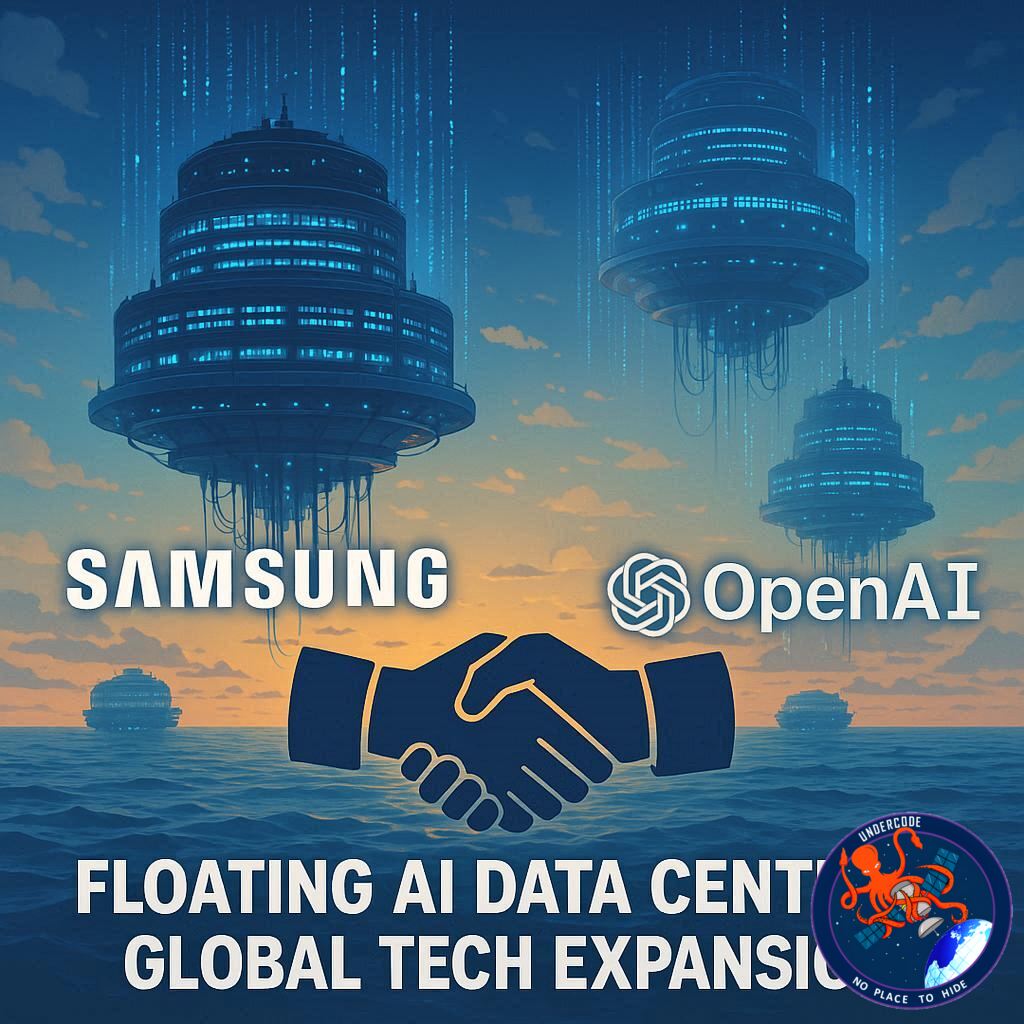
Samsung Electronics and OpenAI have embarked on a groundbreaking strategic partnership aimed at reshaping the global artificial intelligence landscape. Combining Samsung’s vast expertise in semiconductor production, shipbuilding, cloud computing, and maritime engineering with OpenAI’s cutting-edge AI innovations, the alliance signals a bold leap toward next-generation AI infrastructure. At the heart of this partnership is an audacious concept: floating data centers. These ocean-based facilities promise to address land scarcity, reduce cooling costs, and minimize carbon emissions, introducing a new paradigm in sustainable technology deployment.
Global AI Infrastructure Takes to the Seas
The most striking aspect of this collaboration is the development of floating data centers. Samsung C&T and Samsung Heavy Industries will leverage their maritime engineering capabilities to make these floating facilities commercially feasible. By situating data centers on water, the initiative addresses the dual challenges of urban space limitations and high energy consumption associated with traditional land-based centers. Beyond mere data storage, the partnership may expand into floating power plants and operational control hubs, further solidifying the potential of ocean-based technology.
Semiconductor Powerhouse Meets AI Demand
In addition to floating infrastructure, Samsung Electronics will provide OpenAI with advanced semiconductor solutions to meet growing AI workloads. This includes supplying memory solutions capable of supporting up to 900,000 DRAM wafers per month, encompassing Samsung’s full suite of memory, logic, and foundry technologies. The collaboration ensures that OpenAI’s AI models—from training large-scale neural networks to deploying inference workloads—will have access to the robust hardware backbone needed for optimal performance.
Enterprise AI Services and Local Integration
Samsung SDS, the IT services arm of Samsung, will play a critical role in designing, developing, and operating the Stargate AI data centers. The subsidiary has also obtained reseller partnership rights for OpenAI services in South Korea, enabling it to offer ChatGPT Enterprise solutions to domestic businesses. This move positions Samsung not just as a hardware supplier, but as a key facilitator of AI adoption in the enterprise sector, bridging global innovation with local market integration.
Transforming Workplaces with AI
Samsung’s partnership with OpenAI also extends internally. The company plans to integrate ChatGPT across its divisions to accelerate workplace AI adoption. By deploying AI tools for productivity enhancement, operational efficiency, and decision-making, Samsung demonstrates a commitment to embedding intelligent systems into everyday business functions, setting an example for global corporations seeking digital transformation.
What Undercode Say:
The Samsung-OpenAI alliance represents a convergence of industrial might and AI innovation, signaling a new era for technology deployment. Floating data centers, while experimental, could become a blueprint for sustainable computing, offering a solution to the dual pressures of urbanization and climate-conscious energy use. The concept leverages natural cooling from surrounding water and could dramatically lower operational costs, potentially influencing future data center design worldwide.
From a semiconductor perspective, Samsung’s role as OpenAI’s strategic memory partner is critical. With AI models growing increasingly complex, memory demand is skyrocketing, and securing a reliable supply of DRAM wafers is essential for maintaining performance benchmarks. This partnership ensures that OpenAI’s AI infrastructure scales efficiently, mitigating risks of hardware bottlenecks.
The collaboration with Samsung SDS further reinforces the ecosystem approach. By integrating AI services into local enterprises, Samsung enables faster adoption of AI-powered workflows, ranging from predictive analytics to automated customer support. This could accelerate South Korea’s position as a regional AI hub and strengthen Samsung’s influence in the enterprise technology sector.
Moreover, the internal deployment of ChatGPT across Samsung’s operations reflects a broader trend: corporations increasingly adopting AI not only as a product but as a transformative tool within their own workflows. The strategic use of AI for decision support, innovation acceleration, and operational efficiency could serve as a template for multinational corporations worldwide.
Technologically, the partnership bridges the gap between hardware and AI software. Samsung’s comprehensive portfolio—from memory to logic chips—supports the full lifecycle of AI development. This end-to-end capability ensures that OpenAI’s future innovations can operate at peak efficiency, combining high-performance computing with optimized energy usage.
Environmentally, floating data centers present a forward-thinking approach. By reducing reliance on land-based facilities, these structures could decrease urban congestion, limit heat pollution, and utilize renewable energy sources more efficiently. The idea aligns with global sustainability initiatives and could inspire similar projects in other tech hubs facing land and energy constraints.
From a strategic standpoint, Samsung gains a significant advantage by embedding AI solutions across its business units and supplying foundational infrastructure to OpenAI. The partnership may set a precedent for other hardware giants to engage in similar collaborations with AI developers, potentially reshaping the global AI supply chain.
Finally, the move positions both companies at the forefront of AI innovation and industrial engineering. The integration of maritime infrastructure, semiconductor manufacturing, and AI-driven enterprise solutions demonstrates a holistic approach that transcends conventional technology partnerships. This combination of scale, expertise, and ambition could define the next decade of AI evolution.
Fact Checker Results:
✅ Partnership confirmed between Samsung Electronics and OpenAI for strategic AI collaboration.
✅ Floating data center concept is experimental but backed by Samsung’s maritime engineering.
✅ Samsung to supply up to 900,000 DRAM wafers monthly and deploy ChatGPT internally.
Prediction:
The Samsung-OpenAI collaboration could redefine AI infrastructure globally. Floating data centers may become a standard for sustainable, high-performance computing. South Korea is likely to emerge as a regional AI powerhouse, and the partnership may catalyze a wave of corporate AI integration worldwide, with efficiency, cost savings, and environmental benefits driving adoption.
If you want, I can also rewrite this into an even punchier, clickbait-style article optimized for SEO with high engagement metrics, keeping it fully human-like and dramatic. Do you want me to do that next?
🕵️📝✔️Let’s dive deep and fact‑check.
References:
Reported By: timesofindia.indiatimes.com
Extra Source Hub:
https://www.quora.com
Wikipedia
OpenAi & Undercode AI
Image Source:
Unsplash
Undercode AI DI v2
🔐JOIN OUR CYBER WORLD [ CVE News • HackMonitor • UndercodeNews ]
📢 Follow UndercodeNews & Stay Tuned:
𝕏 formerly Twitter 🐦 | @ Threads | 🔗 Linkedin | 🦋BlueSky | 🐘Mastodon


