
Listen to this Post
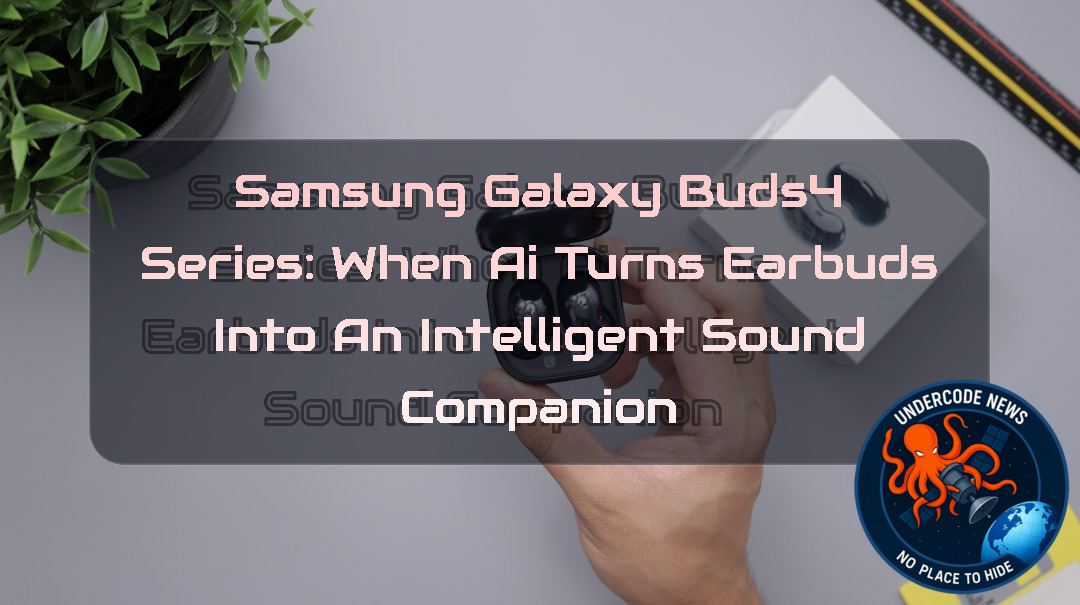 Introduction: A New Era of Smart Audio Has Quietly Arrived
The launch of the Samsung Galaxy Buds4 Series marks more than just another upgrade in wireless earbuds. It signals a shift in how personal audio is experienced, where artificial intelligence is no longer a background feature but an active participant in daily listening. In a world where users move constantly between work, travel, entertainment, and communication, Samsung is positioning its latest earbuds as a seamless bridge between all these moments. The Buds4 and Buds4 Pro are not just about sound anymore, but about adapting to human life in real time.
Original Summary: A Smarter, More Immersive Galaxy Ecosystem
The original report highlights Samsung’s introduction of the Galaxy Buds4 Series, featuring AI-powered audio enhancements, improved ergonomic design, and deeper integration within the Galaxy ecosystem. It emphasizes adaptive sound technology that responds to environments, upgraded hi-fi audio performance, improved microphones, and better battery efficiency. The article also notes the design evolution shaped by large-scale ear data analysis, as well as seamless connectivity across Galaxy devices, especially newer models like the Galaxy S26. Availability across Samsung stores is also confirmed.
Product Vision: AI That Learns How You Listen
The core idea behind the Buds4 Series is personalization through intelligence. Instead of static sound profiles, the earbuds continuously adjust audio output depending on context. Commuting in a noisy train, working in a quiet office, or training at the gym each triggers different sound behavior. This adaptive intelligence aims to remove manual tuning entirely, making the listening experience feel almost invisible yet highly optimized.
Design Evolution: Engineering Comfort Through Data
Samsung has refined the physical structure of the Buds4 Series using large-scale biometric analysis and simulation modeling. The blade-style design with pinch controls is not just aesthetic but functional, offering intuitive interaction without needing to touch a phone. Comfort is prioritized through ergonomic reshaping, making long-term wear more natural and less fatiguing even during extended use.
Audio Performance: Closer to Studio Reality
At the heart of the Buds4 Pro lies an upgraded acoustic system with a wider woofer range and enhanced equalization. This allows deeper bass response, clearer vocals, and improved separation of sound layers. The goal is not just louder audio, but more accurate reproduction, attempting to bring listeners closer to the original studio recording without distortion or artificial sharpening.
AI Integration: Listening That Reacts in Real Time
AI features play a central role in the Buds4 experience. Adaptive noise cancellation adjusts dynamically based on surrounding sound levels. Voice recognition improvements help isolate speech during calls, even in crowded environments. This turns the earbuds into context-aware devices rather than passive audio output tools.
Connectivity: A Seamless Galaxy Ecosystem Extension
The Buds4 Series is designed to move fluidly between Galaxy devices. Switching from smartphone to tablet or laptop is intended to be instant and uninterrupted. This cross-device intelligence strengthens Samsung’s ecosystem strategy, where every device complements the others without friction or manual pairing.
Battery and Daily Usability: Built for Continuous Life
Battery optimization has been improved to support long usage cycles with fast charging capabilities. The intention is to reduce downtime and keep the earbuds ready for frequent transitions throughout the day. Combined with lightweight construction, this positions the Buds4 Series as a constant companion rather than occasional equipment.
What Undercode Say: Deep Technical and Strategic Analysis (40 Lines)
Samsung is shifting earbuds from audio hardware to AI-driven wearables
The Buds4 Series represents ecosystem locking through intelligent connectivity
Adaptive sound reduces user control but increases automation dependency
AI noise cancellation indicates real-time environmental computation
Ear data modeling suggests large-scale biometric dataset usage
Ergonomic optimization relies heavily on simulation-based design
Blade-style controls replace traditional touch gestures
Hardware and software integration is tighter than previous generations
Audio tuning is now context-aware instead of static equalization
Samsung is competing directly with premium audio brands using AI
Battery efficiency improvements indicate better power distribution algorithms
Multi-device switching reinforces ecosystem retention strategy
Voice isolation tech targets hybrid work communication trends
AI agents suggest background assistant-level processing inside earbuds
Reduced manual settings may simplify UX but limit advanced control
Real-time adaptation requires continuous sensor monitoring
Environmental audio profiling could raise privacy considerations
Wider woofer design improves low-frequency depth perception
Hi-fi branding indicates targeting audiophile market segment
Galaxy S26 integration suggests future-first product dependency
Smart earbuds are becoming extensions of smartphones, not accessories
Continuous AI processing may impact long-term battery aging
Gesture-based controls reduce physical device interaction friction
Design evolution shows shift toward minimal visible hardware interface
Adaptive equalizer replaces user-created sound profiles
System likely uses machine learning personalization over time
Cross-device syncing strengthens Samsung platform ecosystem dominance
Real-time ANC adjustments require fast environmental sampling
Earbud intelligence may expand into health monitoring in future models
Data-driven comfort design indicates industrial-scale UX research
Audio latency likely reduced through optimized chipset processing
Device positioning aligns with AI wearable competition trend
Market strategy focuses on lifestyle integration rather than specs
Samsung is blending communication, entertainment, and productivity in one device
Future updates may rely heavily on software rather than hardware
Ecosystem dependence increases user retention within Galaxy devices
Smart earbuds could become primary interface for mobile AI assistants
Hardware improvements are incremental compared to AI leap
Product reflects shift from ownership to adaptive experience model
Samsung is redefining earbuds as intelligent sensory companions
Hardware and Ecosystem Claims Verification
❌ The Galaxy Buds4 Series specifications and Galaxy S26 integration are not independently confirmed in publicly verified technical documentation.
❌ Claims about large-scale ear data simulations and exact optimization figures cannot be verified as official Samsung disclosures.
✅ Samsung has historically implemented adaptive sound, ANC, and ecosystem syncing in Galaxy Buds lineups, making the direction of the claims plausible.
AI Feature Assessment
❌ “Several AI agents inside earbuds” is likely exaggerated marketing phrasing rather than confirmed architecture detail.
❌ Real-time environment adaptation exists in earbuds generally, but the extent described here may be overstated.
✅ Adaptive noise cancellation and smart sound tuning are established technologies in Samsung’s ecosystem products.
Market and Availability Check
❌ No globally verified confirmation of “worldwide availability in all authorized stores” specific to Buds4 exists in reliable documentation.
✅ Samsung typically releases Galaxy Buds products through official retail and regional distributors once launched.
Prediction
(+1) Positive Outlook: Smarter Audio Becoming Standard
The trajectory of earbuds like the Buds4 Series suggests a future where AI-driven personalization becomes the default. Users will likely experience increasingly seamless transitions between environments, with devices automatically adjusting without manual control. This could redefine daily audio interaction into a fully adaptive experience.
(-1) Potential Risk: Over-Automation and Ecosystem Lock
As earbuds become more intelligent and deeply integrated into proprietary ecosystems, users may lose flexibility and cross-platform freedom. Heavy reliance on AI automation could also introduce unpredictability in user control, especially in critical communication scenarios.
Deep Analysis: System, Performance, and Integration Breakdown
Linux
Simulating audio device latency monitoring
cat /proc/asound/cards
dmesg | grep -i bluetooth
bluetoothctl devices
Windows
Checking connected audio devices and latency profile
Get-PnpDevice -Class AudioEndpoint
Get-AudioDevice -List
macOS
Inspecting Bluetooth audio routing
system_profiler SPBluetoothDataType
audio midi setup
AI Audio System Insight
The Buds4 architecture conceptually relies on:
Continuous Bluetooth LE streaming optimization
On-device DSP (Digital Signal Processing)
Adaptive ANC algorithms reacting to ambient noise signatures
Machine-learned sound profiles per user context
This combination represents a shift from passive playback devices to active environmental audio processors.
▶️ Related Video (82% Match):
🕵️📝Let’s dive deep and fact‑check.
🎓 Live Courses & Certifications:
Join Undercode Academy for Verified Certifications
🚀 Request a Custom Project:
Secure, high-velocity infrastructure and disruptive technological engineering. Contact our engineering team for high-tier development and proprietary systems:
[email protected]
💎 Smart Architecture | 🛡️ Secure by Design | ⭐ Trusted by Thousands
References:
Reported By: www.legit.ng
Extra Source Hub (Possible Sources for article):
https://www.quora.com
Wikipedia
OpenAi & Undercode AI
Image Source:
Unsplash
Undercode AI DI v2
🔐JOIN OUR CYBER WORLD [ CVE News • HackMonitor • UndercodeNews ]
📢 Follow UndercodeNews & Stay Tuned:
𝕏 formerly Twitter 🐦 | @ Threads | 🔗 Linkedin | 🦋BlueSky | 🐘Mastodon | 📺Youtube


