
Listen to this Post
Introduction
Samsung has long been a powerhouse in the tech world, delivering innovative smartphones, wearables, and smart devices that excite millions. But even giants stumble, and the latest buzz around the Samsung Galaxy Ring shows that not all that glitters is gold. Users are reporting alarming battery issues with the company’s first smart ring, raising concerns about reliability and Samsung’s future wearable strategy. Here’s a deep dive into what’s happening, why it matters, and what it could mean for the tech landscape.
Battery Disaster Strikes Galaxy Ring ⚠️
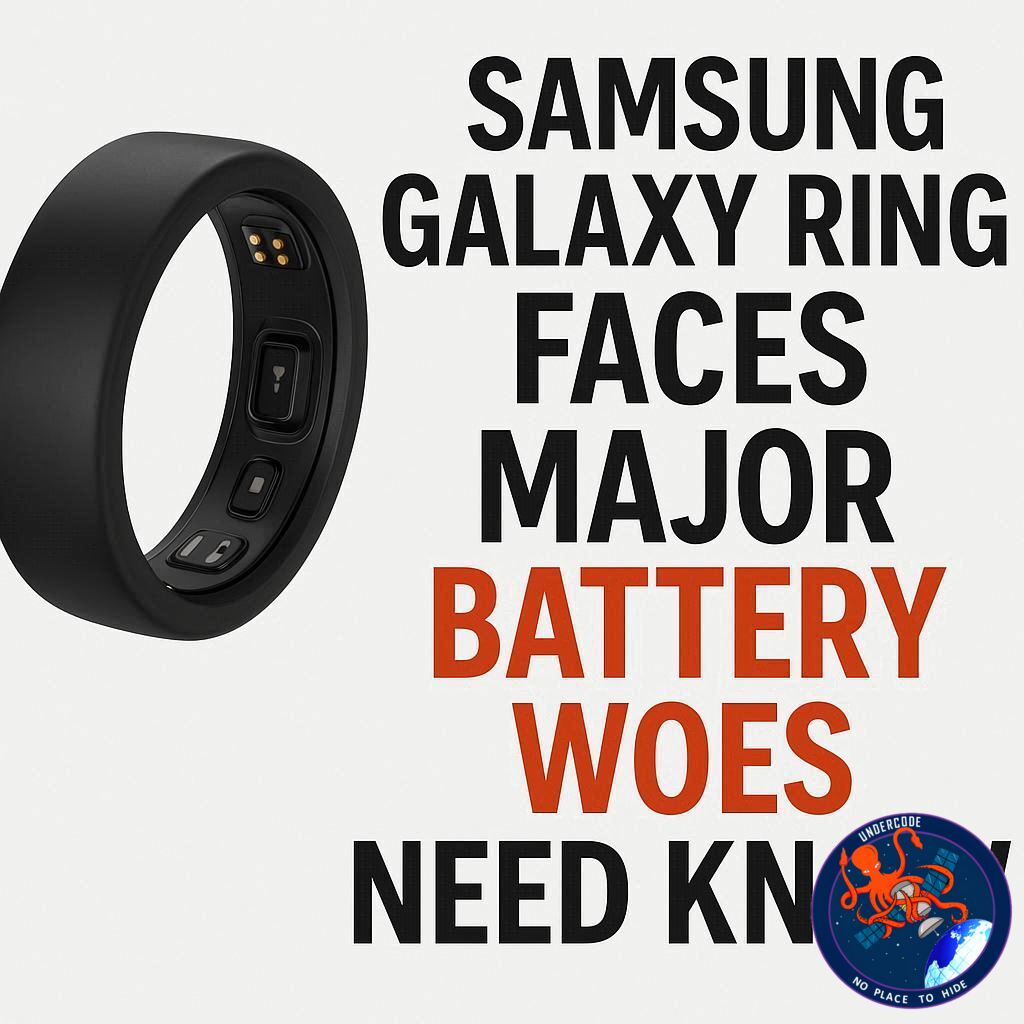
Samsung enthusiasts are being reminded of past battery fiascos, like the Galaxy Note 7, as new issues surface with the Galaxy Ring. Users are reporting severe battery drain, leaving the wearable practically useless after only a few hours. Some extreme cases even describe the battery swelling, trapping the ring on users’ fingers—a literal nightmare scenario.
User Experiences: Battery Drain Nightmare
Reports on Samsung’s official forums and Reddit indicate that some Galaxy Ring owners face a drastic drop of 1% per two minutes. This means the device cannot survive a day without constant charging, contradicting Samsung’s promise of a week-long battery life. For others, charging twice per week is still enough, but inconsistency is causing frustration.
Warranty and Customer Support Challenges 🛠️
A few users have successfully claimed warranty replacements, yet the process remains cumbersome and slow. Samsung has not clarified whether the issue is caused by faulty batteries, a manufacturing defect, or a software glitch that might be solved with an update. The lack of transparency is leaving many customers uneasy about the brand’s reliability in the wearables sector.
Implications for Samsung’s Smart Wearables Future
The Galaxy Ring is meant to be the stepping stone for Samsung’s smart jewelry line. However, battery issues could undermine consumer trust and impact sales of future models. Samsung faces a critical moment: address the problems quickly or risk long-term reputational damage.
What Undercode Say: Analytical Insights 📊
The Galaxy Ring battery problem highlights a deeper challenge in the wearable market. Miniaturization of technology inevitably increases risks, particularly with lithium-ion batteries that are prone to swelling and rapid discharge. From a technical perspective, Samsung may need to reconsider its battery design or implement stricter quality control measures.
Software optimization also plays a crucial role. Poor firmware management can cause excessive background processes, draining power at alarming rates. This suggests that even if hardware is sound, software updates may be essential to restore functionality and customer trust.
Financially, these issues could impact Samsung’s bottom line. Wearables are a growing market segment, but consumer hesitation can slow adoption, directly affecting revenue projections. Smart rings, despite being niche, rely heavily on consumer confidence for future sales of accessories and ecosystem devices.
From a marketing standpoint, Samsung’s lack of immediate response may amplify negative sentiment online. Social media amplifies user complaints rapidly, making swift communication and visible remediation crucial. Samsung could consider launching a dedicated support campaign or even a recall to safeguard its brand image.
On a broader level, this scenario is a reminder that innovation comes with risks. Early adopters are often the first to experience flaws, but their feedback is invaluable. The Galaxy Ring case may guide Samsung and competitors in designing safer, longer-lasting wearable devices, emphasizing battery durability and user-centric design.
Strategically, companies entering the smart jewelry space should analyze Samsung’s misstep. Market analysts will be watching closely to see if competitors seize the opportunity to highlight reliability, potentially capturing wary consumers.
The controversy also underscores the importance of post-launch monitoring. Real-time feedback loops between users and manufacturers can accelerate problem resolution, ensuring that minor glitches don’t escalate into PR disasters.
Samsung’s handling of this issue may define public perception for years. Addressing it effectively could reinforce the brand’s commitment to quality, while ignoring it risks being a cautionary tale for the tech industry.
Fact Checker Results ✅❌
✅ Battery swelling incidents reported by multiple users on Samsung forums.
❌ Samsung has not officially confirmed a widespread defect; reports are anecdotal.
✅ Some warranty replacements have been issued, indicating recognition of individual failures.
Prediction 🔮
The Galaxy Ring may see a software patch addressing battery optimization within the next quarter. Samsung is likely to release improved models with larger, safer batteries to regain consumer confidence. Early adopters may hesitate temporarily, but strong marketing and transparent communication could restore trust and fuel future smart ring sales.
🕵️📝✔️Let’s dive deep and fact‑check.
References:
Reported By: www.sammobile.com
Extra Source Hub:
https://www.digitaltrends.com
Wikipedia
OpenAi & Undercode AI
Image Source:
Unsplash
Undercode AI DI v2
🔐JOIN OUR CYBER WORLD [ CVE News • HackMonitor • UndercodeNews ]
📢 Follow UndercodeNews & Stay Tuned:
𝕏 formerly Twitter 🐦 | @ Threads | 🔗 Linkedin | 🦋BlueSky | 🐘Mastodon


